


Essy
Footprint Detective
"Something wandered through the Crazy Scientist Lab last night... and it left behind a trail of mysterious footprints!"
Professor Picklebottom called early this morning.
"The security cameras stopped working just before our mystery visitor arrived," she said. "All we have left are the footprints."
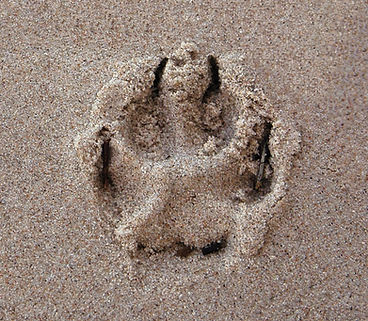
Real wildlife scientists don't always see the animal they're studying. Instead, they collect evidence and look for patterns that reveal its identity.
Today your mission is to become a Footprint Detective.
Can you organise the mystery footprints and build a system that could help identify the unknown visitor?
Ages
5-12 yrs
Duration
min
10
Difficulty
Easy
Stage
Stage 1-3
Cite this resource
Created by Darin Carr (BSc, DipEd)
NESA Accredited Teacher · Chemistry & Physics Specialist · 30+ years in-class teaching
Resource Version: 1.0
First Published:
Last Updated:
22 July 2026
1 Aug 2026

MISSION VERIFIED
Classroom tested. Teacher designed. Safe at home.

Designed by Darin Carr (BScDip Ed)
Practising NESA accredited
Australian Science Teacher
★ 30+ years of classroom experience
MISSION PROGRESS
young scientists have completed this mission.
I'VE COMPLETED THIS MISSION
Click to let us know you have completed this mission
LATEST TEACHER FEEDBACK
No feedback yet for this experiment. Use it with your class and let us know how it went!

Before you investigate... watch the mystery
MISSION HOOK
Professor Picklebottom and the team are travelling and collecting amazing science mysteries.
✔ Coming in Term 1 2027

KEEP EXPLORING
Curiosity Files
BIG Questions & Discovery
Illustrated Facts
Explore • Discover
Road Trip Science
Discover science everywhere
The Teacher's Cauldron
Think. Experiment. Inspire
Books
Read • Explore
Videos
Watch & Learn
LAB Resources
Premium learning resources

Mission Equipment
Gather your materials and get
ready for an amazing mission!
Animal Detective Case File (download)
Mystery Footprint Cards
Pencil
Scissors
(Optional) Clipboard
(Optional) Magnifying glass


Let’s Investigate
Follow the missions steps below to solve the mystery.
1
Download Your Case File

Download the Footprint Detective Case File and cut out the mystery footprint cards.
These cards contain the clues you'll use to solve the mystery.
PREDICT
OBSERVE
EVIDENCE
ASK
SAFETY
TIP
PREDICT
Gather your materials and get
ready for an amazing mission!
2
Become a Detective

Look carefully at each footprint.
Don't try to guess the animal yet.
Instead, look for clues like:
Number of toes
Claws or no claws
Hooves or paws
Long or short toes
Size and shape
PREDICT
OBSERVE
EVIDENCE
ASK
SAFETY
TIP
PREDICT
Gather your materials and get
ready for an amazing mission!
3
Sort the Clues

Group footprints that share similar features.
You might make groups such as:
Paw prints
Hoof prints
Bird footprints
Reptile footprints
Remember, there isn't just one correct way to organise them.
PREDICT
OBSERVE
EVIDENCE
ASK
SAFETY
TIP
PREDICT
Gather your materials and get
ready for an amazing mission!
4
Build Your Classification Key

Using the worksheet, write simple YES/NO questions to separate your groups.
For example:
Does it have hooves?
Does it have claws?
Does it have four toes?
Keep testing your key until every footprint can be identified.
PREDICT
OBSERVE
EVIDENCE
ASK
SAFETY
TIP
PREDICT
Gather your materials and get
ready for an amazing mission!
5
Test Your Key
Swap your key with someone else.
Can they correctly identify the mystery footprints using only your questions?
If not, improve your key.
Scientists constantly improve their identification guides.
PREDICT
OBSERVE
EVIDENCE
ASK
SAFETY
TIP
PREDICT
Gather your materials and get
ready for an amazing mission!
6
Compare With the Reference Guide

Now use the Animal Reference Sheet to see which animals match each footprint.
Were there any surprises?
Would you change your classification key now?
PREDICT
OBSERVE
EVIDENCE
ASK
SAFETY
TIP
PREDICT
Gather your materials and get
ready for an amazing mission!
1
Big Title
Gather your materials and get
ready for an amazing mission!
PREDICT
OBSERVE
EVIDENCE
ASK
SAFETY
TIP
PREDICT
Gather your materials and get
ready for an amazing mission!
1
Big Title
Gather your materials and get
ready for an amazing mission!
PREDICT
OBSERVE
EVIDENCE
ASK
SAFETY
TIP
PREDICT
Gather your materials and get
ready for an amazing mission!
1
Big Title
Gather your materials and get
ready for an amazing mission!
PREDICT
OBSERVE
EVIDENCE
ASK
SAFETY
TIP
PREDICT
1
Download Your Case File
Gather your materials and get
ready for an amazing mission!
PREDICT
OBSERVE
EVIDENCE
ASK
SAFETY
TIP
PREDICT
1
Download Your Case File
Gather your materials and get
ready for an amazing mission!
PREDICT
OBSERVE
EVIDENCE
ASK
SAFETY
TIP
PREDICT
1
Big Title
Gather your materials and get
ready for an amazing mission!
PREDICT
OBSERVE
EVIDENCE
ASK
SAFETY
TIP
PREDICT
The Crazy Scientist LAB Learning System™
Every experiment follows The Crazy Scientist Lab Learning System™ — a simple way to help kids think like real scientists.
We
-
LINK to what they already know,
-
ACTIVATE curiosity through hands-on discovery
-
BUILD understanding that actually sticks.

Have you ever seen footprints at the beach?
Or muddy footprints across the floor?
People can often tell who made them without seeing the person.
Scientists do exactly the same thing with animals.
Today you'll become a wildlife detective.

Don't try to guess the animal!
Instead ask yourself...
What clues can I see?
Which footprints look alike?
Which questions separate them best?
Real scientists don't begin with answers.
They begin with questions.

You just built something scientists use every day—
a classification key.
Biologists use classification keys to identify:
🐾 animals
🌿 plants
🪲 insects
🍄 fungi
🐚 shells
🦴 fossils
Even doctors use similar systems to identify diseases.
You didn't memorise facts...
You built a scientific tool.
"Want the full teacher guide? The Crazy Scientist Lab includes classroom delivery tips, how to manage the WOW moment, differentiation for Stage 2 & 3, — ready to teach tomorrow."
Think Like a Scientist
Scientists don't stop after their first discovery.
They ask new questions, collect more evidence and test their ideas in different ways.
Where could you take this investigation next?
What could you change?
✔ Start with a different first question.
✔ Use fewer footprint groups.
What could you change?
✔ Use more detailed questions.
✔ Add new mystery footprints.
✔ Mix bird, mammal and reptile tracks together.

Dr Puddledrip’s Science Tip

Read the Science
How can scientists identify an animal without seeing it?
Real wildlife scientists don't always find the animal they're looking for. Sometimes the only clue they have is a footprint left in mud, sand or snow.
That's why they become detectives.
Instead of guessing, they carefully observe the track and look for patterns. They ask questions like:
How many toes are there?
Are there claws?
Are the toes webbed?
Is it a hoof or a paw?
Each clue helps narrow down the possibilities until they can identify the animal.
What is a classification key?
A classification key (also called a dichotomous key) is a tool scientists use to identify living things.
It works by asking a series of simple YES/NO questions. Each answer splits the group into smaller groups until only one organism is left.
Classification keys are used to identify:
animals
plants
insects
fossils
rocks
shells
You built your own classification key in this investigation—the same thinking process used by real scientists.
Why do scientists classify living things?
There are millions of different species on Earth. Classification helps scientists organise this amazing variety of life.
It allows scientists to:
communicate using the same names
compare organisms from around the world
discover how closely related different species are
understand biodiversity and evolution.
Scientists don't just memorise information—they look for patterns and organise evidence.
What clues did your mystery tracks reveal?
Each mystery footprint had its own special features.
For example:
Dog – four toes with claws and soft paw pads.
Elephant – five toes on the front foot and a huge round footprint designed to spread its weight.
Duck – webbed feet that help it swim.
Gecko – wide sticky toes that help it climb smooth surfaces.
Frog – long webbed toes built for swimming and jumping.
No single clue solved the mystery. It was the combination of clues that helped you identify each track.
Keep Exploring
If you enjoyed becoming a Footprint Detective, you might also enjoy these investigations:
Bird Beak Challenge – discover how different beak shapes help birds eat different foods.
Owl Pellet Detective (coming soon) – identify animals from the bones found inside owl pellets.
Dinosaur Track Detective (coming soon) – compare modern footprints with ancient dinosaur tracks.
Want to learn even more? Visit the Learning Universe to explore topics such as classification, animal adaptations, biodiversity, and ecosystems, then try more hands-on investigations in The Crazy Scientist LAB.
Teachers & Homeschoolers: Print-ready HD versions of this Science Behind It poster and companion G&T Challenge Card are available inside The Crazy Scientist LAB.
Scientist's Challenge
Designed for HPGE, gifted learners and children who enjoy an extra challenge.

Teachers & Homeschoolers: Print-ready HD versions of this Science Behind It poster and companion G&T Challenge Card are available inside The Crazy Scientist LAB.
The Next Question...
You've solved today's mystery. Now discover where curiosity can take you next.

Teachers & Homeschoolers: Print-ready HD versions of this Science Behind It poster and companion G&T Challenge Card are available inside The Crazy Scientist LAB.
Vocabulary
Classification
Classification is the process of grouping living things based on their shared features.
Classification Key
A classification key is a series of YES/NO questions that helps identify an unknown plant, animal or object.
Adaptation
An adaptation is a feature that helps a living thing survive in its environment.
Know a parent or teacher who'd love this? Send it on! 👇
Keep Exploring This Mystery
One experiment leads to even more amazing discoveries inside the Learning Universe.
Curiosity Files
BIG Questions & Discovery
Illustrated Facts
Explore • Discover
Road Trip Science
Discover science everywhere
The Teacher's Cauldron
Think. Experiment. Inspire
Books
Read • Explore
Videos
Watch & Learn
LAB Resources
Premium learning resources


- Coming Mid 2027
Australia's Oldest Dinosaur Footprint Was Hiding For 68 Years
- Coming Mid 2027
Could a Footprint Really Catch a Criminal?
Ready for Your Next Discovery?


READY TO TEACH THIS
TOMORROW?

Running the experiment is easy; however, teaching it well is another challenge.
Teachers often ask:
How do I adapt this for Stages 1,2 or 3?
What misconceptions will they have?
What syllabus outcomes does it cover?
What do I do with fast finishers?
How do I structure this for a full class?
What do I say when they ask WHY?
BUILD AROUND THE LAB LEARNING SYSTEM™
Every resource is designed using our teaching framework.

Inside The Crazy Scientist LAB
Everything you need to confidently teach science tomorrow.


Opening early 2027. Join the Founding Member Waitlist
More Ways to Explore The Crazy Scientist World
Discover more hands-on science fun, programs and resources for every curious mind.


