


Professor Picklebottom
Disco Sprinkles
Put a handful of coloured sprinkles in a bowl. Turn up the music. What do you think happens next?

Ages
5-12 yrs
Duration
min
20
Difficulty
Easy
Stage
Stage 1-3
Cite this resource
Created by Darin Carr (BSc, DipEd)
NESA Accredited Teacher · Chemistry & Physics Specialist · 30+ years in-class teaching
Resource Version: 1.0
First Published:
Last Updated:
4 June 2026
21 Aug 2026

MISSION VERIFIED
Classroom tested. Teacher designed. Safe at home.

Designed by Darin Carr (BScDip Ed)
Practising NESA accredited
Australian Science Teacher
★ 30+ years of classroom experience
MISSION PROGRESS
9
young scientists have completed this mission.
I'VE COMPLETED THIS MISSION
Click to let us know you have completed this mission
LATEST TEACHER FEEDBACK
No feedback yet for this experiment. Use it with your class and let us know how it went!

Before you investigate... watch the mystery
MISSION HOOK
Professor Picklebottom and the team are travelling and collecting amazing science mysteries.
✔ Coming in Term 1 2027

KEEP EXPLORING
Curiosity Files
BIG Questions & Discovery
Illustrated Facts
Explore • Discover
Road Trip Science
Discover science everywhere
The Teacher's Cauldron
Think. Experiment. Inspire
Books
Read • Explore
Videos
Watch & Learn
LAB Resources
Premium learning resources

Mission Equipment
Gather your materials and get
ready for an amazing mission!
A bowl — glass, metal, or ceramic (all work, each slightly differently)
Coloured cake sprinkles (hundreds and thousands)
A Bluetooth speaker or phone speaker
Optional: table salt, uncooked rice, sugar — for comparison testing
Optional: a drum or large pot and wooden spoon — for a no-speaker version


Let’s Investigate
Follow the missions steps below to solve the mystery.
1
Prepare your dancefloor
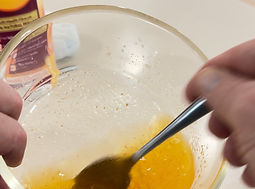
Place a bowl on a flat surface.
Cover top with tught cling wrap
Sprinkle a generous handful of coloured cake sprinkles into the bowl — enough to cover the base loosely. Spread them out so you can see individual sprinkles across the whole surface.
PREDICT
OBSERVE
EVIDENCE
ASK
SAFETY
TIP
PREDICT
Gather your materials and get
ready for an amazing mission!
2
Make your prediction
Before you play any sound — predict.
Will the sprinkles move when you turn on music? Will they move more with quiet music or loud music?
PREDICT
OBSERVE
EVIDENCE
ASK
SAFETY
TIP
PREDICT
Gather your materials and get
ready for an amazing mission!
3
Play the music
Place a Bluetooth speaker on the table next to the bowl — or hold a phone speaker close to the side of the bowl.
Play a song with a strong bass beat at medium volume.
Watch what the sprinkles do the moment the music starts.
PREDICT
OBSERVE
EVIDENCE
ASK
SAFETY
TIP
PREDICT
Gather your materials and get
ready for an amazing mission!
4
Test the volume
Turn the volume down to the lowest setting where the music is still audible. Watch the sprinkles.
Then gradually increase the volume to as loud as is comfortable.
Describe how the sprinkles' movement changes as the volume increases.
PREDICT
OBSERVE
EVIDENCE
ASK
SAFETY
TIP
PREDICT
Gather your materials and get
ready for an amazing mission!
5
Test the frequency
Search for a bass tone or a low hum online, or find a song that is heavy on bass.
Play it near the bowl.
Then switch to a high-pitched tone or a song that is mostly treble — thin and sharp.
Watch whether the sprinkles respond differently to each.
PREDICT
OBSERVE
EVIDENCE
ASK
SAFETY
TIP
PREDICT
Gather your materials and get
ready for an amazing mission!
6
Change the dancers
Tip out the sprinkles and try the same experiment with a different material in the bowl — table salt, uncooked rice, or sugar.
Does each one move differently? Which material dances the best?
PREDICT
OBSERVE
EVIDENCE
ASK
SAFETY
TIP
PREDICT
Gather your materials and get
ready for an amazing mission!
1
Big Title
Gather your materials and get
ready for an amazing mission!
PREDICT
OBSERVE
EVIDENCE
ASK
SAFETY
TIP
PREDICT
Gather your materials and get
ready for an amazing mission!
1
Big Title
Gather your materials and get
ready for an amazing mission!
PREDICT
OBSERVE
EVIDENCE
ASK
SAFETY
TIP
PREDICT
Gather your materials and get
ready for an amazing mission!
1
Big Title
Gather your materials and get
ready for an amazing mission!
PREDICT
OBSERVE
EVIDENCE
ASK
SAFETY
TIP
PREDICT
1
Prepare your dancefloor
Gather your materials and get
ready for an amazing mission!
PREDICT
OBSERVE
EVIDENCE
ASK
SAFETY
TIP
PREDICT
1
Prepare your dancefloor
Gather your materials and get
ready for an amazing mission!
PREDICT
OBSERVE
EVIDENCE
ASK
SAFETY
TIP
PREDICT
1
Big Title
Gather your materials and get
ready for an amazing mission!
PREDICT
OBSERVE
EVIDENCE
ASK
SAFETY
TIP
PREDICT
The Crazy Scientist LAB Learning System™
Every experiment follows The Crazy Scientist Lab Learning System™ — a simple way to help kids think like real scientists.
We
-
LINK to what they already know,
-
ACTIVATE curiosity through hands-on discovery
-
BUILD understanding that actually sticks.

Have you ever stood near a big speaker at a concert, or felt the bass from music in a car? You can feel that vibration in your chest, your feet, even your teeth.
Think about that feeling — the bass you can feel as well as hear. What is actually happening to your body when you feel it? Is something moving?
Now look at the sprinkles in the bowl. Sound is travelling through the air from the speaker to the bowl. Before you turn on a single note — predict: do you think the sound waves will have enough energy to physically move the sprinkles? And if so, will a deep bass beat move them more than a high-pitched sound, or less?

You have watched the sprinkles respond to sound at different volumes and frequencies.
Think back to the moment you first turned up the music. Describe exactly what you saw — how did the sprinkles move? Was it a smooth drift, a jump, a shake?
Now recall the difference between the loud setting and the quiet setting. What changed about the sprinkles' movement as the volume increased? What does that tell you about how much energy was in each wave?
When you tested the bass versus the high-pitched sound, which produced more movement? What does that suggest about the difference between a low-frequency wave and a high-frequency wave?

Sound carries enough energy to physically move objects — every surface it reaches vibrates in response.
A speaker works by converting electrical signals into vibration — a cone moves back and forth rapidly to push air and create sound waves. If you put sprinkles on the front of a speaker cone, what would you expect to happen — and why?
"Want the full teacher guide? The Crazy Scientist Lab includes classroom delivery tips, how to manage the WOW moment, differentiation for Stage 2 & 3, — ready to teach tomorrow."
Think Like a Scientist
Scientists don't stop after their first discovery.
They ask new questions, collect more evidence and test their ideas in different ways.
Where could you take this investigation next?
Does the volume of the sound change how much the sprinkles move?
Does the frequency of the sound make a difference to how much the sprinkles dance?

Dr Puddledrip’s Science Tip
Read the Science
Sound is a pressure wave. When something vibrates — a speaker cone, a vocal cord, a drum skin — it pushes and pulls the air molecules around it in a repeating pattern of compressions and expansions. That pattern travels outward through the air in all directions as a wave.
When that wave reaches the bowl, it doesn't just pass through — it transfers its energy into the bowl itself, causing the bowl to vibrate at the same frequency as the incoming sound. This is called mechanical coupling: the bowl becomes a secondary vibrating surface, driven by the energy arriving in the wave.
The sprinkles on the bowl's surface feel those vibrations as a series of tiny physical pushes. Each push from the bowl flicks the sprinkles upward; gravity brings them back; the next push launches them again. The result looks like dancing, but it is simply Newton's first and second laws playing out at very small scales — a force applied to a mass produces acceleration, and at high frequency, that acceleration makes the sprinkles appear to dance continuously.
Volume controls the amplitude of the wave — a louder sound pushes harder, creating larger bowl vibrations and more dramatic sprinkle movement. Frequency controls how many times per second the bowl is pushed. Deep bass frequencies (20–200 Hz) move the bowl with large displacements at a slower rate, which the sprinkles can visibly follow. Very high frequencies vibrate the bowl much faster but with smaller displacement — the movement is real but harder to see with the naked eye.
Teachers & Homeschoolers: Print-ready HD versions of this Science Behind It poster and companion G&T Challenge Card are available inside The Crazy Scientist LAB.
Scientist's Challenge
Designed for HPGE, gifted learners and children who enjoy an extra challenge.

Teachers & Homeschoolers: Print-ready HD versions of this Science Behind It poster and companion G&T Challenge Card are available inside The Crazy Scientist LAB.
The Next Question...
You've solved today's mystery. Now discover where curiosity can take you next.
Teachers & Homeschoolers: Print-ready HD versions of this Science Behind It poster and companion G&T Challenge Card are available inside The Crazy Scientist LAB.
Vocabulary
Vibration — A quick back-and-forth movement.
Sound — Energy produced by vibrations that travels through a material.
Frequency — How many vibrations happen in a certain amount of time.
Know a parent or teacher who'd love this? Send it on! 👇
Keep Exploring This Mystery
One experiment leads to even more amazing discoveries inside the Learning Universe.
Curiosity Files
BIG Questions & Discovery
Illustrated Facts
Explore • Discover
Road Trip Science
Discover science everywhere
The Teacher's Cauldron
Think. Experiment. Inspire
Books
Read • Explore
Videos
Watch & Learn
LAB Resources
Premium learning resources


- Coming Mid 2027
Can a Shark Feel You Moving Before It Sees You?
- Coming Mid 2027
How Can a Spider Feel an Insect Touch Its Web?
- Coming Mid 2027
Why Do Sprinkles Suddenly Come Alive?
Ready for Your Next Discovery?


READY TO TEACH THIS
TOMORROW?

Running the experiment is easy; however, teaching it well is another challenge.
Teachers often ask:
How do I adapt this for Stages 1,2 or 3?
What misconceptions will they have?
What syllabus outcomes does it cover?
What do I do with fast finishers?
How do I structure this for a full class?
What do I say when they ask WHY?
BUILD AROUND THE LAB LEARNING SYSTEM™
Every resource is designed using our teaching framework.

Inside The Crazy Scientist LAB
Everything you need to confidently teach science tomorrow.


Opening early 2027. Join the Founding Member Waitlist
More Ways to Explore The Crazy Scientist World
Discover more hands-on science fun, programs and resources for every curious mind.


