


Professor Picklebottom
Sick Shampoo Slime
No glue. No borax. Just shampoo, toilet paper… and one very suspicious slime.
Professor Picklebottom has been poking, pulling and squishing it — all in the name of science, of course!
But he’s discovered a mystery.
Does cold change how slime behaves? And will a different shampoo make a completely different slime?
Your mission is to make your slime, change ONE thing at a time, and put each batch through the same tests.
Make a prediction. Squish some slime. Gather your evidence.
Can you help Professor Picklebottom discover what makes the best Sick Shampoo Slime?

Ages
5-12 yrs
Duration
min
120
Difficulty
Easy
Stage
Stage 2-3
Cite this resource
Created by Darin Carr (BSc, DipEd)
NESA Accredited Teacher · Chemistry & Physics Specialist · 30+ years in-class teaching
Resource Version: 1.0
First Published:
Last Updated:
5 Apr 2026
10 Aug 2026

MISSION VERIFIED
Classroom tested. Teacher designed. Safe at home.

Designed by Darin Carr (BScDip Ed)
Practising NESA accredited
Australian Science Teacher
★ 30+ years of classroom experience
MISSION PROGRESS
26
young scientists have completed this mission.
I'VE COMPLETED THIS MISSION
Click to let us know you have completed this mission
LATEST TEACHER FEEDBACK
No feedback yet for this experiment. Use it with your class and let us know how it went!

Before you investigate... watch the mystery
MISSION HOOK
Professor Picklebottom and the team are travelling and collecting amazing science mysteries.
✔ Coming in Term 1 2027

KEEP EXPLORING
Curiosity Files
BIG Questions & Discovery
Illustrated Facts
Explore • Discover
Road Trip Science
Discover science everywhere
The Teacher's Cauldron
Think. Experiment. Inspire
Books
Read • Explore
Videos
Watch & Learn
LAB Resources
Premium learning resources

Mission Equipment
Gather your materials and get
ready for an amazing mission!
100mL shampoo
4 sheets of toilet paper — standard 2-ply
A mixing bowl
A spoon
Food colouring — optional; add to shampoo before mixing
A refrigerator
For Variable 2: 2–3 different shampoo brands
The ingredient label from each shampoo bottle — or a photo of it


Let’s Investigate
Follow the missions steps below to solve the mystery.
1
Mix the shampoo
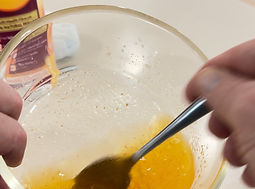
Measure 100mL of shampoo into your mixing bowl. Add food colouring now if using.
Stir vigorously for 1 to 2 minutes — you want to aerate the shampoo so it becomes slightly lighter and fluffier.
PREDICT
OBSERVE
EVIDENCE
ASK
SAFETY
TIP
PREDICT
Gather your materials and get
ready for an amazing mission!
2
Add the toilet paper
Tear 4 sheets of toilet paper into small pieces and add them gradually to the shampoo.
Stir as you go until the paper is fully incorporated and no dry pieces remain.
The mixture will look lumpy and uneven at first — keep mixing until it becomes more uniform. Describe the texture now: does it already feel like slime, or is it too wet and loose?
PREDICT
OBSERVE
EVIDENCE
ASK
SAFETY
TIP
PREDICT
Gather your materials and get
ready for an amazing mission!
3
The fridge test
Divide your mixture into two equal portions. Place both in sealed containers or cover them with cling wrap.
Put one portion in the fridge and leave the other on the bench at room temperature.
Note the time. Leave both for 2 hours — do not mix or disturb them during this time.
While you wait, record a prediction: will the fridge version be stretchier, firmer, or the same as the room temperature version?
PREDICT
OBSERVE
EVIDENCE
ASK
SAFETY
TIP
PREDICT
Gather your materials and get
ready for an amazing mission!
4
Testing slimes
After 2 hours, take the fridge portion out and let it sit for 2 minutes. Then mix both portions vigorously for 1 minute.
Now run the same three tests on each:
the stretch test (pull slowly between both hands — how far does it go before breaking?),
the pressure test (press slowly then press quickly — does it behave differently?), and the
bubble test (look closely at the surface — can you see bubbles, or is the structure smooth and continuous?).
Record your observations for both versions side by side.
PREDICT
OBSERVE
EVIDENCE
ASK
SAFETY
TIP
PREDICT
Gather your materials and get
ready for an amazing mission!
5
Change the Shampoo
Now repeat Steps 1 to 5 using a different shampoo brand. Read that label first — does it contain carbomer?
Where does it appear in the list compared to your first shampoo?
Run exactly the same method and the same three tests. Compare the results
PREDICT
OBSERVE
EVIDENCE
ASK
SAFETY
TIP
PREDICT
Gather your materials and get
ready for an amazing mission!
6
Solve the Mystery
Based on both variables — fridge vs no fridge, and shampoo A vs shampoo B — write a single sentence that summarises what actually controls the result.
My evidence suggests that __________ because __________.
PREDICT
OBSERVE
EVIDENCE
ASK
SAFETY
TIP
PREDICT
Gather your materials and get
ready for an amazing mission!
1
Big Title
Gather your materials and get
ready for an amazing mission!
PREDICT
OBSERVE
EVIDENCE
ASK
SAFETY
TIP
PREDICT
Gather your materials and get
ready for an amazing mission!
1
Big Title
Gather your materials and get
ready for an amazing mission!
PREDICT
OBSERVE
EVIDENCE
ASK
SAFETY
TIP
PREDICT
Gather your materials and get
ready for an amazing mission!
1
Big Title
Gather your materials and get
ready for an amazing mission!
PREDICT
OBSERVE
EVIDENCE
ASK
SAFETY
TIP
PREDICT
1
Mix the shampoo
Gather your materials and get
ready for an amazing mission!
PREDICT
OBSERVE
EVIDENCE
ASK
SAFETY
TIP
PREDICT
1
Mix the shampoo
Gather your materials and get
ready for an amazing mission!
PREDICT
OBSERVE
EVIDENCE
ASK
SAFETY
TIP
PREDICT
1
Big Title
Gather your materials and get
ready for an amazing mission!
PREDICT
OBSERVE
EVIDENCE
ASK
SAFETY
TIP
PREDICT
The Crazy Scientist LAB Learning System™
Every experiment follows The Crazy Scientist Lab Learning System™ — a simple way to help kids think like real scientists.
We
-
LINK to what they already know,
-
ACTIVATE curiosity through hands-on discovery
-
BUILD understanding that actually sticks.

Have you ever poured shampoo and noticed how slowly it flows?
Or squeezed it through your fingers?
Some liquids are thick.
Some are runny.
Some can even stretch!
Today, you'll investigate what happens when ordinary shampoo is transformed into slime.

Which shampoo produced the better result — and where did carbomer appear in its ingredient list compared to the other brand?
The fridge version and the room temperature version had the same ingredients, the same method, and the same waiting time. If one was better, what did the cold actually do to the polymer network?
Toilet paper is made of cellulose — the same class of molecule as psyllium husk. But cellulose from toilet paper is not cross-linked the way PVA slime is. What does that mean for how the slime holds together — and why might it feel different from PVA slime even if it stretches?
If you were going to write a better version of this recipe for someone who had never made it before, what would you add to the instructions that most online versions leave out?

Carbomer is used in face creams, sunscreens, hand sanitisers, and hair gels — anywhere a product needs to be thick and smooth without feeling greasy. What property of carbomer makes it useful across all of those products — and is it the same property that made your slime stretchy?
Ingredient lists on cosmetic products are required by law to list ingredients from highest to lowest concentration. If carbomer appears near the bottom, it is present in a very small amount.
Does a smaller amount of carbomer always mean a worse slime — or could other ingredients also contribute? How would you design a test to find out?
The cellulose from toilet paper forms hydrogen bonds when wet, which helps the mixture hold together. Psyllium husk is also a cellulose-based polysaccharide that holds water. If you replaced the toilet paper with psyllium husk powder, what do you predict would happen — and what would you need to test to find out?
"Want the full teacher guide? The Crazy Scientist Lab includes classroom delivery tips, how to manage the WOW moment, differentiation for Stage 2 & 3, — ready to teach tomorrow."
Think Like a Scientist
Scientists don't stop after their first discovery.
They ask new questions, collect more evidence and test their ideas in different ways.
Where could you take this investigation next?
Does refrigerating the mixture change the result — does the fridge version produce a firmer, stretchier slime than one left at room temperature for the same time, or does temperature make no measurable difference?
Does the shampoo brand change the result — does a shampoo with carbomer on the ingredient list produce a better slime than one without it, and can the ingredient list predict the outcome before you test?

Dr Puddledrip’s Science Tip

Read the Science
Why does it turn into slime?
Shampoo might look like a simple liquid, but it is actually a mixture of several ingredients designed to make it thick, smooth and easy to spread.
When you add tiny pieces of toilet paper, they soak up some of the liquid and mix throughout the shampoo.
This makes the mixture thicker and changes the way it moves.
Add enough toilet paper and your runny shampoo starts behaving much more like slime!
Why do different shampoos give different results?
Not all shampoos are made the same way.
Some are thick and creamy. Others are much runnier. They also contain different ingredients in different amounts.
That means one shampoo might make a fantastic stretchy slime, while another might make something sticky, lumpy or hardly slime-like at all!
That's why comparing two shampoos is important.
Changing the shampoo can change the result.
What did the fridge do?
Cooling materials can sometimes change the way they behave.
In your investigation, you put one sample in the fridge while leaving the other at room temperature.
Everything else stayed the same.
That meant you could investigate one question:
Does changing the temperature change the slime?
Comparing the two samples gave you evidence to help answer it.
Think Like a Scientist
You didn't just make slime — you carried out an investigation.
You changed one thing at a time, made predictions, tested your slime and compared what happened.
Scientists do exactly the same thing when they investigate new materials.
Change one thing. Test it. Compare the results. Look for evidence.
Try next
Compare the plant-fibre stretch to a slime made entirely from natural plant gel → [Snail Slime]
Explore a slime made by linking molecules together with a chemical activator → [The Polymer Factory]
Teachers & Homeschoolers: Print-ready HD versions of this Science Behind It poster and companion G&T Challenge Card are available inside The Crazy Scientist LAB.
Scientist's Challenge
Designed for HPGE, gifted learners and children who enjoy an extra challenge.

Teachers & Homeschoolers: Print-ready HD versions of this Science Behind It poster and companion G&T Challenge Card are available inside The Crazy Scientist LAB.
The Next Question...
You've solved today's mystery. Now discover where curiosity can take you next.

Teachers & Homeschoolers: Print-ready HD versions of this Science Behind It poster and companion G&T Challenge Card are available inside The Crazy Scientist LAB.
Vocabulary
Polymer
A very long molecule formed by linking thousands of identical smaller units in a chain. Examples include carbomer, cellulose, nylon, and rubber.
Carbomer
A thickening ingredient found in many shampoos, creams, and gels. It forms long, springy molecules that create a smooth, stretchy gel when mixed with water.
Want more science words?
LAB members unlock complete vocabulary packs, student-friendly glossaries and classroom discussion prompts.
Know a parent or teacher who'd love this? Send it on! 👇
Keep Exploring This Mystery
One experiment leads to even more amazing discoveries inside the Learning Universe.
Curiosity Files
BIG Questions & Discovery
Illustrated Facts
Explore • Discover
Road Trip Science
Discover science everywhere
The Teacher's Cauldron
Think. Experiment. Inspire
Books
Read • Explore
Videos
Watch & Learn
LAB Resources
Premium learning resources


- Coming Early 2027
Don't Let the Wow Moment End the Lesson

- Coming Early 2027
Would Shampoo Still Pour From a Bottle in Space?
- Coming Early 2027
Would a T-Rex be able to run on a pool of Oobleck?
Ready for Your Next Discovery?


READY TO TEACH THIS
TOMORROW?

Running the experiment is easy; however, teaching it well is another challenge.
Teachers often ask:
How do I adapt this for Stages 1,2 or 3?
What misconceptions will they have?
What syllabus outcomes does it cover?
What do I do with fast finishers?
How do I structure this for a full class?
What do I say when they ask WHY?
BUILD AROUND THE LAB LEARNING SYSTEM™
Every resource is designed using our teaching framework.

Inside The Crazy Scientist LAB
Everything you need to confidently teach science tomorrow.


Opening early 2027. Join the Founding Member Waitlist
More Ways to Explore The Crazy Scientist World
Discover more hands-on science fun, programs and resources for every curious mind.


