


Alex
Monster Blasters
Build a monster. Give it a brain. Then make it fire that brain at you. This is not just a launcher -- it's a physics machine hiding inside a toilet roll.

Ages
5-12 yrs
Duration
min
10
Difficulty
Easy
Stage
Stage 1-3
Cite this resource
Created by Darin Carr (BSc, DipEd)
NESA Accredited Teacher · Chemistry & Physics Specialist · 30+ years in-class teaching
Resource Version: 1.0
First Published:
Last Updated:
16 Feb 2026
21 Aug 2026

MISSION VERIFIED
Classroom tested. Teacher designed. Safe at home.

Designed by Darin Carr (BScDip Ed)
Practising NESA accredited
Australian Science Teacher
★ 30+ years of classroom experience
MISSION PROGRESS
84
young scientists have completed this mission.
I'VE COMPLETED THIS MISSION
Click to let us know you have completed this mission
LATEST TEACHER FEEDBACK
No feedback yet for this experiment. Use it with your class and let us know how it went!

Before you investigate... watch the mystery
MISSION HOOK
Professor Picklebottom and the team are travelling and collecting amazing science mysteries.
✔ Coming in Term 1 2027

KEEP EXPLORING
Curiosity Files
BIG Questions & Discovery
Illustrated Facts
Explore • Discover
Road Trip Science
Discover science everywhere
The Teacher's Cauldron
Think. Experiment. Inspire
Books
Read • Explore
Videos
Watch & Learn
LAB Resources
Premium learning resources
Mission Equipment
Gather your materials and get
ready for an amazing mission!
Empty toilet roll tube (one per monster)
Balloon (one per monster)
Scissors (adult use)
Pom poms -- these are the brains! Different sizes work great for testing
Googly eyes and markers to decorate your monster
Tape or rubber bands (optional -- to secure the balloon)
Tape measure or ruler for measuring brain-firing distance


Let’s Investigate
Follow the missions steps below to solve the mystery.
1
Build Your Monster

Decorate your toilet roll tube with googly eyes and markers. This is your monster -- give it a face, a name, a personality. The more terrifying the better.
PREDICT
OBSERVE
EVIDENCE
ASK
SAFETY
TIP
PREDICT
Gather your materials and get
ready for an amazing mission!
2
Attach the Brain Launcher

Cut the tip off a balloon (just the very end -- not too much).
Stretch the balloon opening over one end of the tube as far as it will go.
It should be tight and secure.
PREDICT
OBSERVE
EVIDENCE
ASK
SAFETY
TIP
PREDICT
Gather your materials and get
ready for an amazing mission!
3
Tie knot and tape

Tie a knot at one end and then tape the balloon to the tube.
PREDICT
OBSERVE
EVIDENCE
ASK
SAFETY
TIP
PREDICT
Gather your materials and get
ready for an amazing mission!
4
Fire!

Point your monster away from faces. Pull the balloon knot back as far as you can. Count down. Let go. Watch the brain fly.
PREDICT
OBSERVE
EVIDENCE
ASK
SAFETY
TIP
PREDICT
Gather your materials and get
ready for an amazing mission!
5
Measure the Brain Splat
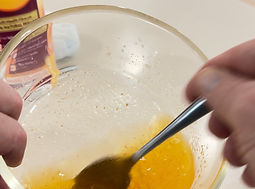
Mark where the brain lands. Measure the distance. Record it. Now fire again -- can you beat it? Try pulling back more. Try a different brain size.
PREDICT
OBSERVE
EVIDENCE
ASK
SAFETY
TIP
PREDICT
Gather your materials and get
ready for an amazing mission!
6
Challenge the Monster Next to You
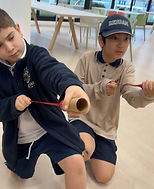
Whose monster fires its brain the furthest? Is it about the pull distance, the brain size, or the monster itself? Build a second monster and find out.
PREDICT
OBSERVE
EVIDENCE
ASK
SAFETY
TIP
PREDICT
Gather your materials and get
ready for an amazing mission!
1
Big Title
Gather your materials and get
ready for an amazing mission!
PREDICT
OBSERVE
EVIDENCE
ASK
SAFETY
TIP
PREDICT
Gather your materials and get
ready for an amazing mission!
1
Big Title
Gather your materials and get
ready for an amazing mission!
PREDICT
OBSERVE
EVIDENCE
ASK
SAFETY
TIP
PREDICT
Gather your materials and get
ready for an amazing mission!
1
Big Title
Gather your materials and get
ready for an amazing mission!
PREDICT
OBSERVE
EVIDENCE
ASK
SAFETY
TIP
PREDICT
1
Build Your Monster
Gather your materials and get
ready for an amazing mission!
PREDICT
OBSERVE
EVIDENCE
ASK
SAFETY
TIP
PREDICT
1
Build Your Monster
Gather your materials and get
ready for an amazing mission!
PREDICT
OBSERVE
EVIDENCE
ASK
SAFETY
TIP
PREDICT
1
Big Title
Gather your materials and get
ready for an amazing mission!
PREDICT
OBSERVE
EVIDENCE
ASK
SAFETY
TIP
PREDICT
The Crazy Scientist LAB Learning System™
Every experiment follows The Crazy Scientist Lab Learning System™ — a simple way to help kids think like real scientists.
We
-
LINK to what they already know,
-
ACTIVATE curiosity through hands-on discovery
-
BUILD understanding that actually sticks.

Your monster looks harmless. Floppy balloon. Cardboard tube. Googly eyes.
But the moment you pull that balloon back, something invisible happens. Energy disappears from your fingers -- and hides inside the rubber, coiled up, waiting.
Here's the question: if you pull back TWICE as far, does the brain fly twice as far?
Make your prediction. Write it down. Then fire.

Did pulling back further actually make the brain fly further? By how much?
What happened when you swapped to a heavier brain? Did the monster struggle?
What angle sent the brain the absolute furthest -- straight ahead, or slightly upward?
Could you predict where the brain would land before you fired? How close did you get?
What did you feel in your fingers right before you let go?

When you pull the balloon back, you store energy in the rubber.
When you release, that stored energy converts into movement.
One form of energy becoming another -- instantly.
Bows and arrows, slingshots, catapults, and rubber band planes all use the same trick -- can you think of any others?
If pulling back twice as far stored FOUR times the energy, why doesn't the brain fly four times as far?
What would happen to your Monster Blaster in space, where there's no air resistance to slow the brain down?
"Want the full teacher guide? The Crazy Scientist Lab includes classroom delivery tips, how to manage the WOW moment, differentiation for Stage 2 & 3, — ready to teach tomorrow."
Think Like a Scientist
Scientists don't stop after their first discovery.
They ask new questions, collect more evidence and test their ideas in different ways.
Where could you take this investigation next?
What happens if you have the string on an angle -- does firing upward at 45 degrees send the brain further than firing straight ahead?
What happens if you use a thicker balloon -- does it store more energy or less? Does it change how far the brain travels?

Dr Puddledrip’s Science Tip
Read the Science
When you pull that balloon back, you're hiding energy inside the rubber. Stretched molecules desperately want to snap back — all that wanting is stored up as elastic potential energy. You can actually feel it building in your fingers.
The moment you let go, that stored energy has nowhere to go but into the pom pom — and it converts instantly into kinetic energy, the energy of movement. One type of energy becomes another, right in your hands.
Did you notice pulling back further sent the brain flying further? More stretch means more stored energy means more speed. The balloon is an energy storage tank — and you control how full it gets.
Did you also notice that heavier brains don't fly as far? Same energy, more mass — less speed. That's Newton's Second Law doing its thing.
Your monster just demonstrated some of the most important rules in physics — with a toilet roll and a balloon.
But here's the question — if you pull back twice as far, does the brain fly twice as far?
The answer will surprise you. Find out in The Crazy Scientist Lab!
Teachers & Homeschoolers: Print-ready HD versions of this Science Behind It poster and companion G&T Challenge Card are available inside The Crazy Scientist LAB.
Scientist's Challenge
Designed for HPGE, gifted learners and children who enjoy an extra challenge.

Teachers & Homeschoolers: Print-ready HD versions of this Science Behind It poster and companion G&T Challenge Card are available inside The Crazy Scientist LAB.
The Next Question...
You've solved today's mystery. Now discover where curiosity can take you next.
Teachers & Homeschoolers: Print-ready HD versions of this Science Behind It poster and companion G&T Challenge Card are available inside The Crazy Scientist LAB.
Vocabulary
Air Pressure — The force caused by air pushing against a surface.
Force — A push or pull that can change an object’s movement.
Compression — Squeezing something into a smaller space.
Know a parent or teacher who'd love this? Send it on! 👇
Keep Exploring This Mystery
One experiment leads to even more amazing discoveries inside the Learning Universe.
Curiosity Files
BIG Questions & Discovery
Illustrated Facts
Explore • Discover
Road Trip Science
Discover science everywhere
The Teacher's Cauldron
Think. Experiment. Inspire
Books
Read • Explore
Videos
Watch & Learn
LAB Resources
Premium learning resources


- Coming Early 2027
Could This Bottle Suddenly Come Alive?
- Coming Late 2027
Can One Tiny Drop Create a Giant Foam Monster?
Ready for Your Next Discovery?


READY TO TEACH THIS
TOMORROW?

Running the experiment is easy; however, teaching it well is another challenge.
Teachers often ask:
How do I adapt this for Stages 1,2 or 3?
What misconceptions will they have?
What syllabus outcomes does it cover?
What do I do with fast finishers?
How do I structure this for a full class?
What do I say when they ask WHY?
BUILD AROUND THE LAB LEARNING SYSTEM™
Every resource is designed using our teaching framework.

Inside The Crazy Scientist LAB
Everything you need to confidently teach science tomorrow.


Opening early 2027. Join the Founding Member Waitlist
More Ways to Explore The Crazy Scientist World
Discover more hands-on science fun, programs and resources for every curious mind.


