


Alex
The Great Friction Battle
Weave two books together page by page — then try to pull them apart. Sounds easy? Now add water. What changes?

Ages
7-12 yrs
Duration
min
15
Difficulty
Easy
Stage
Stage 2-3
Cite this resource
Created by Darin Carr (BSc, DipEd)
NESA Accredited Teacher · Chemistry & Physics Specialist · 30+ years in-class teaching
Resource Version: 1.0
First Published:
Last Updated:
14 June 2026
16 Aug 2026

MISSION VERIFIED
Classroom tested. Teacher designed. Safe at home.

Designed by Darin Carr (BScDip Ed)
Practising NESA accredited
Australian Science Teacher
★ 30+ years of classroom experience
MISSION PROGRESS
43
young scientists have completed this mission.
I'VE COMPLETED THIS MISSION
Click to let us know you have completed this mission
LATEST TEACHER FEEDBACK
No feedback yet for this experiment. Use it with your class and let us know how it went!

Before you investigate... watch the mystery
MISSION HOOK
Professor Picklebottom and the team are travelling and collecting amazing science mysteries.
✔ Coming in Term 1 2027
KEEP EXPLORING
Curiosity Files
BIG Questions & Discovery
Illustrated Facts
Explore • Discover
Road Trip Science
Discover science everywhere
The Teacher's Cauldron
Think. Experiment. Inspire
Books
Read • Explore
Videos
Watch & Learn
LAB Resources
Premium learning resources

Mission Equipment
Gather your materials and get
ready for an amazing mission!
Two softcover books with as many pages as possible (old phone books, catalogues, or magazines work perfectly — the more pages, the better!)
A cup of water
Two strong volunteers!
A towel (for the wet round)


Let’s Investigate
Follow the missions steps below to solve the mystery.
1
Set up the battle
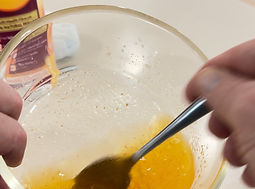
Place two similar books facing each other with the pages open.
Point the page edges towards each other.
Overlap the books slightly in the middle.Set Up the Battle
PREDICT
OBSERVE
EVIDENCE
ASK
SAFETY
TIP
PREDICT
Gather your materials and get
ready for an amazing mission!
2
Weave the pages
Alternate pages from each book: left, right, left, right.
Work from the front towards the back.
Aim for at least 50 pages from each book.
The more pages you weave, the better the challenge!
PREDICT
OBSERVE
EVIDENCE
ASK
SAFETY
TIP
PREDICT
Gather your materials and get
ready for an amazing mission!
3
The Dry Challenge
One person holds each book firmly by the spine.
Count to three and PULL!
Pull straight rather than twisting the books.
PREDICT
OBSERVE
EVIDENCE
ASK
SAFETY
TIP
PREDICT
Gather your materials and get
ready for an amazing mission!
4
The Wet Challenge
Carefully separate the books.
Rebuild the weave using the same number of pages.
Add water evenly across the interleaved area.
Wait 10–15 seconds.
PREDICT
OBSERVE
EVIDENCE
ASK
SAFETY
TIP
PREDICT
Gather your materials and get
ready for an amazing mission!
5
Pull Again!
Hold the books in exactly the same way.
Count to three and PULL!
Compare this attempt with your dry test.
PREDICT
OBSERVE
EVIDENCE
ASK
SAFETY
TIP
PREDICT
Gather your materials and get
ready for an amazing mission!
1
Big Title
Gather your materials and get
ready for an amazing mission!
PREDICT
OBSERVE
EVIDENCE
ASK
SAFETY
TIP
PREDICT
Gather your materials and get
ready for an amazing mission!
1
Big Title
Gather your materials and get
ready for an amazing mission!
PREDICT
OBSERVE
EVIDENCE
ASK
SAFETY
TIP
PREDICT
Gather your materials and get
ready for an amazing mission!
1
Big Title
Gather your materials and get
ready for an amazing mission!
PREDICT
OBSERVE
EVIDENCE
ASK
SAFETY
TIP
PREDICT
Gather your materials and get
ready for an amazing mission!
1
Big Title
Gather your materials and get
ready for an amazing mission!
PREDICT
OBSERVE
EVIDENCE
ASK
SAFETY
TIP
PREDICT
Easy or impossible?
Imagine the pages woven together.
How hard do you think the books will be to pull apart?
Do you think two books can become almost impossible to pull apart? Why?
1
Set up the battle
Gather your materials and get
ready for an amazing mission!
PREDICT
OBSERVE
EVIDENCE
ASK
SAFETY
TIP
PREDICT
Easy or impossible?
Imagine the pages woven together.
How hard do you think the books will be to pull apart?
Do you think two books can become almost impossible to pull apart? Why?
1
Set up the battle
Gather your materials and get
ready for an amazing mission!
PREDICT
OBSERVE
EVIDENCE
ASK
SAFETY
TIP
PREDICT
Easy or impossible?
Imagine the pages woven together.
How hard do you think the books will be to pull apart?
Do you think two books can become almost impossible to pull apart? Why?
1
Big Title
Gather your materials and get
ready for an amazing mission!
PREDICT
OBSERVE
EVIDENCE
ASK
SAFETY
TIP
PREDICT
Easy or impossible?
Imagine the pages woven together.
How hard do you think the books will be to pull apart?
Do you think two books can become almost impossible to pull apart? Why?
The Crazy Scientist LAB Learning System™
Every experiment follows The Crazy Scientist Lab Learning System™ — a simple way to help kids think like real scientists.
We
-
LINK to what they already know,
-
ACTIVATE curiosity through hands-on discovery
-
BUILD understanding that actually sticks.

Have you ever slipped on a wet floor? Struggled to hold something with soapy hands? Everyone knows water makes things slippery.
So here's your prediction challenge: if you weave two books together page by page — then pour water on the pages — do you think the wet pages would be EASIER or HARDER to pull apart than the dry ones?
Make your prediction. Then get ready for one of the biggest surprises in science.

No glue. No clips. Just pages — so why couldn't you pull them apart?
Friction is the force that pushes back whenever two surfaces try to slide. One page on another creates almost none. But you had hundreds of pages all touching at once.
Friction stacks. Add up hundreds of tiny forces and you need an enormous force to overcome them all.
Now the wet round.
Water reduces friction on smooth surfaces — tiles, glass, metal. But paper is made of tiny fibres. Water grips into those fibres instead of lubricating them, pulling the pages together through surface tension and capillary adhesion.
On paper, water acts like a weak glue — not a lubricant. That's why wet was harder.

You've just discovered that the same substance — water — does completely opposite things on different surfaces.
On smooth surfaces (glass, tiles, metal): water gets between the surfaces and reduces friction. Things slip.
On fibrous surfaces (paper, fabric, skin): water grips into the material and increases adhesion. Things stick.
Now apply that to a new situation: step out of the shower onto a smooth tile floor — slippery.
Step onto a bath mat — not slippery. Same wet feet. Same water. Why the difference?
"Want the full teacher guide? The Crazy Scientist Lab includes classroom delivery tips, how to manage the WOW moment, differentiation for Stage 2 & 3, — ready to teach tomorrow."
Think Like a Scientist
Scientists don't stop after their first discovery.
They ask new questions, collect more evidence and test their ideas in different ways.
Where could you take this investigation next?
What happens if you weave more pages together — do the books become harder or easier to pull apart?
What if you tried magazines with glossy pages instead of plain paper — does the surface change the result?
Dr Puddledrip’s Science Tip
Read the Science
Why are the books so hard to pull apart?
A single sheet of paper slides across another quite easily.
But when you weave two books together, something surprising happens. Every overlapping page creates another place where the surfaces rub against each other.
That rubbing force is called friction.
One pair of pages doesn't create much friction. But dozens and dozens of pages create lots of tiny friction forces at the same time.
Small forces + lots of pages = one surprisingly strong grip.
So what happens when you add water?
You might expect water to make the pages slippery.
But paper isn't a smooth surface like glass. It's made from a network of tiny fibres, and it can absorb water.
As the pages become wet, they can cling and grip together differently, making the books even harder to separate.
That's why the wet test may feel very different from the dry one.
The big science idea
This experiment shows something scientists and engineers see again and again:
Lots of small forces can combine to create a surprisingly large effect.
Curiosity Spark
What would happen if you changed the number of interwoven pages?
Would 10, 20, 50 or 100 pages take the same force to pull apart?
How could you measure it?
Want to turn this into a real force investigation—with measurements, graphs and a fair test? Continue the investigation inside The Crazy Scientist LAB.
Teachers & Homeschoolers: Print-ready HD versions of this Science Behind It poster and companion G&T Challenge Card are available inside The Crazy Scientist LAB.
Scientist's Challenge
Designed for HPGE, gifted learners and children who enjoy an extra challenge.

Teachers & Homeschoolers: Print-ready HD versions of this Science Behind It poster and companion G&T Challenge Card are available inside The Crazy Scientist LAB.
The Next Question...
You've solved today's mystery. Now discover where curiosity can take you next.

Teachers & Homeschoolers: Print-ready HD versions of this Science Behind It poster and companion G&T Challenge Card are available inside The Crazy Scientist LAB.
Vocabulary
Friction — a force that resists movement when two surfaces touch.
Surface — the outside layer of an object where it touches something else.
Grip — how strongly two surfaces resist sliding past each other.
Know a parent or teacher who'd love this? Send it on! 👇
Keep Exploring This Mystery
One experiment leads to even more amazing discoveries inside the Learning Universe.
Curiosity Files
BIG Questions & Discovery
Illustrated Facts
Explore • Discover
Road Trip Science
Discover science everywhere
The Teacher's Cauldron
Think. Experiment. Inspire
Books
Read • Explore
Videos
Watch & Learn
LAB Resources
Premium learning resources


- Coming Mid 2027
Why Is Ice So Slippery?
Ready for Your Next Discovery?


READY TO TEACH THIS
TOMORROW?

Running the experiment is easy; however, teaching it well is another challenge.
Teachers often ask:
How do I adapt this for Stages 1,2 or 3?
What misconceptions will they have?
What syllabus outcomes does it cover?
What do I do with fast finishers?
How do I structure this for a full class?
What do I say when they ask WHY?
BUILD AROUND THE LAB LEARNING SYSTEM™
Every resource is designed using our teaching framework.

Inside The Crazy Scientist LAB
Everything you need to confidently teach science tomorrow.


Opening early 2027. Join the Founding Member Waitlist
More Ways to Explore The Crazy Scientist World
Discover more hands-on science fun, programs and resources for every curious mind.


