


Professor Picklebottom
The Bone Bender
Inside every bone in your body there are two completely different materials working together. One makes bone hard. One keeps it from snapping. Take one away — and what is left behind will change the way you think about your own skeleton.

Ages
7-12 yrs
Duration
min
15
Difficulty
Easy
Stage
Stage 2-3
Cite this resource
Created by Darin Carr (BSc, DipEd)
NESA Accredited Teacher · Chemistry & Physics Specialist · 30+ years in-class teaching
Resource Version: 1.0
First Published:
Last Updated:
28 May 2026
21 Aug 2026

MISSION VERIFIED
Classroom tested. Teacher designed. Safe at home.

Designed by Darin Carr (BScDip Ed)
Practising NESA accredited
Australian Science Teacher
★ 30+ years of classroom experience
MISSION PROGRESS
5
young scientists have completed this mission.
I'VE COMPLETED THIS MISSION
Click to let us know you have completed this mission
LATEST TEACHER FEEDBACK
No feedback yet for this experiment. Use it with your class and let us know how it went!

Before you investigate... watch the mystery
MISSION HOOK
Professor Picklebottom and the team are travelling and collecting amazing science mysteries.
✔ Coming in Term 1 2027

KEEP EXPLORING
Curiosity Files
BIG Questions & Discovery
Illustrated Facts
Explore • Discover
Road Trip Science
Discover science everywhere
The Teacher's Cauldron
Think. Experiment. Inspire
Books
Read • Explore
Videos
Watch & Learn
LAB Resources
Premium learning resources

Mission Equipment
Gather your materials and get
ready for an amazing mission!
Clean chicken bones — drumstick
White vinegar
A glass jar or tall cup large enough to fully submerge the bone
Optional: lemon juice and cola — for acid comparison
Optional: a ruler or protractor — for measuring bend angle


Let’s Investigate
Follow the missions steps below to solve the mystery.
1
Prepare your bones
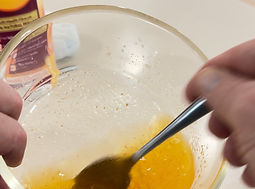
Start with clean chicken bones — a drumstick bone works well, as does a wishbone or a wing bone.
Remove all meat from the bone and rinse it thoroughly. Pat it dry.
PREDICT
OBSERVE
EVIDENCE
ASK
SAFETY
TIP
PREDICT
Gather your materials and get
ready for an amazing mission!
2
Before you start
Before you place the bone in vinegar — squeeze the tip of your nose gently between two fingers.
Bend it. Let it go.
Do the same with the top of your ear. Notice how those structures are flexible and springy, not rigid like a bone.
PREDICT
OBSERVE
EVIDENCE
ASK
SAFETY
TIP
PREDICT
Gather your materials and get
ready for an amazing mission!
3
Make your predictions
Write down your predictions before placing the bone in vinegar.
Will the bone change?
How long do you think it will take?
PREDICT
OBSERVE
EVIDENCE
ASK
SAFETY
TIP
PREDICT
Gather your materials and get
ready for an amazing mission!
4
Submerge the bones
Place the bone in a glass jar and cover it completely with white vinegar.
Make sure the entire bone is submerged.
Put a lid or cling wrap loosely over the top to contain the vinegar smell. Leave it at room temperature and do not disturb it.
PREDICT
OBSERVE
EVIDENCE
ASK
SAFETY
TIP
PREDICT
Gather your materials and get
ready for an amazing mission!
5
Observe
Check the bone once a day without removing it from the vinegar.
Look for: the bubbles on the bone's surface, any visible changes to the bone's colour or texture, and any cloudiness in the vinegar.
PREDICT
OBSERVE
EVIDENCE
ASK
SAFETY
TIP
PREDICT
Gather your materials and get
ready for an amazing mission!
6
Testing the bone
After three to five days, carefully remove the bone from the vinegar and rinse it gently with water.
Now try to bend it.
Compare it to the fresh bone you tested in Step 1.
PREDICT
OBSERVE
EVIDENCE
ASK
SAFETY
TIP
PREDICT
Gather your materials and get
ready for an amazing mission!
7
Comparing cartilage
Hold the bent bone and squeeze the tip of your nose again with your other hand.
Compare the two feelings — the soaked bone and your nose cartilage.
Now think: your nose and ears are made of cartilage, not bone. Cartilage is collagen without the calcium mineral.
PREDICT
OBSERVE
EVIDENCE
ASK
SAFETY
TIP
PREDICT
Gather your materials and get
ready for an amazing mission!
1
Big Title
Gather your materials and get
ready for an amazing mission!
PREDICT
OBSERVE
EVIDENCE
ASK
SAFETY
TIP
PREDICT
Gather your materials and get
ready for an amazing mission!
1
Big Title
Gather your materials and get
ready for an amazing mission!
PREDICT
OBSERVE
EVIDENCE
ASK
SAFETY
TIP
PREDICT
1
Prepare your bones
Gather your materials and get
ready for an amazing mission!
PREDICT
OBSERVE
EVIDENCE
ASK
SAFETY
TIP
PREDICT
1
Prepare your bones
Gather your materials and get
ready for an amazing mission!
PREDICT
OBSERVE
EVIDENCE
ASK
SAFETY
TIP
PREDICT
1
Big Title
Gather your materials and get
ready for an amazing mission!
PREDICT
OBSERVE
EVIDENCE
ASK
SAFETY
TIP
PREDICT
The Crazy Scientist LAB Learning System™
Every experiment follows The Crazy Scientist Lab Learning System™ — a simple way to help kids think like real scientists.
We
-
LINK to what they already know,
-
ACTIVATE curiosity through hands-on discovery
-
BUILD understanding that actually sticks.

You already know that bones are hard. But have you ever thought about WHY they are hard — what is actually inside the bone that makes it rigid?
Squeeze the tip of your nose. Bend it gently. Does it feel like the rest of your skeleton — your arm, your shin, your knuckles? What is different about your nose compared to your arm?
Your nose is made of cartilage, not bone. Cartilage is flexible. Bone is rigid. But they are actually made of some of the same ingredients — just in different amounts.
Predict: if bone and cartilage share some ingredients, could you ever turn a bone into something that behaves like cartilage? What would you need to remove — or add — to make that happen?

Think back to the bubbles you saw forming on the bone from day one. What were those bubbles — and what does the fact that they appeared immediately tell you about what was happening inside the bone from the very first moment it touched the vinegar?
Recall the daily changes you recorded. Did the reaction speed stay the same throughout — or did the bubbles slow down over time? What does that suggest about where the calcium was sitting inside the bone and how the acid had to work its way in?
When you squeezed the soaked bone and then your nose, what did they have in common? What has vinegar effectively turned the bone into — and what ingredient was removed to make that happen?
The bone kept its shape even after going rubbery. What does that tell you about the collagen framework — is it just filler, or is it actually doing structural work inside the bone?

Bone is a composite material — two ingredients working together. Engineers use the same principle in almost every strong structure on the planet.
Reinforced concrete combines concrete (strong under compression, brittle under tension) with steel rebar (flexible under tension).
How is that the same partnership as calcium and collagen in your bones?
What does each ingredient contribute — and what would happen to a building made of concrete alone?
"Want the full teacher guide? The Crazy Scientist Lab includes classroom delivery tips, how to manage the WOW moment, differentiation for Stage 2 & 3, — ready to teach tomorrow."
Think Like a Scientist
Scientists don't stop after their first discovery.
They ask new questions, collect more evidence and test their ideas in different ways.
Where could you take this investigation next?
Does the type of acid change how quickly the bone softens? Compare white vinegar, lemon juice, and cola — all three are acidic but at different concentrations.
Does the type or size of bone make a difference?

Dr Puddledrip’s Science Tip
Read the Science
Bone is not a single material — it is a biological composite, meaning it is built from two fundamentally different substances working together.
The first is collagen, a protein that forms long, interwoven fibres throughout the bone's structure. Collagen is tough, flexible, and resistant to being pulled apart — it gives bone tensile strength, the ability to resist snapping under a bending force. On its own, collagen is rubbery and bendy, like the cartilage in your nose and ears.
The second is calcium mineral — primarily calcium phosphate in a crystalline form called hydroxyapatite, with some calcium carbonate. This mineral is deposited throughout the collagen framework during bone development, hardening it into a rigid structure that resists compression and supports the body's weight.
Together, these two materials give bone a remarkable combination of properties: hard enough to support the body and protect organs, yet flexible enough to absorb shock without shattering. Engineers recreate this same principle in composite materials: reinforced concrete (concrete plus steel), fiberglass (glass fibres plus resin), and carbon fibre all use two materials — one rigid, one flexible — to produce something stronger than either alone.
Teachers & Homeschoolers: Print-ready HD versions of this Science Behind It poster and companion G&T Challenge Card are available inside The Crazy Scientist LAB.
Scientist's Challenge
Designed for HPGE, gifted learners and children who enjoy an extra challenge.
Teachers & Homeschoolers: Print-ready HD versions of this Science Behind It poster and companion G&T Challenge Card are available inside The Crazy Scientist LAB.
The Next Question...
You've solved today's mystery. Now discover where curiosity can take you next.
Teachers & Homeschoolers: Print-ready HD versions of this Science Behind It poster and companion G&T Challenge Card are available inside The Crazy Scientist LAB.
Vocabulary
Calcium — A mineral that helps make bones hard and strong.
Mineral — A naturally occurring substance that can give bones strength and hardness.
Flexible — Able to bend without breaking.
Know a parent or teacher who'd love this? Send it on! 👇
Keep Exploring This Mystery
One experiment leads to even more amazing discoveries inside the Learning Universe.
Curiosity Files
BIG Questions & Discovery
Illustrated Facts
Explore • Discover
Road Trip Science
Discover science everywhere
The Teacher's Cauldron
Think. Experiment. Inspire
Books
Read • Explore
Videos
Watch & Learn
LAB Resources
Premium learning resources


- Coming Late 2027
Could You Break a Bone Just by Bending It the Wrong Way?
Ready for Your Next Discovery?


READY TO TEACH THIS
TOMORROW?

Running the experiment is easy; however, teaching it well is another challenge.
Teachers often ask:
How do I adapt this for Stages 1,2 or 3?
What misconceptions will they have?
What syllabus outcomes does it cover?
What do I do with fast finishers?
How do I structure this for a full class?
What do I say when they ask WHY?
BUILD AROUND THE LAB LEARNING SYSTEM™
Every resource is designed using our teaching framework.

Inside The Crazy Scientist LAB
Everything you need to confidently teach science tomorrow.


Opening early 2027. Join the Founding Member Waitlist
More Ways to Explore The Crazy Scientist World
Discover more hands-on science fun, programs and resources for every curious mind.


