

Essy
The Colour Climb
Every tree on Earth is doing something right now that seems impossible: pulling water upward from its roots, against gravity, all the way to its highest leaves. No pump. No motor. No electricity.

Ages
5-12 yrs
Duration
min
20
Difficulty
Easy
Stage
Stage 1-3
Cite this resource
Created by Darin Carr (BSc, DipEd)
NESA Accredited Teacher · Chemistry & Physics Specialist · 30+ years in-class teaching
Resource Version: 1.0
First Published:
Last Updated:
4 May 2026
21 Aug 2026

MISSION VERIFIED
Classroom tested. Teacher designed. Safe at home.

Designed by Darin Carr (BScDip Ed)
Practising NESA accredited
Australian Science Teacher
★ 30+ years of classroom experience
MISSION PROGRESS
14
young scientists have completed this mission.
I'VE COMPLETED THIS MISSION
Click to let us know you have completed this mission
LATEST TEACHER FEEDBACK
No feedback yet for this experiment. Use it with your class and let us know how it went!

Before you investigate... watch the mystery
MISSION HOOK
Professor Picklebottom and the team are travelling and collecting amazing science mysteries.
✔ Coming in Term 1 2027
KEEP EXPLORING
Curiosity Files
BIG Questions & Discovery
Illustrated Facts
Explore • Discover
Road Trip Science
Discover science everywhere
The Teacher's Cauldron
Think. Experiment. Inspire
Books
Read • Explore
Videos
Watch & Learn
LAB Resources
Premium learning resources

Mission Equipment
Gather your materials and get
ready for an amazing mission!
Three clear cups or glasses
Water
Food colouring — one colour only
2 sheets of paper towel
A flat surface where the setup can sit undisturbed for several hours

Let’s Investigate
Follow the missions steps below to solve the mystery.
1
Cup set up
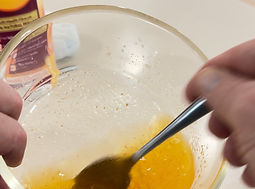
Place two clear cups side to side on a flat surface with a small gap between each, just wide enough for a folded paper towel to arch between them comfortably.
Fill one cup with water and add several drops of food colouring to it, stirring to mix.
PREDICT
OBSERVE
EVIDENCE
ASK
SAFETY
TIP
PREDICT
Gather your materials and get
ready for an amazing mission!
2
Create paper arch
Fold a sheet of paper towel lengthwise several times to make a long, narrow strip — about 2–3 cm wide
The strip needs to be long enough to dip into one cup, arch over the gap, and dip into the next cup.
PREDICT
OBSERVE
EVIDENCE
ASK
SAFETY
TIP
PREDICT
Gather your materials and get
ready for an amazing mission!
3
Predict
Before placing either paper towel bridge: look at your two cups
Write down exactly what you predict will happen once the bridges are in place.
PREDICT
OBSERVE
EVIDENCE
ASK
SAFETY
TIP
PREDICT
Gather your materials and get
ready for an amazing mission!
4
Let's begin
Place one end of the paper towel strip into the full outer cup, arch it over the gap, and place the other end into the empty cup.
PREDICT
OBSERVE
EVIDENCE
ASK
SAFETY
TIP
PREDICT
Gather your materials and get
ready for an amazing mission!
5
Observe & record
Check the experiment at 15 minutes, 30 minutes, and 1 hour.
Each time, record the water level in all cups and note how far the colour has travelled through the paper towel.
If possible, mark the water level on each cup with a marker at each check.
PREDICT
OBSERVE
EVIDENCE
ASK
SAFETY
TIP
PREDICT
Gather your materials and get
ready for an amazing mission!
6
The turning point
Once the levels have equalised, look closely at the paper towel bridges.
The colour shows exactly how far the water climbed and where it began to descend. Find the apex — the highest point of the arch.
That is where adhesion and cohesion stopped beating gravity and gravity took back over.
PREDICT
OBSERVE
EVIDENCE
ASK
SAFETY
TIP
PREDICT
Gather your materials and get
ready for an amazing mission!
1
Big Title
Gather your materials and get
ready for an amazing mission!
PREDICT
OBSERVE
EVIDENCE
ASK
SAFETY
TIP
PREDICT
Gather your materials and get
ready for an amazing mission!
1
Big Title
Gather your materials and get
ready for an amazing mission!
PREDICT
OBSERVE
EVIDENCE
ASK
SAFETY
TIP
PREDICT
Gather your materials and get
ready for an amazing mission!
1
Big Title
Gather your materials and get
ready for an amazing mission!
PREDICT
OBSERVE
EVIDENCE
ASK
SAFETY
TIP
PREDICT
1
Cup set up
Gather your materials and get
ready for an amazing mission!
PREDICT
OBSERVE
EVIDENCE
ASK
SAFETY
TIP
PREDICT
1
Cup set up
Gather your materials and get
ready for an amazing mission!
PREDICT
OBSERVE
EVIDENCE
ASK
SAFETY
TIP
PREDICT
1
Big Title
Gather your materials and get
ready for an amazing mission!
PREDICT
OBSERVE
EVIDENCE
ASK
SAFETY
TIP
PREDICT
The Crazy Scientist LAB Learning System™
Every experiment follows The Crazy Scientist Lab Learning System™ — a simple way to help kids think like real scientists.
We
-
LINK to what they already know,
-
ACTIVATE curiosity through hands-on discovery
-
BUILD understanding that actually sticks.

You already know water flows downhill. Pour it from a jug and gravity does the work — it falls. Every river, every waterfall, every raindrop works the same way. Gravity pulls water down.
But here's something to think about before you touch anything: how does a tree move water from the ground to its own leaves? A tall eucalyptus can be 60 or 70 metres high.
There's no pump inside the trunk. No electricity. No motor. Yet water moves from the roots all the way to the highest leaves — upward, against gravity — every single day.
Write down your prediction: if you set up a paper towel bridge between a full cup of coloured water and an empty cup, what do you think will happen — and why? Then set it up and wait.

The water is climbing uphill. What force do you think is pulling it upward — and what is it pulling against?
Look at the paper towel arch carefully. At what point does the water stop going up and start going down? What changes at that exact spot?
When the experiment is finished and the levels have equalised, look closely at the paper towel itself. What do you notice about where the colour has and hasn't reached?

Water just climbed uphill through a paper towel using nothing but the attraction between molecules. Now think about where that same invisible force is quietly doing the same job — at every scale from a bandage to a forest.
A coast redwood can be over 100 metres tall, and it pulls water from the soil all the way to its highest leaves every day. What do you think is inside the tree's trunk that acts like the paper towel fibres — and how narrow do those passages need to be for capillary action to work against that height of gravity?
When you put a bandage on a cut, the blood wicks into the dressing automatically — you don't have to squeeze it in. What property of the bandage fibres makes that happen, and why does it matter that the fibres are tightly packed?
"Want the full teacher guide? The Crazy Scientist Lab includes classroom delivery tips, how to manage the WOW moment, differentiation for Stage 2 & 3, — ready to teach tomorrow."
Think Like a Scientist
Scientists don't stop after their first discovery.
They ask new questions, collect more evidence and test their ideas in different ways.
Where could you take this investigation next?
Does the material make a difference — does water climb faster, higher, or further through paper towel than through a strip of fabric, cotton wool, or tissue paper?
Does the temperature of the water change the speed of the climb — does warm water travel through the paper towel faster than cold water, and what might that tell you about how the molecules are moving?
Dr Puddledrip’s Science Tip
Read the Science
Water is a polar molecule. Each water molecule has a slightly positive end and a slightly negative end — like a tiny magnet. Paper towel fibres are made of cellulose, which is also polar. Opposite electrical charges attract each other: the water molecules are pulled toward the cellulose fibres. This attraction between unlike molecules is called adhesion.
Once the first water molecules move up into the fibres, they don't go alone. Water molecules are also attracted to each other — a force called cohesion. They pull each other along in a chain, the way a string of paper clips moves when you lift the first one.
Together, adhesion and cohesion create capillary action — a climbing force strong enough to beat gravity over short distances.
But gravity doesn't disappear. As the water climbs higher, gravity pulls back harder. The apex of the paper towel arch is the turning point — the highest point the capillary force can reach before gravity wins. From there, gravity assists, and the water drips down into the empty cup.
The experiment reaches equilibrium when all three cups are at the same water level. At that point, gravity and the capillary force are exactly balanced, and flow stops.
This is not a party trick. It is the mechanism that keeps every forest on Earth alive. The xylem vessels inside a tree trunk are extraordinarily narrow tubes — far narrower than your paper towel fibres. Water molecules are pulled upward through adhesion to the vessel walls and cohesion to each other, in an unbroken chain from the soil all the way to the topmost leaves. In the world's tallest coast redwoods — over 115 metres high — that chain is working against over 11 atmospheres of gravity.
It works because the tubes are narrow enough, and the molecular forces are strong enough.
Curiosity spark: Capillary action works because the passages are narrow. What do you predict would happen if you used a wider material — like a sponge with large pores instead of paper towel with tiny fibres? Would the water climb higher, lower, or not at all?
Teachers & Homeschoolers: Print-ready HD versions of this Science Behind It poster and companion G&T Challenge Card are available inside The Crazy Scientist LAB.
Scientist's Challenge
Designed for HPGE, gifted learners and children who enjoy an extra challenge.
Teachers & Homeschoolers: Print-ready HD versions of this Science Behind It poster and companion G&T Challenge Card are available inside The Crazy Scientist LAB.
The Next Question...
You've solved today's mystery. Now discover where curiosity can take you next.
Teachers & Homeschoolers: Print-ready HD versions of this Science Behind It poster and companion G&T Challenge Card are available inside The Crazy Scientist LAB.
Vocabulary
Capillary Action — The movement of water through tiny spaces, sometimes against gravity.
Absorb — To take in a liquid.
Fibre — A tiny thread-like part of a material such as paper.
Know a parent or teacher who'd love this? Send it on! 👇
Keep Exploring This Mystery
One experiment leads to even more amazing discoveries inside the Learning Universe.
Curiosity Files
BIG Questions & Discovery
Illustrated Facts
Explore • Discover
Road Trip Science
Discover science everywhere
The Teacher's Cauldron
Think. Experiment. Inspire
Books
Read • Explore
Videos
Watch & Learn
LAB Resources
Premium learning resources


- Coming Early 2027
Why Did Ancient Romans Wipe Their Bottoms With a Sponge on a Stick?
Ready for Your Next Discovery?


READY TO TEACH THIS
TOMORROW?

Running the experiment is easy; however, teaching it well is another challenge.
Teachers often ask:
How do I adapt this for Stages 1,2 or 3?
What misconceptions will they have?
What syllabus outcomes does it cover?
What do I do with fast finishers?
How do I structure this for a full class?
What do I say when they ask WHY?
BUILD AROUND THE LAB LEARNING SYSTEM™
Every resource is designed using our teaching framework.

Inside The Crazy Scientist LAB
Everything you need to confidently teach science tomorrow.


Opening early 2027. Join the Founding Member Waitlist
More Ways to Explore The Crazy Scientist World
Discover more hands-on science fun, programs and resources for every curious mind.


