


Dr Puddledrip
The Great Crystal Race!
Dr Puddledrip was growing a crystal snowflake when she noticed something strange.
Tiny crystals quickly covered the fuzzy pipe cleaner...
But they barely grew on the smooth string holding it up.
Why did the crystals seem to "choose" one material over another?
Was it just luck...
Or do crystals have a favourite place to begin growing?
Today you'll investigate the mystery and discover which material wins The Great Crystal Race!

Ages
7-12 yrs
Duration
min
15
Difficulty
Easy
Stage
Stage 2-3
Cite this resource
Created by Darin Carr (BSc, DipEd)
NESA Accredited Teacher · Chemistry & Physics Specialist · 30+ years in-class teaching
Resource Version: 1.0
First Published:
Last Updated:
4 Aug 2026
21 Aug 2026

MISSION VERIFIED
Classroom tested. Teacher designed. Safe at home.

Designed by Darin Carr (BScDip Ed)
Practising NESA accredited
Australian Science Teacher
★ 30+ years of classroom experience
MISSION PROGRESS
young scientists have completed this mission.
I'VE COMPLETED THIS MISSION
Click to let us know you have completed this mission
LATEST TEACHER FEEDBACK
No feedback yet for this experiment. Use it with your class and let us know how it went!

Before you investigate... watch the mystery
MISSION HOOK
Professor Picklebottom and the team are travelling and collecting amazing science mysteries.
✔ Coming in Term 1 2027
KEEP EXPLORING
Curiosity Files
BIG Questions & Discovery
Illustrated Facts
Explore • Discover
Road Trip Science
Discover science everywhere
The Teacher's Cauldron
Think. Experiment. Inspire
Books
Read • Explore
Videos
Watch & Learn
LAB Resources
Premium learning resources

Mission Equipment
Gather your materials and get
ready for an amazing mission!
4 clear glass jars or cups
Epsom salts (about 4 cups total)
Warm water (about 4 cups)
Measuring cup
Spoon for stirring
Pipe cleaner
Cotton string
Wooden craft stick
Fishing line (or nylon thread)
Pencil or skewer (to suspend the materials)
Sticky labels and marker
Adult help for hot water

Let’s Investigate
Follow the missions steps below to solve the mystery.
1
Meet the Mystery
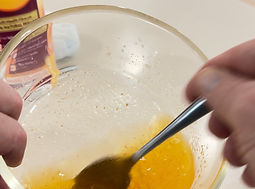
Scientists have discovered something strange.
Crystals don't always grow equally well on every material.
Today you'll test several different materials to discover which one becomes the best crystal starter (nucleation site).
Before you begin, look carefully at each material.
Which one do you think will grow the biggest crystals?
PREDICT
OBSERVE
EVIDENCE
ASK
SAFETY
TIP
PREDICT
Gather your materials and get
ready for an amazing mission!
2
Build Your Crystal Race
Fill each jar with the same amount of warm water.
Add the same amount of Epsom salts to every jar and stir until almost all the salt has dissolved.
Hang one different test material into each jar so it is completely under the water but not touching the sides or bottom.
Label every jar.
PREDICT
OBSERVE
EVIDENCE
ASK
SAFETY
TIP
PREDICT
Gather your materials and get
ready for an amazing mission!
3
Wait Like a Scientist
Place the jars somewhere they won't be disturbed.
Leave them overnight (or longer).
Scientists often have to wait patiently while nature does the work!
PREDICT
OBSERVE
EVIDENCE
ASK
SAFETY
TIP
PREDICT
Gather your materials and get
ready for an amazing mission!
4
Compare the Results
Carefully lift each material out of its jar.
Compare them side by side.
Look closely at:
How many crystals formed
How large they are
Which material has the most crystal coverage
PREDICT
OBSERVE
EVIDENCE
ASK
SAFETY
TIP
PREDICT
Gather your materials and get
ready for an amazing mission!
5
Solve the Mystery
Now think like a real scientist.
Why do you think one material worked better than another?
What made it easier for crystals to begin growing there?
Use your observations to explain your ideas.
PREDICT
OBSERVE
EVIDENCE
ASK
SAFETY
TIP
PREDICT
Gather your materials and get
ready for an amazing mission!
1
Big Title
Gather your materials and get
ready for an amazing mission!
PREDICT
OBSERVE
EVIDENCE
ASK
SAFETY
TIP
PREDICT
Gather your materials and get
ready for an amazing mission!
1
Big Title
Gather your materials and get
ready for an amazing mission!
PREDICT
OBSERVE
EVIDENCE
ASK
SAFETY
TIP
PREDICT
Gather your materials and get
ready for an amazing mission!
1
Big Title
Gather your materials and get
ready for an amazing mission!
PREDICT
OBSERVE
EVIDENCE
ASK
SAFETY
TIP
PREDICT
Gather your materials and get
ready for an amazing mission!
1
Big Title
Gather your materials and get
ready for an amazing mission!
PREDICT
OBSERVE
EVIDENCE
ASK
SAFETY
TIP
PREDICT
I predict __________ will grow the most crystals because __________________________.
1
Meet the Mystery
Gather your materials and get
ready for an amazing mission!
PREDICT
OBSERVE
EVIDENCE
ASK
SAFETY
TIP
PREDICT
I predict __________ will grow the most crystals because __________________________.
1
Meet the Mystery
Gather your materials and get
ready for an amazing mission!
PREDICT
OBSERVE
EVIDENCE
ASK
SAFETY
TIP
PREDICT
I predict __________ will grow the most crystals because __________________________.
1
Big Title
Gather your materials and get
ready for an amazing mission!
PREDICT
OBSERVE
EVIDENCE
ASK
SAFETY
TIP
PREDICT
I predict __________ will grow the most crystals because __________________________.
The Crazy Scientist LAB Learning System™
Every experiment follows The Crazy Scientist Lab Learning System™ — a simple way to help kids think like real scientists.
We
-
LINK to what they already know,
-
ACTIVATE curiosity through hands-on discovery
-
BUILD understanding that actually sticks.

Have you ever noticed that frost always seems to appear first on some parts of a window?
Or wondered why tiny crystals suddenly seem to appear out of nowhere?
Scientists know crystals don't actually appear randomly.
They always need somewhere to begin.
Today you'll investigate whether different materials make better starting places for crystals to grow.

Before anyone explained crystal growth...
You became the scientist.
You compared four different materials.
You made predictions.
You controlled your variables.
You observed carefully and collected evidence.
Now it's time to discover why one material became the crystal champion.

Every crystal needs a tiny place to begin growing.
Scientists call this nucleation.
When Epsom salts dissolve in hot water, the water can hold lots of dissolved salt.
As the solution cools, it can't keep all of that salt dissolved anymore.
The extra salt begins joining together into tiny crystals.
But crystals grow much more easily when they can attach to a surface.
Some materials give crystals lots of tiny places to grab onto.
Others are much smoother, making it harder for crystals to get started.
That's why scientists test different materials when growing crystals in laboratories—and even when developing new materials for technology and medicine.
Today you discovered that the starting surface matters just as much as the crystal itself.
"Want the full teacher guide? The Crazy Scientist Lab includes classroom delivery tips, how to manage the WOW moment, differentiation for Stage 2 & 3, — ready to teach tomorrow."
Think Like a Scientist
Scientists don't stop after their first discovery.
They ask new questions, collect more evidence and test their ideas in different ways.
Where could you take this investigation next?
What happens if you change the temperature of the crystal solution?
Does rougher or smoother material grow crystals faster?
Dr Puddledrip’s Science Tip
Read the Science
What Makes Crystals Choose Where to Grow?
You left several different materials sitting in exactly the same crystal solution.
Same water.
Same Epsom salts.
Same amount of time.
But when you looked the next day...
Some materials were covered in sparkling crystals.
Others hardly grew any at all.
So why didn't every material grow crystals equally well?
Why Did One Material Win the Crystal Race?
Your investigation showed that some materials gave crystals a better place to begin growing.
Scientists call these starting places nucleation sites.
Think of it like building a house.
It's much easier to build on strong foundations than balancing on a slippery surface.
Crystals are the same.
They need somewhere to grab onto before they can begin growing.
What's Happening Inside the Water?
When you stirred the Epsom salts into the warm water, most of the salt dissolved and seemed to disappear.
But it was still there!
As the solution slowly cooled, it couldn't hold quite as much dissolved salt anymore.
Tiny pieces of the salt began joining together.
If they found a good surface to stick to, a crystal started to grow.
Then more and more tiny pieces joined on...
Until you could finally see sparkling crystals with your own eyes.
Did You Notice This?
Not every material gives crystals the same starting point.
Some rough or fuzzy materials can make it easier for crystals to begin growing than smooth, slippery surfaces.
That's why scientists often compare different materials instead of testing just one.
Every experiment gives another clue.
Want To Explore Further?
Today you discovered that crystals need somewhere to begin growing.
But scientists still ask even bigger questions...
🔒 Why do some salts grow much bigger crystals than others?
🔒 Does warmer water always grow better crystals?
🔒 Which material creates the strongest nucleation site?
🔒 Can scientists control crystal growth to make medicines, electronics and even artificial gemstones?
Continue your investigation inside The Crazy Scientist LAB™.
Teachers & Homeschoolers: Print-ready HD versions of this Science Behind It poster and companion G&T Challenge Card are available inside The Crazy Scientist LAB.
Scientist's Challenge
Designed for HPGE, gifted learners and children who enjoy an extra challenge.

Teachers & Homeschoolers: Print-ready HD versions of this Science Behind It poster and companion G&T Challenge Card are available inside The Crazy Scientist LAB.
The Next Question...
You've solved today's mystery. Now discover where curiosity can take you next.

Teachers & Homeschoolers: Print-ready HD versions of this Science Behind It poster and companion G&T Challenge Card are available inside The Crazy Scientist LAB.
Vocabulary
Crystal — A solid whose particles are arranged in a repeating pattern.
Dissolve — When a substance mixes into a liquid to form a solution.
Evaporation — When a liquid changes into a gas.
Know a parent or teacher who'd love this? Send it on! 👇
Keep Exploring This Mystery
One experiment leads to even more amazing discoveries inside the Learning Universe.
Curiosity Files
BIG Questions & Discovery
Illustrated Facts
Explore • Discover
Road Trip Science
Discover science everywhere
The Teacher's Cauldron
Think. Experiment. Inspire
Books
Read • Explore
Videos
Watch & Learn
LAB Resources
Premium learning resources
Ready for Your Next Discovery?


READY TO TEACH THIS
TOMORROW?

Running the experiment is easy; however, teaching it well is another challenge.
Teachers often ask:
How do I adapt this for Stages 1,2 or 3?
What misconceptions will they have?
What syllabus outcomes does it cover?
What do I do with fast finishers?
How do I structure this for a full class?
What do I say when they ask WHY?
BUILD AROUND THE LAB LEARNING SYSTEM™
Every resource is designed using our teaching framework.

Inside The Crazy Scientist LAB
Everything you need to confidently teach science tomorrow.


Opening early 2027. Join the Founding Member Waitlist
More Ways to Explore The Crazy Scientist World
Discover more hands-on science fun, programs and resources for every curious mind.


