


Dr Puddledrip
The Kitchen Chemical Detective
Dr Puddledrip has a question...
Have you ever looked around your kitchen and wondered if the clear liquids hiding in bottles are really as ordinary as they seem?
Some clean your dishes.
Some make cakes rise.
Some make drinks fizzy.
They may look similar, but each one hides a different chemical secret.
Can you build a colour-changing detector and discover what's really inside?

Ages
7-12 yrs
Duration
min
30
Difficulty
Easy
Stage
Stage 2-3
Cite this resource
Created by Darin Carr (BSc, DipEd)
NESA Accredited Teacher · Chemistry & Physics Specialist · 30+ years in-class teaching
Resource Version: 1.0
First Published:
Last Updated:
7 Aug 2026
7 Aug 2026

MISSION VERIFIED
Classroom tested. Teacher designed. Safe at home.

Designed by Darin Carr (BScDip Ed)
Practising NESA accredited
Australian Science Teacher
★ 30+ years of classroom experience
MISSION PROGRESS
young scientists have completed this mission.
I'VE COMPLETED THIS MISSION
Click to let us know you have completed this mission
LATEST TEACHER FEEDBACK
No feedback yet for this experiment. Use it with your class and let us know how it went!

Before you investigate... watch the mystery
MISSION HOOK
Professor Picklebottom and the team are travelling and collecting amazing science mysteries.
✔ Coming in Term 1 2027

KEEP EXPLORING
Curiosity Files
BIG Questions & Discovery
Illustrated Facts
Explore • Discover
Road Trip Science
Discover science everywhere
The Teacher's Cauldron
Think. Experiment. Inspire
Books
Read • Explore
Videos
Watch & Learn
LAB Resources
Premium learning resources

Mission Equipment
Gather your materials and get
ready for an amazing mission!
• ¼ red cabbage
• Blender
• Warm water
• Fine strainer
• Large bowl
• 6–8 small clear cups
• Dropper or teaspoon
Mystery liquids
• Water, Lemon juice
• White vinegar, Baking soda
• Dishwashing liquid, Hand soap
• Soda water, Sparkling water


Let’s Investigate
Follow the missions steps below to solve the mystery.
1
Become a Kitchen Chemical Detective

Dr Puddledrip has discovered several mystery liquids from the kitchen.
They all look almost the same...
But are they really?
Today you'll build a colour-changing chemical detector and investigate what each liquid is hiding.
PREDICT
OBSERVE
EVIDENCE
ASK
SAFETY
TIP
PREDICT
Gather your materials and get
ready for an amazing mission!
2
Build Your Chemical Detector

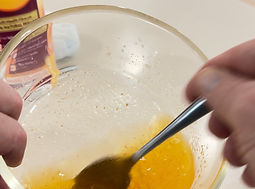
Tear a few red cabbage leaves into your blender.
Add enough warm water to cover them.
Blend until the water becomes a deep purple colour.
Pour the mixture through a strainer into a bowl.
Your detector is ready!
PREDICT
OBSERVE
EVIDENCE
ASK
SAFETY
TIP
PREDICT
Gather your materials and get
ready for an amazing mission!
3
Prepare Your Mystery Liquids

Pour about 2 tablespoons (30 mL) of each mystery liquid into a separate clear cup.
Try to use the same amount in every cup so your investigation is a fair test.
Label each cup.
Don't test them yet!
PREDICT
OBSERVE
EVIDENCE
ASK
SAFETY
TIP
PREDICT
Gather your materials and get
ready for an amazing mission!
4
Make Your Predictions

Before you test anything...
Look carefully at each mystery liquid.
Is it:
• clear?
• bubbly?
• thick?
• slippery?
• fizzy?
Use your observations to predict whether each liquid might be...
PREDICT
OBSERVE
EVIDENCE
ASK
SAFETY
TIP
PREDICT
Gather your materials and get
ready for an amazing mission!
5
Test Your First Mystery

Add 3–5 drops of cabbage indicator to your first mystery liquid.
Stir gently and watch carefully.
Watch for any colour change.
Record exactly what happens.
PREDICT
OBSERVE
EVIDENCE
ASK
SAFETY
TIP
PREDICT
Gather your materials and get
ready for an amazing mission!
6
Test the Remaining Liquids

Repeat the investigation for each mystery liquid.
Compare the colours carefully.
Some liquids may produce very similar colours.
Others may be completely different.
Record the colour for each mystery liquid before moving to the next one.
PREDICT
OBSERVE
EVIDENCE
ASK
SAFETY
TIP
PREDICT
Gather your materials and get
ready for an amazing mission!
7
Solve the Mystery

Use the colour clues from every cup.
Use the pH colur chart in the download worksheet below.
Can you group the liquids into three groups using only the colours?
Use the pH colour chart on your worksheet to check your ideas.
acids
neutral substances
alkalis
Do any of your predictions need changing?
PREDICT
OBSERVE
EVIDENCE
ASK
SAFETY
TIP
PREDICT
Gather your materials and get
ready for an amazing mission!
8
Mission Complete!

What did you discover?
Which liquid surprised you the most?
Which prediction was correct?
Which prediction changed?
Which liquids belonged to the same group?
Can you explain your evidence to someone else?
PREDICT
OBSERVE
EVIDENCE
ASK
SAFETY
TIP
PREDICT
Gather your materials and get
ready for an amazing mission!
1
Big Title
Gather your materials and get
ready for an amazing mission!
PREDICT
OBSERVE
EVIDENCE
ASK
SAFETY
TIP
PREDICT
Which liquid do you think will be the most acidic? Which do you think might be the most alkaline? Why?
1
Become a Kitchen Chemical Detective
Gather your materials and get
ready for an amazing mission!
PREDICT
OBSERVE
EVIDENCE
ASK
SAFETY
TIP
PREDICT
Which liquid do you think will be the most acidic? Which do you think might be the most alkaline? Why?
1
Become a Kitchen Chemical Detective
Gather your materials and get
ready for an amazing mission!
PREDICT
OBSERVE
EVIDENCE
ASK
SAFETY
TIP
PREDICT
Which liquid do you think will be the most acidic? Which do you think might be the most alkaline? Why?
1
Big Title
Gather your materials and get
ready for an amazing mission!
PREDICT
OBSERVE
EVIDENCE
ASK
SAFETY
TIP
PREDICT
Which liquid do you think will be the most acidic? Which do you think might be the most alkaline? Why?
The Crazy Scientist LAB Learning System™
Every experiment follows The Crazy Scientist Lab Learning System™ — a simple way to help kids think like real scientists.
We
-
LINK to what they already know,
-
ACTIVATE curiosity through hands-on discovery
-
BUILD understanding that actually sticks.

Have you ever squeezed lemon juice onto your dinner, washed your hands with soap or poured yourself a fizzy drink?
Although these everyday liquids may look almost identical, each one behaves differently because of the chemicals hidden inside.
Today you'll investigate how scientists uncover those hidden differences using a simple colour-changing detector made from red cabbage.

Before anyone explained acids or bases...
You became a chemical detective.
• You made predictions.
• You tested several mystery liquids.
• You carefully observed colour changes.
• You compared evidence.
• You searched for patterns.
Just like real scientists, you didn't rely on guessing—you collected evidence to solve the mystery.

Your cabbage juice contains natural pigments called anthocyanins.
These pigments change colour depending on the type of chemical they're mixed with.
Acidic liquids usually turn the indicator pink or red.
Neutral liquids stay purple.
Basic (alkaline) liquids often change it to blue or green.
Scientists use indicators because many liquids look exactly the same. Instead of guessing, they
collect evidence and use colour changes to identify unknown substances safely.
The most important discovery wasn't simply learning about pH—it was discovering how scientists solve problems by gathering evidence.
"Want the full teacher guide? The Crazy Scientist Lab includes classroom delivery tips, how to manage the WOW moment, differentiation for Stage 2 & 3, — ready to teach tomorrow."
Think Like a Scientist
Scientists don't stop after their first discovery.
They ask new questions, collect more evidence and test their ideas in different ways.
Where could you take this investigation next?
What happens if you test different household liquids? Which one causes the biggest colour change?
What happens if you dilute the same liquid with water before testing it? Does the colour change become weaker?

Dr Puddledrip’s Science Tip

Read the Science
Why does red cabbage change colour?
At first, your red cabbage juice looked like nothing more than purple water.
But hidden inside the cabbage are natural pigments called anthocyanins. These pigments are extremely sensitive to the chemicals dissolved in different liquids.
When you added your homemade red cabbage pH indicator to each mystery liquid, the pigments changed shape. That tiny change affected the colour of the light they reflected, causing the solution to turn pink, purple, blue or green.
This is why red cabbage is one of the best natural pH indicators you can make at home.
What do acids and bases do?
Every liquid contains different amounts of tiny particles called hydrogen ions.
Acidic liquids contain more hydrogen ions, causing the cabbage indicator to turn shades of pink or red.
Neutral liquids, like pure water, usually stay purple because there is a balance of hydrogen and hydroxide ions.
Basic (alkaline) liquids, such as baking soda solution or some soaps, contain fewer hydrogen ions and often turn the indicator blue or green.
Scientists use this colour change to estimate a liquid's pH, which tells them whether it is acidic, neutral or alkaline.
Why did your results change?
During your investigation, you tested different household liquids while keeping your testing method the same.
Each liquid contained different chemicals, so each one reacted differently with the cabbage indicator.
By comparing the colours, you weren't just watching a colour change—you were collecting evidence.
This is exactly how scientists investigate unknown substances. They test one sample at a time, compare the results and use evidence to reach a conclusion.
Curiosity Spark
Red cabbage isn't the only plant that can reveal hidden chemistry.
Some flowers, berries and even autumn leaves contain the same family of pigments called anthocyanins.
Scientists also use special indicators to monitor swimming pools, drinking water, aquariums, soil, laboratories and even medical tests.
If an ordinary cabbage can reveal so much about a liquid...
What other plants do you think could become natural science tools?
Try These Next
Magic Milk Reaction – Discover how soap changes the way milk behaves.
Mentos and Coke – Investigate why tiny lollies can create a giant fizzy eruption.
Invisible Extinguisher – Explore how invisible gases can put out a flame without touching it.
Teachers & Homeschoolers: Print-ready HD versions of this Science Behind It poster and companion G&T Challenge Card are available inside The Crazy Scientist LAB.
Scientist's Challenge
Designed for HPGE, gifted learners and children who enjoy an extra challenge.

Teachers & Homeschoolers: Print-ready HD versions of this Science Behind It poster and companion G&T Challenge Card are available inside The Crazy Scientist LAB.
The Next Question...
You've solved today's mystery. Now discover where curiosity can take you next.

Teachers & Homeschoolers: Print-ready HD versions of this Science Behind It poster and companion G&T Challenge Card are available inside The Crazy Scientist LAB.
Vocabulary
Indicator
A substance that changes colour to show information about another substance, such as whether it is an acid or a base.
pH
A scale that tells us whether a liquid is acidic, neutral or alkaline (basic).
Anthocyanin
A natural purple pigment found in red cabbage that changes colour when it is mixed with different acids and bases.
Know a parent or teacher who'd love this? Send it on! 👇
Keep Exploring This Mystery
One experiment leads to even more amazing discoveries inside the Learning Universe.
Curiosity Files
BIG Questions & Discovery
Illustrated Facts
Explore • Discover
Road Trip Science
Discover science everywhere
The Teacher's Cauldron
Think. Experiment. Inspire
Books
Read • Explore
Videos
Watch & Learn
LAB Resources
Premium learning resources
Ready for Your Next Discovery?


READY TO TEACH THIS
TOMORROW?

Running the experiment is easy; however, teaching it well is another challenge.
Teachers often ask:
How do I adapt this for Stages 1,2 or 3?
What misconceptions will they have?
What syllabus outcomes does it cover?
What do I do with fast finishers?
How do I structure this for a full class?
What do I say when they ask WHY?
BUILD AROUND THE LAB LEARNING SYSTEM™
Every resource is designed using our teaching framework.

Inside The Crazy Scientist LAB
Everything you need to confidently teach science tomorrow.


Opening early 2027. Join the Founding Member Waitlist
More Ways to Explore The Crazy Scientist World
Discover more hands-on science fun, programs and resources for every curious mind.


