


Mackey
The Lunchbox Mystery
Can you solve Mackey's Lunchbox Mystery using paper chromatography?
Someone has stolen her lunch and left behind a note written in black marker.
Discover how this fun chromatography experiment reveals the hidden colours inside ink and helps forensic scientists identify which marker wrote the note.

Ages
5-12 yrs
Duration
min
20
Difficulty
Easy
Stage
Stage 1-3
Cite this resource
Created by Darin Carr (BSc, DipEd)
NESA Accredited Teacher · Chemistry & Physics Specialist · 30+ years in-class teaching
Resource Version: 1.0
First Published:
Last Updated:
7 Aug 2026

MISSION VERIFIED
Classroom tested. Teacher designed. Safe at home.

Designed by Darin Carr (BScDip Ed)
Practising NESA accredited
Australian Science Teacher
★ 30+ years of classroom experience
MISSION PROGRESS
young scientists have completed this mission.
I'VE COMPLETED THIS MISSION
Click to let us know you have completed this mission
LATEST TEACHER FEEDBACK
No feedback yet for this experiment. Use it with your class and let us know how it went!

Before you investigate... watch the mystery
MISSION HOOK
Professor Picklebottom and the team are travelling and collecting amazing science mysteries.
✔ Coming in Term 1 2027

KEEP EXPLORING
Curiosity Files
BIG Questions & Discovery
Illustrated Facts
Explore • Discover
Road Trip Science
Discover science everywhere
The Teacher's Cauldron
Think. Experiment. Inspire
Books
Read • Explore
Videos
Watch & Learn
LAB Resources
Premium learning resources

Mission Equipment
Gather your materials and get
ready for an amazing mission!
White coffee filter paper
Small clear cup
Water
Scissors
Pencil
Ruler (optional)
3–4 different brands of black water-based markers or washable black textas


Let’s Investigate
Follow the missions steps below to solve the mystery.
1
Create the Mystery
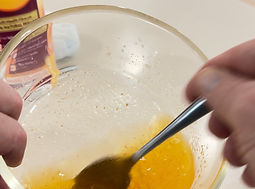
Mackey found this note inside her empty lunchbox:
"Thanks for the delicious lunch!"
Ask an adult or teacher to secretly choose one of the black markers and write the note on a coffee filter strip.
Don't tell anyone which marker was used!
Now cut three more strips from the coffee filter for the suspect markers.
PREDICT
OBSERVE
EVIDENCE
ASK
SAFETY
TIP
PREDICT
Gather your materials and get
ready for an amazing mission!
2
Test the Suspect Markers
Draw a thick black line near the bottom of each remaining strip using one suspect marker.
Label each strip:
Dr Puddledrip
Alex
Professor Picklebottom
PREDICT
OBSERVE
EVIDENCE
ASK
SAFETY
TIP
PREDICT
Gather your materials and get
ready for an amazing mission!
3
Collect the Ink Samples
Using each suspect's black water-based marker, draw a thick black line across each strip about 2 cm from the bottom.
Keep the Mystery Note strip separate.
PREDICT
OBSERVE
EVIDENCE
ASK
SAFETY
TIP
PREDICT
Gather your materials and get
ready for an amazing mission!
4
Begin the Investigation
Pour about 1 cm of water into a clear cup.
Stand one chromatography strip in the cup so only the bottom edge touches the water.
Do not let the black ink line sit in the water.
Repeat with each strip.
PREDICT
OBSERVE
EVIDENCE
ASK
SAFETY
TIP
PREDICT
Gather your materials and get
ready for an amazing mission!
5
Watch the Hidden Clues Appear
Watch carefully as the water climbs through the paper.
When the water is about 2 cm from the top, remove the strip and place it somewhere safe to dry.
Repeat with the remaining strips.
PREDICT
OBSERVE
EVIDENCE
ASK
SAFETY
TIP
PREDICT
Gather your materials and get
ready for an amazing mission!
6
Compare the Evidence
Lay all of the dry chromatography strips side by side.
Carefully compare the coloured patterns.
Scientists call these unique patterns chromatograms.
PREDICT
OBSERVE
EVIDENCE
ASK
SAFETY
TIP
PREDICT
Gather your materials and get
ready for an amazing mission!
7
Case Closed?
Present your evidence.
Did you solve Mackey's Lunchbox Mystery?
PREDICT
OBSERVE
EVIDENCE
ASK
SAFETY
TIP
PREDICT
Gather your materials and get
ready for an amazing mission!
1
Big Title
Gather your materials and get
ready for an amazing mission!
PREDICT
OBSERVE
EVIDENCE
ASK
SAFETY
TIP
PREDICT
Gather your materials and get
ready for an amazing mission!
1
Big Title
Gather your materials and get
ready for an amazing mission!
PREDICT
OBSERVE
EVIDENCE
ASK
SAFETY
TIP
PREDICT
Do you think you'll be able to work out which marker wrote the note?
Why?
1
Create the Mystery
Gather your materials and get
ready for an amazing mission!
PREDICT
OBSERVE
EVIDENCE
ASK
SAFETY
TIP
PREDICT
Do you think you'll be able to work out which marker wrote the note?
Why?
1
Create the Mystery
Gather your materials and get
ready for an amazing mission!
PREDICT
OBSERVE
EVIDENCE
ASK
SAFETY
TIP
PREDICT
Do you think you'll be able to work out which marker wrote the note?
Why?
1
Big Title
Gather your materials and get
ready for an amazing mission!
PREDICT
OBSERVE
EVIDENCE
ASK
SAFETY
TIP
PREDICT
Do you think you'll be able to work out which marker wrote the note?
Why?
The Crazy Scientist LAB Learning System™
Every experiment follows The Crazy Scientist Lab Learning System™ — a simple way to help kids think like real scientists.
We
-
LINK to what they already know,
-
ACTIVATE curiosity through hands-on discovery
-
BUILD understanding that actually sticks.

Have you ever noticed that some black pens look exactly the same?
What if I told you they might actually be made from lots of different coloured inks mixed together?
Scientists often need to discover what something is made of, even when they can't see all of its parts.
Today, you'll investigate whether black ink is really just... black.

Become a Science Detective
Can you solve Mackey's Lunchbox Mystery?
A mysterious note was left behind after someone ate Mackey's lunch.
By separating the hidden colours inside different black markers, you'll compare each marker's unique ink fingerprint to see which one matches the mystery note.
Collect evidence, compare clues and think like a real forensic scientist.

Chromatography Reveals Hidden Clues
Water moves through the coffee filter paper carrying some ink pigments with it.
Because different pigments travel at different speeds, the black ink separates into the hidden colours it was made from.
Scientists call this process paper chromatography.
The colourful pattern that appears is called a chromatogram, and it can help forensic scientists compare inks, investigate documents and solve real mysteries.
"Want the full teacher guide? The Crazy Scientist Lab includes classroom delivery tips, how to manage the WOW moment, differentiation for Stage 2 & 3, — ready to teach tomorrow."
Think Like a Scientist
Scientists don't stop after their first discovery.
They ask new questions, collect more evidence and test their ideas in different ways.
Where could you take this investigation next?
Which brand of black marker produces the most colourful chromatogram?
Which type of paper separates the hidden ink colours most clearly?
Dr Puddledrip’s Science Tip
Read the Science
What is happening?
The science behind paper chromatography
How did a simple black marker help solve Mackey's Lunchbox Mystery?
The answer is paper chromatography. Scientists use this technique to separate mixtures into their different parts. In this chromatography experiment, the black ink wasn't made from just one colour. Instead, it was a mixture of many different pigments that were hidden inside the marker all along.
When the pigments separated, they created a unique pattern that acted like an ink fingerprint
.
Why isn't black ink really black?
Although black ink looks like a single colour, it is usually made by mixing several different coloured pigments together.
Different brands of black markers often use different combinations of blue, purple, green, brown or yellow pigments. That's why two black markers can look identical on paper but produce completely different patterns during a paper chromatography experiment.
These hidden colour patterns are called chromatograms, and scientists can compare them just like fingerprints.
Why do the colours separate?
When the bottom of the coffee filter touches the water, the water begins travelling upwards through the paper. This movement is called capillary action.
As the water moves, it carries the ink pigments with it. Some pigments dissolve in the water more easily and travel further. Others stick more strongly to the paper fibres and move more slowly.
Because each pigment behaves differently, the colours gradually spread apart into separate bands, revealing the hidden colours that made up the black ink.
How do forensic scientists use chromatography?
Chromatography isn't just a classroom experiment—it is an important tool used in forensic science.
Scientists can compare inks from anonymous notes, questioned documents or altered records to see whether they were written using the same pen or marker. Chromatography is also used to identify dyes in foods, medicines, plants and environmental samples.
Although chromatography alone cannot prove who wrote a note, it provides valuable scientific evidence that can be combined with other clues during an investigation.
Teachers & Homeschoolers: Print-ready HD versions of this Science Behind It poster and companion G&T Challenge Card are available inside The Crazy Scientist LAB.
Scientist's Challenge
Designed for HPGE, gifted learners and children who enjoy an extra challenge.

Teachers & Homeschoolers: Print-ready HD versions of this Science Behind It poster and companion G&T Challenge Card are available inside The Crazy Scientist LAB.
The Next Question...
You've solved today's mystery. Now discover where curiosity can take you next.

Teachers & Homeschoolers: Print-ready HD versions of this Science Behind It poster and companion G&T Challenge Card are available inside The Crazy Scientist LAB.
Vocabulary
Chromatography
A scientific method used to separate a mixture into its different parts. In this experiment, chromatography separates the hidden colours inside black ink.
Pigment
A coloured substance that gives something its colour. Black marker ink is made from several different coloured pigments mixed together.
Chromatogram
The unique pattern of separated colours left behind after chromatography. Scientists compare chromatograms like fingerprints to help identify different inks.
Know a parent or teacher who'd love this? Send it on! 👇
Keep Exploring This Mystery
One experiment leads to even more amazing discoveries inside the Learning Universe.
Curiosity Files
BIG Questions & Discovery
Illustrated Facts
Explore • Discover
Road Trip Science
Discover science everywhere
The Teacher's Cauldron
Think. Experiment. Inspire
Books
Read • Explore
Videos
Watch & Learn
LAB Resources
Premium learning resources
Ready for Your Next Discovery?


READY TO TEACH THIS
TOMORROW?

Running the experiment is easy; however, teaching it well is another challenge.
Teachers often ask:
How do I adapt this for Stages 1,2 or 3?
What misconceptions will they have?
What syllabus outcomes does it cover?
What do I do with fast finishers?
How do I structure this for a full class?
What do I say when they ask WHY?
BUILD AROUND THE LAB LEARNING SYSTEM™
Every resource is designed using our teaching framework.

Inside The Crazy Scientist LAB
Everything you need to confidently teach science tomorrow.


Opening early 2027. Join the Founding Member Waitlist
More Ways to Explore The Crazy Scientist World
Discover more hands-on science fun, programs and resources for every curious mind.


