


Professor Picklebottom
The Orange Assassin
An orange. A balloon. A pipette. Something is hidden inside the peel — and when it meets the latex, things get interesting. Extract it, apply it one drop at a time, and watch what the chemistry does.

Ages
7-12 yrs
Duration
min
15
Difficulty
Easy
Stage
Stage 2-3
Cite this resource
Created by Darin Carr (BSc, DipEd)
NESA Accredited Teacher · Chemistry & Physics Specialist · 30+ years in-class teaching
Resource Version: 1.0
First Published:
Last Updated:
14 Aug 2025
31 July 2026

MISSION VERIFIED
Classroom tested. Teacher designed. Safe at home.

Designed by Darin Carr (BScDip Ed)
Practising NESA accredited
Australian Science Teacher
★ 30+ years of classroom experience
MISSION PROGRESS
28
young scientists have completed this mission.
I'VE COMPLETED THIS MISSION
Click to let us know you have completed this mission
LATEST TEACHER FEEDBACK
No feedback yet for this experiment. Use it with your class and let us know how it went!

Before you investigate... watch the mystery
MISSION HOOK
Professor Picklebottom and the team are travelling and collecting amazing science mysteries.
✔ Coming in Term 1 2027

KEEP EXPLORING
Curiosity Files
BIG Questions & Discovery
Illustrated Facts
Explore • Discover
Road Trip Science
Discover science everywhere
The Teacher's Cauldron
Think. Experiment. Inspire
Books
Read • Explore
Videos
Watch & Learn
LAB Resources
Premium learning resources

Mission Equipment
Gather your materials and get
ready for an amazing mission!
latex balloons
Oranges
A small bowl or spoon
A pipette or dropper
A knife to cut the peel — adult use
Optional: a piece of string to measure balloon circumference before and between tests
Safety note: hold the balloon away from your face at all times — the burst is sudden


Let’s Investigate
Follow the missions steps below to solve the mystery.
1
Inflates balloons
Inflate your balloon to roughly the size of a grapefruit — not too large, not too small.
Tie it off. If you have a piece of string, measure its circumference and record it.
PREDICT
OBSERVE
EVIDENCE
ASK
SAFETY
TIP
PREDICT
Gather your materials and get
ready for an amazing mission!
2
Collect your weapon
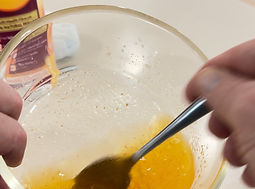
Ask an adult to cut a piece of orange peel roughly the size of your thumb, orange side out.
Hold it over a small bowl or spoon — orange side facing down. Squeeze the peel firmly between your fingers.
A fine mist of oil should spray out.
You may be able to smell it immediately. Keep squeezing until you have a visible pool of oil in the bowl — even a few drops is enough to begin.
PREDICT
OBSERVE
EVIDENCE
ASK
SAFETY
TIP
PREDICT
Gather your materials and get
ready for an amazing mission!
3
Make your prediction
Look at your balloon and your dish of orange oil. Before you apply a single drop — what do you think will happen?
Write your prediction down: will anything change on the surface of the balloon? Will it happen straight away, or will it take a while?
PREDICT
OBSERVE
EVIDENCE
ASK
SAFETY
TIP
PREDICT
Gather your materials and get
ready for an amazing mission!
4
One drop at a time
Using a pipette or the very tip of a spoon, place ONE drop of orange oil on the surface of the balloon.
Hold the balloon away from your face.
Observe carefully
PREDICT
OBSERVE
EVIDENCE
ASK
SAFETY
TIP
PREDICT
Gather your materials and get
ready for an amazing mission!
5
Add more drops
Continue adding drops, one at a time.
After each drop, observe the surface and record what you see. Keep your running count.
Keep balloon at arms length away from your face.
PREDICT
OBSERVE
EVIDENCE
ASK
SAFETY
TIP
PREDICT
Gather your materials and get
ready for an amazing mission!
6
Citrus Challenge
Inflate a fresh balloon to exactly the same size as the first. Repeat the experiment using a different citrus fruit — lemon, lime, or grapefruit.
Collect the oil the same way. Apply drops the same way. Count again.
PREDICT
OBSERVE
EVIDENCE
ASK
SAFETY
TIP
PREDICT
Gather your materials and get
ready for an amazing mission!
1
Big Title
Gather your materials and get
ready for an amazing mission!
PREDICT
OBSERVE
EVIDENCE
ASK
SAFETY
TIP
PREDICT
Gather your materials and get
ready for an amazing mission!
1
Big Title
Gather your materials and get
ready for an amazing mission!
PREDICT
OBSERVE
EVIDENCE
ASK
SAFETY
TIP
PREDICT
Gather your materials and get
ready for an amazing mission!
1
Big Title
Gather your materials and get
ready for an amazing mission!
PREDICT
OBSERVE
EVIDENCE
ASK
SAFETY
TIP
PREDICT
1
Inflates balloons
Gather your materials and get
ready for an amazing mission!
PREDICT
OBSERVE
EVIDENCE
ASK
SAFETY
TIP
PREDICT
1
Inflates balloons
Gather your materials and get
ready for an amazing mission!
PREDICT
OBSERVE
EVIDENCE
ASK
SAFETY
TIP
PREDICT
1
Big Title
Gather your materials and get
ready for an amazing mission!
PREDICT
OBSERVE
EVIDENCE
ASK
SAFETY
TIP
PREDICT
The Crazy Scientist LAB Learning System™
Every experiment follows The Crazy Scientist Lab Learning System™ — a simple way to help kids think like real scientists.
We
-
LINK to what they already know,
-
ACTIVATE curiosity through hands-on discovery
-
BUILD understanding that actually sticks.

Salt dissolves in water. Oil does not. Food colouring dissolves in water. Wax does not.
Water dissolves some things and not others. Oil dissolves some things that water cannot touch.
This is because of a rule in chemistry: like dissolves like.
Polar things dissolve polar things.
Non-polar things dissolve non-polar things.
A balloon is made of latex, natural rubber. Orange peel contains an oil. Neither latex nor orange oil mixes with water.
Predict: if you apply orange peel oil to a latex balloon, drop by drop — what do you think will happen to the surface of the balloon?

You watched the surface change where each drop landed. Describe what you saw — was the latex looking different before it burst?
The balloon burst at a specific spot — the spot where the drops were applied. Why there, and not on the other side of the balloon?
The air pressure inside the balloon was there before the first drop. The limonene didn't add pressure — it changed something else. What exactly did it change about the latex at that spot?

Limonene is the active ingredient in many natural cleaning products — citrus-based degreasers, orange-oil hand cleaners, industrial solvents. Why does a non-polar solvent make such an effective degreaser?
Engine grease, cooking oil, and motor oil all refuse to wash off with water alone. A mechanic uses a citrus-based hand cleaner after work. Why does it work when water doesn't — and what is the cleaner actually doing to the grease?
"Want the full teacher guide? The Crazy Scientist Lab includes classroom delivery tips, how to manage the WOW moment, differentiation for Stage 2 & 3, — ready to teach tomorrow."
Think Like a Scientist
Scientists don't stop after their first discovery.
They ask new questions, collect more evidence and test their ideas in different ways.
Where could you take this investigation next?
Does the inflation level of the balloon change the drop count — does a harder, more inflated balloon burst in fewer drops than a softer one?
Does the type of citrus change the count — does lemon, lime, or grapefruit burst the balloon faster than orange, suggesting a higher limonene concentration in its peel?

Dr Puddledrip’s Science Tip
Read the Science
What’s really making the balloon pop?
Orange peel contains tiny oil glands packed just under the surface — visible as small dots on the outer skin. When you squeeze the peel, those glands burst and release a natural oil called limonene.
Limonene and latex rubber have something important in common: neither mixes with water, and both are built from the same type of molecule — no positive or negative electrical ends.
When limonene touches the balloon, it seeps between the rubber chains and spreads them apart — the way water soaks into a rope and loosens every fibre. The latex weakens at that spot.
• The air pressure inside the balloon has been pushing outward the entire time. When the weakened spot can no longer hold, the balloon bursts.
Why “like dissolves like” explains this?
There’s a rule in chemistry that explains most of what dissolves in what: like dissolves like.
Water has a slightly positive end and a slightly negative end — it’s attracted to other substances with charged ends, like salt and sugar. Limonene has no charged ends at all. That’s why limonene doesn’t mix with water.
Latex rubber in balloons is also built with no charged ends. So limonene and latex are attracted to each other — and the limonene slips between the rubber chains and loosens them.
• It’s the same reason oil floats on water, and why petrol can dissolve rubber seals in old engines.
Is this actually a chemical reaction?
No — and this distinction matters. In a chemical reaction, new substances are created. When chalk dissolves in vinegar, carbon dioxide is produced: a completely new substance.
Here, the limonene and rubber remain exactly what they were. No new substances are formed. The arrangement of the rubber chains changed — but the chemistry didn’t.
This is a physical change: dramatic, fast, and often mistaken for a reaction — but not one.
Real-world connection
• Limonene is the active ingredient in citrus-based cleaning products — the orange-oil hand cleaners mechanics use after working on engines, and the citrus degreasers used in kitchens.
• They work by the same like-dissolves-like principle: grease has no charged ends, limonene has no charged ends, so limonene pulls grease away from surfaces.
Try next
• See the same like-dissolves-like principle at work when water is bent by static charge → [Jedi Balloon Power]
• Explore another physical change that looks like a chemical reaction but isn’t → [The Bone Bender]
Teachers & Homeschoolers: Print-ready HD versions of this Science Behind It poster and companion G&T Challenge Card are available inside The Crazy Scientist LAB.
Scientist's Challenge
Designed for HPGE, gifted learners and children who enjoy an extra challenge.
Teachers & Homeschoolers: Print-ready HD versions of this Science Behind It poster and companion G&T Challenge Card are available inside The Crazy Scientist LAB.
The Next Question...
You've solved today's mystery. Now discover where curiosity can take you next.
What is polarity and why does it matter?
Polarity describes the distribution of electrical charge across a molecule.
A polar molecule has regions of partial positive charge and partial negative charge — like a tiny magnet with a north and south end. Water is highly polar.
A non-polar molecule has charge distributed evenly, with no distinct ends. Limonene and latex rubber are non-polar.
The rule 'like dissolves like' arises because polar molecules attract other polar molecules through their charge differences, and non-polar molecules attract other non-polar molecules through weaker forces called van der Waals interactions.
When a non-polar solvent contacts a non-polar solid, the solvent molecules interact with the solid molecules and pull them apart — dissolving or loosening the structure.
What is d-limonene and where does it come from?
D-limonene is a terpene — a class of natural chemical compounds produced by plants, primarily in their outer peel and resin.
Plants produce terpenes as a defence mechanism against insects and fungi (both of which have non-polar membranes that limonene can disrupt) and to attract pollinators through scent.
D-limonene is the compound responsible for the sharp, fresh citrus smell of orange peel.
Physical change vs chemical reaction
A chemical reaction creates new substances with different properties.
A physical change alters the form, arrangement, or state of a substance without creating anything new.
Dissolving rubber chains apart with limonene is a physical change — the latex and limonene molecules are still the same molecules after the balloon bursts.
Compare this to the Acid Attack experiment, where chalk + vinegar produced carbon dioxide gas (a completely new substance) — that is a chemical reaction.
Teachers & Homeschoolers: Print-ready HD versions of this Science Behind It poster and companion G&T Challenge Card are available inside The Crazy Scientist LAB.
Vocabulary
Limonene
A natural oil found in citrus peel that gives it its sharp, fresh smell. It is non-polar and seeps between rubber chains, weakening latex.
Non-polar
Describes a molecule with a charge spread evenly — no positive or negative ends. Non-polar substances dissolve in other non-polar substances.
Polar
Describes a molecule with a slightly positive end and a slightly negative end. Polar substances (like water) dissolve other polar substances.
Like dissolves like
A chemistry rule: polar substances dissolve polar substances; non-polar substances dissolve non-polar substances. Oil and water don't mix because one is polar and the other isn't.
Know a parent or teacher who'd love this? Send it on! 👇
Keep Exploring This Mystery
One experiment leads to even more amazing discoveries inside the Learning Universe.
Curiosity Files
BIG Questions & Discovery
Illustrated Facts
Explore • Discover
Road Trip Science
Discover science everywhere
The Teacher's Cauldron
Think. Experiment. Inspire
Books
Read • Explore
Videos
Watch & Learn
LAB Resources
Premium learning resources


- Coming Early 2027
Can Fruit Really Pop a Balloon?
Ready for Your Next Discovery?


READY TO TEACH THIS
TOMORROW?

Running the experiment is easy; however, teaching it well is another challenge.
Teachers often ask:
How do I adapt this for Stages 1,2 or 3?
What misconceptions will they have?
What syllabus outcomes does it cover?
What do I do with fast finishers?
How do I structure this for a full class?
What do I say when they ask WHY?
BUILD AROUND THE LAB LEARNING SYSTEM™
Every resource is designed using our teaching framework.

Inside The Crazy Scientist LAB
Everything you need to confidently teach science tomorrow.


Opening early 2027. Join the Founding Member Waitlist
More Ways to Explore The Crazy Scientist World
Discover more hands-on science fun, programs and resources for every curious mind.


