


Essy
Lung Capacity
Somewhere between three and five litres of air moves through your lungs when you take the biggest breath you possibly can. You have been doing this your whole life — but you have never measured it.

Ages
9-12 yrs
Duration
min
30
Difficulty
Easy
Stage
Stage 3
Cite this resource
Created by Darin Carr (BSc, DipEd)
NESA Accredited Teacher · Chemistry & Physics Specialist · 30+ years in-class teaching
Resource Version: 1.0
First Published:
Last Updated:
22 May 2026
21 Aug 2026

MISSION VERIFIED
Classroom tested. Teacher designed. Safe at home.

Designed by Darin Carr (BScDip Ed)
Practising NESA accredited
Australian Science Teacher
★ 30+ years of classroom experience
MISSION PROGRESS
8
young scientists have completed this mission.
I'VE COMPLETED THIS MISSION
Click to let us know you have completed this mission
LATEST TEACHER FEEDBACK
No feedback yet for this experiment. Use it with your class and let us know how it went!

Before you investigate... watch the mystery
MISSION HOOK
Professor Picklebottom and the team are travelling and collecting amazing science mysteries.
✔ Coming in Term 1 2027

KEEP EXPLORING
Curiosity Files
BIG Questions & Discovery
Illustrated Facts
Explore • Discover
Road Trip Science
Discover science everywhere
The Teacher's Cauldron
Think. Experiment. Inspire
Books
Read • Explore
Videos
Watch & Learn
LAB Resources
Premium learning resources

Mission Equipment
Gather your materials and get
ready for an amazing mission!
A large clear plastic bottle — 2 litre minimum, 3 litre ideal
A large bowl or container deep enough to hold the bottle upside down
Water
A flexible plastic tube or long straw (about 50 cm)
A permanent marker
A ruler
A measuring jug


Let’s Investigate
Follow the missions steps below to solve the mystery.
1
Prepare measuring bottle
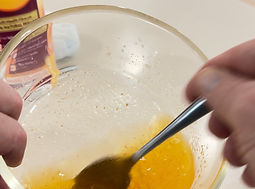
Using a ruler and permanent marker, draw horizontal lines on the outside of your plastic bottle at 100 ml intervals from the bottom up.
PREDICT
OBSERVE
EVIDENCE
ASK
SAFETY
TIP
PREDICT
Gather your materials and get
ready for an amazing mission!
2
Set up Apparatus
Fill the marked bottle completely to the top with water and put the cap on.
Fill your bowl or container with water to about 10 cm depth.
Carefully flip the full bottle upside down and lower its mouth into the water in the bowl — then, keeping the mouth underwater, remove the cap.
PREDICT
OBSERVE
EVIDENCE
ASK
SAFETY
TIP
PREDICT
Gather your materials and get
ready for an amazing mission!
3
Make predictions
Before anyone measures — make class predictions.
Look around the room and predict: who do you think will have the largest vital capacity? The smallest?
PREDICT
OBSERVE
EVIDENCE
ASK
SAFETY
TIP
PREDICT
Gather your materials and get
ready for an amazing mission!
4
Measure capacity
Stand next to the apparatus. Take the deepest breath you possibly can — fill your lungs completely.
Place your mouth on the tube and breathe out as hard and as fully as you can until there is genuinely nothing left to give.
Mark the new water level on the bottle. This is your vital capacity — read it from the markings.
PREDICT
OBSERVE
EVIDENCE
ASK
SAFETY
TIP
PREDICT
Gather your materials and get
ready for an amazing mission!
1
Big Title
Gather your materials and get
ready for an amazing mission!
PREDICT
OBSERVE
EVIDENCE
ASK
SAFETY
TIP
PREDICT
Gather your materials and get
ready for an amazing mission!
1
Big Title
Gather your materials and get
ready for an amazing mission!
PREDICT
OBSERVE
EVIDENCE
ASK
SAFETY
TIP
PREDICT
Gather your materials and get
ready for an amazing mission!
1
Big Title
Gather your materials and get
ready for an amazing mission!
PREDICT
OBSERVE
EVIDENCE
ASK
SAFETY
TIP
PREDICT
Gather your materials and get
ready for an amazing mission!
1
Big Title
Gather your materials and get
ready for an amazing mission!
PREDICT
OBSERVE
EVIDENCE
ASK
SAFETY
TIP
PREDICT
Gather your materials and get
ready for an amazing mission!
1
Big Title
Gather your materials and get
ready for an amazing mission!
PREDICT
OBSERVE
EVIDENCE
ASK
SAFETY
TIP
PREDICT
1
Prepare measuring bottle
Gather your materials and get
ready for an amazing mission!
PREDICT
OBSERVE
EVIDENCE
ASK
SAFETY
TIP
PREDICT
1
Prepare measuring bottle
Gather your materials and get
ready for an amazing mission!
PREDICT
OBSERVE
EVIDENCE
ASK
SAFETY
TIP
PREDICT
1
Big Title
Gather your materials and get
ready for an amazing mission!
PREDICT
OBSERVE
EVIDENCE
ASK
SAFETY
TIP
PREDICT
The Crazy Scientist LAB Learning System™
Every experiment follows The Crazy Scientist Lab Learning System™ — a simple way to help kids think like real scientists.
We
-
LINK to what they already know,
-
ACTIVATE curiosity through hands-on discovery
-
BUILD understanding that actually sticks.

You breathe roughly 20,000 times a day without thinking about it. But when you really push — when you sprint, swim hard, or play a wind instrument — your lungs are working at a completely different level.
Think of someone you know who is a really good swimmer, a runner, or plays a brass or woodwind instrument.
Do you think their lungs work differently from someone who does not train? In what way?

You have measured your vital capacity and built the class dot plot.
Think back to your prediction — was your actual vital capacity higher or lower than you expected? By how much? What does that tell you about how well people know their own bodies?
What you measured today has a specific scientific name: vital capacity. Why do you think doctors and physiologists use this measurement? What would a lower-than-average vital capacity in an adult tell a doctor?

Vital capacity is a real clinical measurement — doctors, athletes, and researchers use it to assess lung health, fitness, and performance.
Wind instrument players — trumpet, clarinet, saxophone, didgeridoo — consistently show above-average vital capacity. Is that because people with larger lungs choose these instruments, or because playing the instrument trains the lungs? How would you design an experiment to find out which explanation is correct?
"Want the full teacher guide? The Crazy Scientist Lab includes classroom delivery tips, how to manage the WOW moment, differentiation for Stage 2 & 3, — ready to teach tomorrow."
Think Like a Scientist
Scientists don't stop after their first discovery.
They ask new questions, collect more evidence and test their ideas in different ways.
Where could you take this investigation next?
Does physical activity immediately before measuring change your vital capacity result?
Does physical activity immediately before measuring change your vital capacity result?

Dr Puddledrip’s Science Tip
Read the Science
Vital capacity is defined as the maximum volume of air that can be exhaled following a maximum inhalation. It is one of several lung volumes that physiologists measure to understand how the respiratory system works.
The four primary lung volumes are: tidal volume — the air moved in a normal, relaxed breath (approximately 0.5 litres); inspiratory reserve volume — the extra air you can inhale beyond a normal breath (approximately 3 litres); expiratory reserve volume — the extra air you can push out beyond a normal exhale (approximately 1.1 litres); and residual volume — the air that permanently remains in the lungs after maximum exhalation (approximately 1.2 litres).
Vital capacity = tidal volume + inspiratory reserve + expiratory reserve. It is the total range of air you can voluntarily move. It does not include residual volume, because residual volume cannot be controlled — it is set by the elastic properties of the lung tissue itself. If the lungs fully collapsed with every exhale, reinflating them would require enormous muscular effort and would damage the delicate alveoli. The residual volume keeps them slightly inflated at all times.
Your lungs contain approximately 600 million alveoli — tiny air sacs with walls only one cell thick. The total surface area of all these alveoli is approximately 70 square metres — the size of a singles tennis court. This enormous surface area allows rapid gas exchange: oxygen diffuses from the air in the alveoli into the blood, and carbon dioxide diffuses in the opposite direction, in the time it takes for a red blood cell to pass through a capillary.
Vital capacity is influenced by height (taller chest cavity), age (peaks around age 20–25), biological sex (males average slightly more due to larger chest size), aerobic fitness (respiratory muscles strengthen with training), and specific training such as swimming or wind instrument playing. Doctors use spirometry — a precise clinical measurement of lung volumes — to diagnose conditions including asthma, COPD, and pulmonary fibrosis, all of which reduce vital capacity in characteristic ways.
Teachers & Homeschoolers: Print-ready HD versions of this Science Behind It poster and companion G&T Challenge Card are available inside The Crazy Scientist LAB.
Scientist's Challenge
Designed for HPGE, gifted learners and children who enjoy an extra challenge.
Teachers & Homeschoolers: Print-ready HD versions of this Science Behind It poster and companion G&T Challenge Card are available inside The Crazy Scientist LAB.
The Next Question...
You've solved today's mystery. Now discover where curiosity can take you next.
Teachers & Homeschoolers: Print-ready HD versions of this Science Behind It poster and companion G&T Challenge Card are available inside The Crazy Scientist LAB.
Vocabulary
Lung Capacity — The amount of air your lungs can hold.
Volume — The amount of space something takes up.
Exhale — To breathe air out of your lungs.
Know a parent or teacher who'd love this? Send it on! 👇
Keep Exploring This Mystery
One experiment leads to even more amazing discoveries inside the Learning Universe.
Curiosity Files
BIG Questions & Discovery
Illustrated Facts
Explore • Discover
Road Trip Science
Discover science everywhere
The Teacher's Cauldron
Think. Experiment. Inspire
Books
Read • Explore
Videos
Watch & Learn
LAB Resources
Premium learning resources


- Coming Mid 2027
How Much Air Can Your Lungs Actually Hold?
Ready for Your Next Discovery?


READY TO TEACH THIS
TOMORROW?

Running the experiment is easy; however, teaching it well is another challenge.
Teachers often ask:
How do I adapt this for Stages 1,2 or 3?
What misconceptions will they have?
What syllabus outcomes does it cover?
What do I do with fast finishers?
How do I structure this for a full class?
What do I say when they ask WHY?
BUILD AROUND THE LAB LEARNING SYSTEM™
Every resource is designed using our teaching framework.

Inside The Crazy Scientist LAB
Everything you need to confidently teach science tomorrow.


Opening early 2027. Join the Founding Member Waitlist
More Ways to Explore The Crazy Scientist World
Discover more hands-on science fun, programs and resources for every curious mind.


