


Mackey
Volcano Sunset Mystery
Have you ever noticed that some sunsets are far brighter and redder than others?
In 1883, people around the world began reporting spectacular glowing sunsets.
What had changed?
Scientists suspected the answer might lie in one enormous volcanic eruption.
Your mission is to investigate whether they were right.

Ages
7-12 yrs
Duration
min
10
Difficulty
Easy
Stage
Stage 2-3
Cite this resource
Created by Darin Carr (BSc, DipEd)
NESA Accredited Teacher · Chemistry & Physics Specialist · 30+ years in-class teaching
Resource Version: 1.0
First Published:
Last Updated:
21 Aug 2026

MISSION VERIFIED
Classroom tested. Teacher designed. Safe at home.

Designed by Darin Carr (BScDip Ed)
Practising NESA accredited
Australian Science Teacher
★ 30+ years of classroom experience
MISSION PROGRESS
young scientists have completed this mission.
I'VE COMPLETED THIS MISSION
Click to let us know you have completed this mission
LATEST TEACHER FEEDBACK
No feedback yet for this experiment. Use it with your class and let us know how it went!

Before you investigate... watch the mystery
MISSION HOOK
Professor Picklebottom and the team are travelling and collecting amazing science mysteries.
✔ Coming in Term 1 2027
KEEP EXPLORING
Curiosity Files
BIG Questions & Discovery
Illustrated Facts
Explore • Discover
Road Trip Science
Discover science everywhere
The Teacher's Cauldron
Think. Experiment. Inspire
Books
Read • Explore
Videos
Watch & Learn
LAB Resources
Premium learning resources

Mission Equipment
Gather your materials and get
ready for an amazing mission!
1 clear plastic container
Water • Milk
1 small LED torch
Teaspoon
Spoon for stirring
Dark room or dark background

Let’s Investigate
Follow the missions steps below to solve the mystery.
1
Build Your Atmosphere (Control)
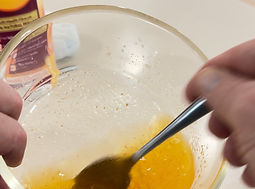
Fill the container about ¾ full with water.
Place it in a dim room with a dark background.
Shine the LED torch through one short end so the light travels through the longest part of the container.
PREDICT
OBSERVE
EVIDENCE
ASK
SAFETY
TIP
PREDICT
Gather your materials and get
ready for an amazing mission!
2
The Volcano Prediction
Scientists think huge volcanic eruptions fill the atmosphere with tiny particles.
Your milk will represent those particles.
PREDICT
OBSERVE
EVIDENCE
ASK
SAFETY
TIP
PREDICT
Gather your materials and get
ready for an amazing mission!
3
Create Your Model Atmosphere
Add ½ teaspoon of milk.
Stir gently.
Don't add any more yet.
Scientists only change one thing at a time.
PREDICT
OBSERVE
EVIDENCE
ASK
SAFETY
TIP
PREDICT
Gather your materials and get
ready for an amazing mission!
4
Hunt for Evidence
Shine the torch through the container again.
Don't stay in one spot.
Move around.
Look
from the side
from the far end
from above
PREDICT
OBSERVE
EVIDENCE
ASK
SAFETY
TIP
PREDICT
Gather your materials and get
ready for an amazing mission!
5
Compare Your Evidence
Now compare your observations.
PREDICT
OBSERVE
EVIDENCE
ASK
SAFETY
TIP
PREDICT
Gather your materials and get
ready for an amazing mission!
6
Turn Up the Volcano
Imagine a much bigger eruption.
Would there be more particles?
Add another ½ teaspoon of milk.
Repeat your observations.
PREDICT
OBSERVE
EVIDENCE
ASK
SAFETY
TIP
PREDICT
Gather your materials and get
ready for an amazing mission!
7
Find the Sweet Spot
Continue adding small amounts if needed.
VOLCANO CHALLENGE
Can you find the amount of milk that creates the strongest sunset effect?
Record your evidence.
PREDICT
OBSERVE
EVIDENCE
ASK
SAFETY
TIP
PREDICT
Gather your materials and get
ready for an amazing mission!
8
Solve the Volcano Mystery
Look back at all your evidence.
ASK
Could millions of tiny particles high in Earth's atmosphere really change the colours of sunsets?
What evidence from your investigation supports your conclusion?
PREDICT
OBSERVE
EVIDENCE
ASK
SAFETY
TIP
PREDICT
Gather your materials and get
ready for an amazing mission!
1
Big Title
Gather your materials and get
ready for an amazing mission!
PREDICT
OBSERVE
EVIDENCE
ASK
SAFETY
TIP
PREDICT
1
Build Your Atmosphere (Control)
Gather your materials and get
ready for an amazing mission!
PREDICT
OBSERVE
EVIDENCE
ASK
SAFETY
TIP
PREDICT
1
Build Your Atmosphere (Control)
Gather your materials and get
ready for an amazing mission!
PREDICT
OBSERVE
EVIDENCE
ASK
SAFETY
TIP
PREDICT
1
Big Title
Gather your materials and get
ready for an amazing mission!
PREDICT
OBSERVE
EVIDENCE
ASK
SAFETY
TIP
PREDICT
The Crazy Scientist LAB Learning System™
Every experiment follows The Crazy Scientist Lab Learning System™ — a simple way to help kids think like real scientists.
We
-
LINK to what they already know,
-
ACTIVATE curiosity through hands-on discovery
-
BUILD understanding that actually sticks.

Have you ever noticed that no two sunsets are exactly the same?
Some are brilliant orange and red.
Others hardly change colour at all.
After one enormous volcanic eruption, people around the world reported incredible glowing sunsets.
Coincidence... or could a volcano really change the colour of the sky?

Before you begin, you'll build a model atmosphere.
Scientists often use models to investigate ideas that are too big, too dangerous or impossible to experiment with directly.
As you test your model, look carefully from different directions.
Does the light always look the same?
Does adding more particles always make the effect stronger?
At what point do you think there are too many particles?
Keep a record of your observations. Scientists look for patterns before they explain them.

Your investigation will help answer a real scientific mystery.
As light travels through your model atmosphere, observe what changes and what stays the same.
Change only one variable at a time, compare your results, and use your evidence to decide:
Could tiny particles really change the colour of sunlight?
Would a larger volcanic eruption produce the same effect as a smaller one?
What evidence from your investigation supports your conclusion?
Scientists believe enormous eruptions such as Krakatoa filled Earth's atmosphere with tiny particles, creating some of the most spectacular sunsets ever recorded.
Did your investigation produce evidence that could help explain why?
After Krakatoa erupted in 1883, people around the world painted and wrote about unusually brilliant red sunsets. More than 140 years later, scientists still study these observations to better understand Earth's atmosphere.
"Want the full teacher guide? The Crazy Scientist Lab includes classroom delivery tips, how to manage the WOW moment, differentiation for Stage 2 & 3, — ready to teach tomorrow."
Think Like a Scientist
Scientists don't stop after their first discovery.
They ask new questions, collect more evidence and test their ideas in different ways.
Where could you take this investigation next?
Does the position of the Sun change the colours you see?
Does the particle type affect the sunset produced (milk, jelly crystals, salt)
Dr Puddledrip’s Science Tip
Read the Science
Could a Volcano Really Change the Colour of Sunsets?
In 1883, one of the largest volcanic eruptions in history blasted huge amounts of ash and tiny particles high into Earth's atmosphere.
Soon afterwards, people around the world reported spectacular red and orange sunsets.
Scientists wondered...
Could those tiny particles have changed the way sunlight travelled through the atmosphere?
What happened to the light?
Sunlight may look white, but it is actually made up of many different colours.
Blue light has a shorter wavelength, while red and orange light have longer wavelengths.
As sunlight travels through tiny particles in the atmosphere, more of the blue light is scattered away, while more of the red and orange light continues travelling towards your eyes.
That's why sunsets often appear warm shades of yellow, orange and red.
Why did your model work?
Your container became a model atmosphere.
The milk represented tiny particles floating in the air after a volcanic eruption.
By changing the amount of milk, you investigated how different numbers of particles affected the light travelling through your model.
Scientists often use models like this to investigate ideas that are too big or impossible to test directly.
Scientists Say...
Large volcanic eruptions aren't the only things that can change the colours of sunsets.
Bushfire smoke, dust storms and pollution can also add tiny particles to the atmosphere.
Scientists continue to study how these particles affect the light we see and why every sunset can look a little different.
Learning Universe
Why are sunsets on Mars blue instead of red?
Discover why different planets can have completely different sunsets—and how scientists use light to explore worlds beyond Earth.
Teachers & Homeschoolers: Print-ready HD versions of this Science Behind It poster and companion G&T Challenge Card are available inside The Crazy Scientist LAB.
Scientist's Challenge
Designed for HPGE, gifted learners and children who enjoy an extra challenge.

Teachers & Homeschoolers: Print-ready HD versions of this Science Behind It poster and companion G&T Challenge Card are available inside The Crazy Scientist LAB.
The Next Question...
You've solved today's mystery. Now discover where curiosity can take you next.

Teachers & Homeschoolers: Print-ready HD versions of this Science Behind It poster and companion G&T Challenge Card are available inside The Crazy Scientist LAB.
Vocabulary
Scattering — When light is redirected in different directions.
Particle — A tiny piece of matter.
Wavelength — The distance between repeating parts of a light wave.
Know a parent or teacher who'd love this? Send it on! 👇
Keep Exploring This Mystery
One experiment leads to even more amazing discoveries inside the Learning Universe.
Curiosity Files
BIG Questions & Discovery
Illustrated Facts
Explore • Discover
Road Trip Science
Discover science everywhere
The Teacher's Cauldron
Think. Experiment. Inspire
Books
Read • Explore
Videos
Watch & Learn
LAB Resources
Premium learning resources
Ready for Your Next Discovery?


READY TO TEACH THIS
TOMORROW?

Running the experiment is easy; however, teaching it well is another challenge.
Teachers often ask:
How do I adapt this for Stages 1,2 or 3?
What misconceptions will they have?
What syllabus outcomes does it cover?
What do I do with fast finishers?
How do I structure this for a full class?
What do I say when they ask WHY?
BUILD AROUND THE LAB LEARNING SYSTEM™
Every resource is designed using our teaching framework.

Inside The Crazy Scientist LAB
Everything you need to confidently teach science tomorrow.


Opening early 2027. Join the Founding Member Waitlist
More Ways to Explore The Crazy Scientist World
Discover more hands-on science fun, programs and resources for every curious mind.


