


Essy
A Plant's Hidden Pipes
Every plant has a secret plumbing system running through it — pipes so tiny you can’t see them without a microscope. But what if you could make them visible?

Ages
5-12 yrs
Duration
min
20
Difficulty
Easy
Stage
Stage 2-3
Cite this resource
Created by Darin Carr (BSc, DipEd)
NESA Accredited Teacher · Chemistry & Physics Specialist · 30+ years in-class teaching
Resource Version: 1.0
First Published:
Last Updated:
4 Apr 2026
21 Aug 2026

MISSION VERIFIED
Classroom tested. Teacher designed. Safe at home.

Designed by Darin Carr (BScDip Ed)
Practising NESA accredited
Australian Science Teacher
★ 30+ years of classroom experience
MISSION PROGRESS
0
young scientists have completed this mission.
I'VE COMPLETED THIS MISSION
Click to let us know you have completed this mission
LATEST TEACHER FEEDBACK
No feedback yet for this experiment. Use it with your class and let us know how it went!

Before you investigate... watch the mystery
MISSION HOOK
Professor Picklebottom and the team are travelling and collecting amazing science mysteries.
✔ Coming in Term 1 2027

KEEP EXPLORING
Curiosity Files
BIG Questions & Discovery
Illustrated Facts
Explore • Discover
Road Trip Science
Discover science everywhere
The Teacher's Cauldron
Think. Experiment. Inspire
Books
Read • Explore
Videos
Watch & Learn
LAB Resources
Premium learning resources

Mission Equipment
Gather your materials and get
ready for an amazing mission!
1 stick of celery (with leaves at the top — the more leaves the better)
2 glasses or jars
Water
2 different colours of food colouring (red and blue work best)
A sharp knife and chopping board (adult use)
A magnifying glass (optional — for the cross-section reveal)


Let’s Investigate
Follow the missions steps below to solve the mystery.
1
Prepare the celery
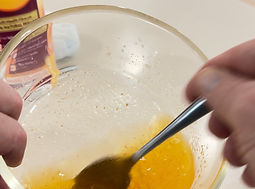
Ask an adult to cut 2 cm off the bottom of the celery stick at a slight angle — a fresh cut opens up the tiny tubes inside so water can flow in easily.
Now carefully slice the celery stalk lengthways from the bottom cut, up about halfway through the stalk.
PREDICT
OBSERVE
EVIDENCE
ASK
SAFETY
TIP
PREDICT
Gather your materials and get
ready for an amazing mission!
2
Set up the glasses
Fill each glass with about 3 cm of water.
Add a generous amount of food colouring to each glass — make one deeply blue and one deeply red.
PREDICT
OBSERVE
EVIDENCE
ASK
SAFETY
TIP
PREDICT
Gather your materials and get
ready for an amazing mission!
3
Place the celery
Gently spread the two legs of the celery apart and place one leg into the blue glass and the other into the red glass.
The top half of the celery — with all the leaves — should be sitting above and between both glasses.
PREDICT
OBSERVE
EVIDENCE
ASK
SAFETY
TIP
PREDICT
Gather your materials and get
ready for an amazing mission!
4
Watch and wait
Leave the celery in a bright spot — near a window is perfect.
A full, dramatic result takes 2–4 hours.
PREDICT
OBSERVE
EVIDENCE
ASK
SAFETY
TIP
PREDICT
Gather your materials and get
ready for an amazing mission!
5
Reveal the Hidden Pipes
Ask an adult to cut the celery stalk straight across the middle — not lengthways, but across, like slicing a carrot.
Look closely at the flat cut surface.
PREDICT
OBSERVE
EVIDENCE
ASK
SAFETY
TIP
PREDICT
Gather your materials and get
ready for an amazing mission!
1
Big Title
Gather your materials and get
ready for an amazing mission!
PREDICT
OBSERVE
EVIDENCE
ASK
SAFETY
TIP
PREDICT
Gather your materials and get
ready for an amazing mission!
1
Big Title
Gather your materials and get
ready for an amazing mission!
PREDICT
OBSERVE
EVIDENCE
ASK
SAFETY
TIP
PREDICT
Gather your materials and get
ready for an amazing mission!
1
Big Title
Gather your materials and get
ready for an amazing mission!
PREDICT
OBSERVE
EVIDENCE
ASK
SAFETY
TIP
PREDICT
Gather your materials and get
ready for an amazing mission!
1
Big Title
Gather your materials and get
ready for an amazing mission!
PREDICT
OBSERVE
EVIDENCE
ASK
SAFETY
TIP
PREDICT
1
Prepare the celery
Gather your materials and get
ready for an amazing mission!
PREDICT
OBSERVE
EVIDENCE
ASK
SAFETY
TIP
PREDICT
1
Prepare the celery
Gather your materials and get
ready for an amazing mission!
PREDICT
OBSERVE
EVIDENCE
ASK
SAFETY
TIP
PREDICT
1
Big Title
Gather your materials and get
ready for an amazing mission!
PREDICT
OBSERVE
EVIDENCE
ASK
SAFETY
TIP
PREDICT
The Crazy Scientist LAB Learning System™
Every experiment follows The Crazy Scientist Lab Learning System™ — a simple way to help kids think like real scientists.
We
-
LINK to what they already know,
-
ACTIVATE curiosity through hands-on discovery
-
BUILD understanding that actually sticks.

Your celery is plumbing. Right now, invisible tubes run from the cut end of the stalk all the way up to the very tip of every leaf — and something is moving through them.
Here’s your challenge: can you make those invisible tubes visible? And if you use two different colours at the same time — will the plant keep them separated, or will it mix them together?
Make your prediction.

Can you see the tiny coloured dots inside the stem? The colour went in at the bottom — how did it get all the way up there against gravity?
Did the two colours mix together in the leaves, or did the plant keep them separated all the way up? What does that tell you about the tubes inside?
What do you think would happen if you removed all the leaves from the top before you started — would water still travel up?

Plants pull water upward through tiny tubes called xylem — and the water molecules hold onto each other like an unbroken chain all the way from roots to leaves.
The tallest trees on Earth are over 100 metres tall — how do you think water gets to the very top leaves without any pump?
If you cut all the leaves off the celery before you started, do you think the coloured water would still travel up as fast? Why or why not?
A florist puts white carnations in coloured water and the petals change colour. Which part of the flower do you think the xylem tubes connect to?
"Want the full teacher guide? The Crazy Scientist Lab includes classroom delivery tips, how to manage the WOW moment, differentiation for Stage 2 & 3, — ready to teach tomorrow."
Think Like a Scientist
Scientists don't stop after their first discovery.
They ask new questions, collect more evidence and test their ideas in different ways.
Where could you take this investigation next?
Does warm water travel up the celery stem faster than cold water?
What happens if you remove all the leaves from the top before you start — does the colour still travel up as quickly?

Dr Puddledrip’s Science Tip
Read the Science
Inside every plant stem there are hundreds of tiny tubes called xylem vessels — too small to see without a microscope, but your coloured water just made them visible.
These tubes run continuously from the roots, up through the stem, and out to every leaf.
When you split the celery stalk in two, each half is connected to different xylem tubes, which is why each colour stayed separated all the way up.
But here's the question that trips everyone up: how does the water get there? Gravity is pulling it down, and a suction pump — like sucking through a drinking straw — only works to about 10 metres.
The tallest trees reach over 100 metres. So something else is doing the work.
The answer is cohesion-tension. Water molecules cling to each other like people holding hands in a chain. As leaves lose water vapour through tiny pores (transpiration), they pull on the water in the xylem below — and that pull travels all the way down the chain from leaf to stem to root. The water isn't pushed up from below. It's pulled from above.
The coloured dots you saw when you cut the stem? Those are the xylem vessels — each tiny dot was carrying coloured water all the way from the glass to the tips of the leaves.
Teachers & Homeschoolers: Print-ready HD versions of this Science Behind It poster and companion G&T Challenge Card are available inside The Crazy Scientist LAB.
Scientist's Challenge
Designed for HPGE, gifted learners and children who enjoy an extra challenge.
Teachers & Homeschoolers: Print-ready HD versions of this Science Behind It poster and companion G&T Challenge Card are available inside The Crazy Scientist LAB.
The Next Question...
You've solved today's mystery. Now discover where curiosity can take you next.
Teachers & Homeschoolers: Print-ready HD versions of this Science Behind It poster and companion G&T Challenge Card are available inside The Crazy Scientist LAB.
Vocabulary
Xylem — Tiny tubes that carry water from a plant’s roots towards its leaves.
Capillary Action — The movement of water through very narrow spaces.
Transport — The movement of materials from one place to another.
Know a parent or teacher who'd love this? Send it on! 👇
Keep Exploring This Mystery
One experiment leads to even more amazing discoveries inside the Learning Universe.
Curiosity Files
BIG Questions & Discovery
Illustrated Facts
Explore • Discover
Road Trip Science
Discover science everywhere
The Teacher's Cauldron
Think. Experiment. Inspire
Books
Read • Explore
Videos
Watch & Learn
LAB Resources
Premium learning resources


- Coming Early 2027
Why Did Ancient Romans Wipe Their Bottoms With a Sponge on a Stick?
Ready for Your Next Discovery?


READY TO TEACH THIS
TOMORROW?

Running the experiment is easy; however, teaching it well is another challenge.
Teachers often ask:
How do I adapt this for Stages 1,2 or 3?
What misconceptions will they have?
What syllabus outcomes does it cover?
What do I do with fast finishers?
How do I structure this for a full class?
What do I say when they ask WHY?
BUILD AROUND THE LAB LEARNING SYSTEM™
Every resource is designed using our teaching framework.

Inside The Crazy Scientist LAB
Everything you need to confidently teach science tomorrow.


Opening early 2027. Join the Founding Member Waitlist
More Ways to Explore The Crazy Scientist World
Discover more hands-on science fun, programs and resources for every curious mind.


