


Mackey
Hidden Messages
Mackey has been digging through the dusty shelves of an old potion laboratory when she discovers something strange — recipes, symbols and scraps of paper that seem completely blank.
But Mackey knows better.
For centuries, spies, inventors and explorers found clever ways to hide messages from anyone who wasn’t supposed to read them.
Now she needs your help to crack the mystery.
Several ordinary household liquids can be used as invisible ink — but do they all work equally well?
Your mission is to test different liquids, reveal their hidden messages and discover:
Which liquid makes the best invisible ink?

Ages
5-12 yrs
Duration
min
20
Difficulty
Easy
Stage
Stage 2-3
Cite this resource
Created by Darin Carr (BSc, DipEd)
NESA Accredited Teacher · Chemistry & Physics Specialist · 30+ years in-class teaching
Resource Version: 1.0
First Published:
Last Updated:
18 June 2026
26 Aug 2026

MISSION VERIFIED
Classroom tested. Teacher designed. Safe at home.

Designed by Darin Carr (BScDip Ed)
Practising NESA accredited
Australian Science Teacher
★ 30+ years of classroom experience
MISSION PROGRESS
12
young scientists have completed this mission.
I'VE COMPLETED THIS MISSION
Click to let us know you have completed this mission
LATEST TEACHER FEEDBACK
No feedback yet for this experiment. Use it with your class and let us know how it went!

Before you investigate... watch the mystery
MISSION HOOK
Professor Picklebottom and the team are travelling and collecting amazing science mysteries.
✔ Coming in Term 1 2027

KEEP EXPLORING
Curiosity Files
BIG Questions & Discovery
Illustrated Facts
Explore • Discover
Road Trip Science
Discover science everywhere
The Teacher's Cauldron
Think. Experiment. Inspire
Books
Read • Explore
Videos
Watch & Learn
LAB Resources
Premium learning resources

Mission Equipment
Gather your materials and get
ready for an amazing mission!
• Lemon juice (or white vinegar, apple juice, or milk)
• Cotton buds or small paintbrush
• White paper
• Heat source: lamp with incandescent bulb, or iron set to low, or oven at 100°C
• Adult supervision for heat source


Let’s Investigate
Follow the missions steps below to solve the mystery.
1
Choose your mystery inks
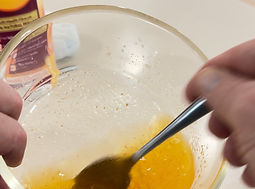
Pick 2–4 different liquids to test as invisible ink.
You might try:
lemon juice
white vinegar
apple juice
milk
Before you begin, make a prediction:
PREDICT
OBSERVE
EVIDENCE
ASK
SAFETY
TIP
PREDICT
Gather your materials and get
ready for an amazing mission!
2
Write your secret messages
Use a cotton bud or small paintbrush to write the same short word, symbol or message on separate sheets of white paper using each liquid.
Write clearly
Use one sheet for each liquid
Label each paper so you know which liquid was used
Try to keep each message about the same size.
PREDICT
OBSERVE
EVIDENCE
ASK
SAFETY
TIP
PREDICT
Gather your materials and get
ready for an amazing mission!
3
Keep it a fair test
To make this a real investigation, try to keep the test fair.
Keep the same:
type of paper
size of message
amount of liquid
drying time
heat source
You are changing only one thing:
the liquid you are testing
PREDICT
OBSERVE
EVIDENCE
ASK
SAFETY
TIP
PREDICT
Gather your materials and get
ready for an amazing mission!
4
Let them dry, then reveal the message
Let each sheet dry completely until the writing is hard to see.
Then, with adult help, gently warm each paper using the same heat conditions.
You might use:
a lamp with an incandescent bulb
an iron on low with no steam
an oven at low heat with adult supervision
Watch carefully as the hidden messages begin to appear.
PREDICT
OBSERVE
EVIDENCE
ASK
SAFETY
TIP
PREDICT
Gather your materials and get
ready for an amazing mission!
5
Observe and record
Now compare your results.
Look for:
Which message appeared first
Which message became darkest
Which message was easiest to read
Record what you notice for each liquid.
PREDICT
OBSERVE
EVIDENCE
ASK
SAFETY
TIP
PREDICT
Gather your materials and get
ready for an amazing mission!
6
Decide which invisible ink worked best
Use your observations to make a conclusion.
Ask yourself:
Which liquid made the best invisible ink?
Was your prediction correct?
What evidence supports your answer?
PREDICT
OBSERVE
EVIDENCE
ASK
SAFETY
TIP
PREDICT
Gather your materials and get
ready for an amazing mission!
1
Big Title
Gather your materials and get
ready for an amazing mission!
PREDICT
OBSERVE
EVIDENCE
ASK
SAFETY
TIP
PREDICT
Gather your materials and get
ready for an amazing mission!
1
Big Title
Gather your materials and get
ready for an amazing mission!
PREDICT
OBSERVE
EVIDENCE
ASK
SAFETY
TIP
PREDICT
Gather your materials and get
ready for an amazing mission!
1
Big Title
Gather your materials and get
ready for an amazing mission!
PREDICT
OBSERVE
EVIDENCE
ASK
SAFETY
TIP
PREDICT
Which liquid do you think will reveal the clearest hidden message?
1
Choose your mystery inks
Gather your materials and get
ready for an amazing mission!
PREDICT
OBSERVE
EVIDENCE
ASK
SAFETY
TIP
PREDICT
Which liquid do you think will reveal the clearest hidden message?
1
Choose your mystery inks
Gather your materials and get
ready for an amazing mission!
PREDICT
OBSERVE
EVIDENCE
ASK
SAFETY
TIP
PREDICT
Which liquid do you think will reveal the clearest hidden message?
1
Big Title
Gather your materials and get
ready for an amazing mission!
PREDICT
OBSERVE
EVIDENCE
ASK
SAFETY
TIP
PREDICT
Which liquid do you think will reveal the clearest hidden message?
The Crazy Scientist LAB Learning System™
Every experiment follows The Crazy Scientist Lab Learning System™ — a simple way to help kids think like real scientists.
We
-
LINK to what they already know,
-
ACTIVATE curiosity through hands-on discovery
-
BUILD understanding that actually sticks.

Have you ever wished you could send a secret message that nobody else could read?
Throughout history, people have hidden messages using invisible inks and clever codes.
But can science help reveal something that appears to have vanished?
Today, you'll investigate how hidden messages can suddenly appear.

Watch where the message develops first when you apply heat.
Is it evenly distributed, or does it appear in some places before others?
Compare your different 'ink' tests.
Which revealed most clearly? Which was most invisible before heating?
Try heating a piece of blank paper with no lemon juice. What happens? Now compare that to your message paper. What’s the difference?
Which ink worked best — lemon juice, vinegar, or milk? Which surprised you most? What do you think those liquids have in common?

The blank paper didn’t change — but the lemon juice did. What does that tell you about the difference between the two? What does the lemon juice have that plain paper doesn’t?
Your message appeared before the paper burned. What does that tell you about which material reacts to heat first? Why is that important for the trick to work?
If you left your secret message in a hot car in summer, could it self-reveal? What does your experiment tell you about the temperature needed?
Ancient spies also hid messages in other ways: steganography (hiding text inside normal text), microdots (photographs shrunk to the size of a full stop), and coded languages. What do these methods have in common with invisible ink?
"Want the full teacher guide? The Crazy Scientist Lab includes classroom delivery tips, how to manage the WOW moment, differentiation for Stage 2 & 3, — ready to teach tomorrow."
Think Like a Scientist
Scientists don't stop after their first discovery.
They ask new questions, collect more evidence and test their ideas in different ways.
Where could you take this investigation next?
Ink concentration — full-strength lemon juice vs diluted 1:3 vs diluted 1:10. How does concentration affect visibility before and after heating?
Paper type — plain white paper vs newspaper vs cardboard. Which substrate gives the clearest result?

Dr Puddledrip’s Science Tip

Read the Science
What’s Really Happening?
When lemon juice dries on paper, it doesn’t completely disappear.
The water evaporates, but tiny amounts of substances from the lemon are left behind in the paper fibres. Once dry, there may not be enough of these substances to see.
But when the paper is warmed, something begins to change.
The hidden writing becomes darker and the secret message appears.
Why Does Heat Reveal the Message?
Heat acts like the secret key.
Lemon juice contains organic compounds — substances containing carbon that came from the living lemon.
When these compounds are heated, they begin to break down
and react with oxygen. This causes them to brown faster than the surrounding paper.
The darker areas reveal where the lemon juice was painted.
This is a chemical change because heating produces new substances with different properties.
Could Other Liquids Work Too?
Lemon juice isn’t the only liquid that can leave a hidden message.
Apple juice, milk and some other liquids contain organic substances that can also change colour when heated.
But they don’t necessarily behave in exactly the same way.
That gives us something to investigate:
Which liquid produces the clearest invisible message?
Scientists can compare:
how quickly each message appears
how dark it becomes
how easy it is to read
Keeping everything else the same makes it a fair test.
Real-World Connection
For hundreds of years, people have searched for ways to hide information.
Invisible inks and secret messages have been used by explorers, inventors, spies and code-breakers.
Different invisible inks work in different ways. Some are revealed by heat, while others need a particular chemical or type of light to make the message appear.
Think Like a Scientist
You discovered that some apparently invisible liquids can leave substances behind on paper that become visible when heated.
But one investigation usually creates another question.
Which liquid makes the darkest message?
Does the amount of liquid change how clearly it appears?
Does the type of paper make a difference?
Does heating time affect the result?
Scientists don’t stop after one result.
They use their evidence to ask the next question.
Try next
• Explore another irreversible chemical reaction that permanently changes a material → [The Mummy Maker]
• See how chemistry from the ancient world was put to practical use → [The Aqueduct Challenge]
Teachers & Homeschoolers: Print-ready HD versions of this Science Behind It poster and companion G&T Challenge Card are available inside The Crazy Scientist LAB.
Scientist's Challenge
Designed for HPGE, gifted learners and children who enjoy an extra challenge.

Teachers & Homeschoolers: Print-ready HD versions of this Science Behind It poster and companion G&T Challenge Card are available inside The Crazy Scientist LAB.
The Next Question...
You've solved today's mystery. Now discover where curiosity can take you next.
What makes a chemical reaction irreversible?
When you heated your lemon juice message, the organic compounds in the juice broke down into new substances — dark, carbon-rich compounds. Those new substances are fundamentally different from the original ones. You cannot heat them back and get lemon juice again.
This is what makes it an irreversible chemical reaction: the original substances are gone and cannot be recovered

Teachers & Homeschoolers: Print-ready HD versions of this Science Behind It poster and companion G&T Challenge Card are available inside The Crazy Scientist LAB.
Vocabulary
Irreversible reaction
A chemical change that creates new substances that cannot be changed back. Once lemon juice has turned brown on paper, it cannot be made invisible again.
Citric acid
A natural acid found in lemons, oranges, and other citrus fruits. It is one of the ingredients in lemon juice that reacts when heated.
Know a parent or teacher who'd love this? Send it on! 👇
Keep Exploring This Mystery
One experiment leads to even more amazing discoveries inside the Learning Universe.
Curiosity Files
BIG Questions & Discovery
Illustrated Facts
Explore • Discover
Road Trip Science
Discover science everywhere
The Teacher's Cauldron
Think. Experiment. Inspire
Books
Read • Explore
Videos
Watch & Learn
LAB Resources
Premium learning resources


- Coming Mid 2027
How Does Real CSI Solve Crimes?
- Coming Mid 2027
How Did Ancient Spies Send Secret Messages Nobody Could Read?
Ready for Your Next Discovery?


READY TO TEACH THIS
TOMORROW?

Running the experiment is easy; however, teaching it well is another challenge.
Teachers often ask:
How do I adapt this for Stages 1,2 or 3?
What misconceptions will they have?
What syllabus outcomes does it cover?
What do I do with fast finishers?
How do I structure this for a full class?
What do I say when they ask WHY?
BUILD AROUND THE LAB LEARNING SYSTEM™
Every resource is designed using our teaching framework.

Inside The Crazy Scientist LAB
Everything you need to confidently teach science tomorrow.


Opening early 2027. Join the Founding Member Waitlist
More Ways to Explore The Crazy Scientist World
Discover more hands-on science fun, programs and resources for every curious mind.


