


Alex
Jedi Balloon Power
A charged balloon held near a thin stream of liquid — no touching, no magnets. Can static charge bend all liquids? Or only the special ones? Two bags. Two liquids. One ruler. Find out.

Ages
9-12 yrs
Duration
min
20
Difficulty
Easy
Stage
Stage 3
Cite this resource
Created by Darin Carr (BSc, DipEd)
NESA Accredited Teacher · Chemistry & Physics Specialist · 30+ years in-class teaching
Resource Version: 1.0
First Published:
Last Updated:
4 June 2026
31 July 2026

MISSION VERIFIED
Classroom tested. Teacher designed. Safe at home.

Designed by Darin Carr (BScDip Ed)
Practising NESA accredited
Australian Science Teacher
★ 30+ years of classroom experience
MISSION PROGRESS
8
young scientists have completed this mission.
I'VE COMPLETED THIS MISSION
Click to let us know you have completed this mission
LATEST TEACHER FEEDBACK
No feedback yet for this experiment. Use it with your class and let us know how it went!

Before you investigate... watch the mystery
MISSION HOOK
Professor Picklebottom and the team are travelling and collecting amazing science mysteries.
✔ Coming in Term 1 2027

KEEP EXPLORING
Curiosity Files
BIG Questions & Discovery
Illustrated Facts
Explore • Discover
Road Trip Science
Discover science everywhere
The Teacher's Cauldron
Think. Experiment. Inspire
Books
Read • Explore
Videos
Watch & Learn
LAB Resources
Premium learning resources

Mission Equipment
Gather your materials and get
ready for an amazing mission!
• 2 medium zip-lock bags
• Water — about 200 - 500 mL
• Cooking oil — vegetable or canola, about 200 - 500 mL
• A pin or sharp needle
• A plastic ruler OR a balloon
• A wool cloth OR clean dry hair
• 2 bowls or containers to catch the liquid
• Sticky tape — to adjust pinhole size if needed
• A science journal or recording sheet


Let’s Investigate
Follow the missions steps below to solve the mystery.
1
Make a prediction
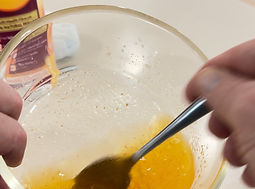
Before you touch anything, write down your predictions. You are going to test two liquids — water and cooking oil.
Here is one clue: a water molecule is shaped like a tiny boomerang, with a slightly positive end and a slightly negative end.
An oil molecule is a long, straight chain with no distinct ends
PREDICT
OBSERVE
EVIDENCE
ASK
SAFETY
TIP
PREDICT
Gather your materials and get
ready for an amazing mission!
2
Make the bags
Fill one zip-lock bag with 150–200 mL of water.
Fill a second bag with the same amount of cooking oil.
Seal both bags and label them clearly — WATER and OIL. Hold each bag over its own bowl.
PREDICT
OBSERVE
EVIDENCE
ASK
SAFETY
TIP
PREDICT
Gather your materials and get
ready for an amazing mission!
3
Make water stream
Use a pin to make a very small hole in the bottom corner of the water bag.
You want a thin, steady trickle — not a gush. If the stream is too thick, cover the hole with tape and try a tinier poke.
Adjust until you have a consistent, narrow stream.
PREDICT
OBSERVE
EVIDENCE
ASK
SAFETY
TIP
PREDICT
Gather your materials and get
ready for an amazing mission!
4
Charge your balloon
Rub the ruler or balloon briskly against a wool cloth or clean dry hair for 20–30 seconds.
This transfers electrons from the cloth onto the plastic, giving it a negative charge.
PREDICT
OBSERVE
EVIDENCE
ASK
SAFETY
TIP
PREDICT
Gather your materials and get
ready for an amazing mission!
5
Test the stream
Hold the charged ruler about 1–2 cm from the water stream — close, but not touching.
Watch carefully.
Record what happens: does the stream move? Which direction? How much
PREDICT
OBSERVE
EVIDENCE
ASK
SAFETY
TIP
PREDICT
Gather your materials and get
ready for an amazing mission!
6
Make the oil stream
Repeat Step 3 with the oil bag.
Try to match the stream thickness to the water stream so the comparison is fair.
PREDICT
OBSERVE
EVIDENCE
ASK
SAFETY
TIP
PREDICT
Gather your materials and get
ready for an amazing mission!
7
Test oil stream
Recharge the ruler for another 20–30 seconds.
Hold it at the same distance from the oil stream.
Observe and record what happens. Compare directly with your water results.
PREDICT
OBSERVE
EVIDENCE
ASK
SAFETY
TIP
PREDICT
Gather your materials and get
ready for an amazing mission!
8
Findings
Look at both results side by side.
Write a single sentence that explains the difference — and connect it back to the molecule shapes you drew in Step 1.
Did the shape predict the result?
PREDICT
OBSERVE
EVIDENCE
ASK
SAFETY
TIP
PREDICT
Gather your materials and get
ready for an amazing mission!
1
Big Title
Gather your materials and get
ready for an amazing mission!
PREDICT
OBSERVE
EVIDENCE
ASK
SAFETY
TIP
PREDICT
1
Make a prediction
Gather your materials and get
ready for an amazing mission!
PREDICT
OBSERVE
EVIDENCE
ASK
SAFETY
TIP
PREDICT
1
Make a prediction
Gather your materials and get
ready for an amazing mission!
PREDICT
OBSERVE
EVIDENCE
ASK
SAFETY
TIP
PREDICT
1
Big Title
Gather your materials and get
ready for an amazing mission!
PREDICT
OBSERVE
EVIDENCE
ASK
SAFETY
TIP
PREDICT
The Crazy Scientist LAB Learning System™
Every experiment follows The Crazy Scientist Lab Learning System™ — a simple way to help kids think like real scientists.
We
-
LINK to what they already know,
-
ACTIVATE curiosity through hands-on discovery
-
BUILD understanding that actually sticks.

A charged balloon. A thin stream of liquid falling from a pinhole. Zero contact. Hold the balloon close and record exactly what happens — then do the same test on a completely different liquid. The results might not be what you expect.
• But does every liquid do this? You are going to test oil using the same setup. Same charge. Same distance. Same method.
• Before you do anything else, read Step 1 carefully — there is one clue about the shape of each molecule. Use that clue to make a prediction. Write it down. The answer is in the shape.

• Your water stream bent. Your oil stream didn't. What does the difference tell you about the inside of a water molecule at a level you cannot see with your eyes?
You charged your ruler by rubbing it on wool. Where did the charge come from — and what exactly happened when the ruler came near the water stream? Draw a diagram with labels showing the electrons, the ruler, and the water molecules.

Try shaking oil and water together in a jar. They separate out no matter how hard you shake. But water dissolves salt, sugar, and food colouring perfectly.
Think about the boomerang shape you learned about in Step 1 — and what you just saw happen to the water stream. Can you use that to explain why water mixes with some things but not others?
"Want the full teacher guide? The Crazy Scientist Lab includes classroom delivery tips, how to manage the WOW moment, differentiation for Stage 2 & 3, — ready to teach tomorrow."
Think Like a Scientist
Scientists don't stop after their first discovery.
They ask new questions, collect more evidence and test their ideas in different ways.
Where could you take this investigation next?
Does the distance between the ruler and the stream change how much the stream bends?
Does rubbing the ruler for longer produce a larger bend, and is there a point where more rubbing makes no further difference?

Dr Puddledrip’s Science Tip
Read the Science
What's really happening?
When you rub a balloon or ruler on your hair or wool, you are moving tiny particles called electrons from one material to the other.
The material that gains extra electrons becomes negatively charged. Hold that charged object near a thin stream of water and something surprising happens — the stream bends toward it, without any contact.
This is static electricity bending a liquid.
Why does water bend but oil doesn't?
Water molecules have a special bent shape — like a tiny boomerang. Because of this shape, one end of the molecule is slightly positive and the other end is slightly negative.
Scientists call this a polar molecule. When the negatively charged ruler comes close, the slightly positive ends of the water molecules nearest to it swing toward the ruler — like compass needles all pointing the same direction.
When billions of molecules all tilt the same way at once, the force is strong enough to pull the whole stream sideways.
Oil molecules are shaped completely differently — long, straight chains with charge spread evenly all the way along.
There are no positive or negative ends to be attracted to anything. When the charged ruler comes close, there is nothing to grab. The oil stream keeps flowing straight.
Same equipment. Same charge. Completely different result — because the shape inside the molecule is different.
Why does this matter beyond the experiment?
The bent shape of water molecules explains far more than a bending stream. It's the reason water dissolves salt and sugar (both polar), but refuses to mix with oil (non-polar). It's why water carries nutrients around your body, why plants can absorb it through their roots, and why rainwater cleans surfaces but can't remove grease.
Every property that makes water the most useful liquid on Earth comes from that same tiny boomerang shape you just made visible with a charged ruler.
Real-world connection
The same principle — polar molecules responding to electric fields — is used in inkjet printers. Tiny droplets of electrically charged ink are steered to exactly the right position on the page by electric fields.
The ink drops are deflected mid-air, just like your water stream, before they land. Every document you print uses the same physics you tested today.
Try next
See what happens when water's polar nature determines what it mixes with → [The Orange Assassin]
See how water's attractive forces help it stay on a coin → [The Impossible Water Drop Trick]
Teachers & Homeschoolers: Print-ready HD versions of this Science Behind It poster and companion G&T Challenge Card are available inside The Crazy Scientist LAB.
Scientist's Challenge
Designed for HPGE, gifted learners and children who enjoy an extra challenge.
Teachers & Homeschoolers: Print-ready HD versions of this Science Behind It poster and companion G&T Challenge Card are available inside The Crazy Scientist LAB.
The Next Question...
You've solved today's mystery. Now discover where curiosity can take you next.
What is static electricity?
All materials are made of atoms. Every atom has a positively charged centre — the nucleus — with negative electrons on the outside. In most materials, electrons stay firmly attached to their own atoms.
But when you rub two different materials together — like a ruler on your hair — electrons can transfer from one surface to the other. The material that picks up extra electrons becomes negatively charged.
The one that loses electrons becomes positively charged. Opposite charges attract — which is why a negatively charged ruler pulls the water stream towards it without touching it.
The word 'static' means the charge stays stuck in place on the surface, rather than flowing through a wire like current in a circuit.
When you walk across carpet in socks and touch a metal door handle, you sometimes get a small shock. The carpet transfers electrons to your socks, and the charge builds up in your body. The shock is those electrons suddenly jumping to the metal. Predict: would this happen the same way on a tiled floor? On a wooden floor? What property of the floor material would determine how much charge builds up — and how would you test it?
Teachers & Homeschoolers: Print-ready HD versions of this Science Behind It poster and companion G&T Challenge Card are available inside The Crazy Scientist LAB.
Vocabulary
Static electricity
A build-up of electric charge on the surface of a material, caused by electrons being transferred during rubbing. The charge stays in place rather than flowing like a current.
Electron
A tiny negatively charged particle found in every atom. Electrons can transfer between materials when they are rubbed together, creating static charge.
Polar molecule
A molecule whose shape causes the electric charge to be unevenly spread — one end ends up slightly negative and the other slightly positive. Water is a polar molecule.
Non-polar molecule
A molecule in which charge is evenly distributed along its entire length, so it has no positive or negative ends. Oil molecules are nonpolar and do not respond to static charge.
Charge
A property of matter. Objects can be positively charged, negatively charged, or neutral. Opposite charges attract each other; like charges repel each other.
Attract
To pull toward. The slightly positive end of a water molecule is attracted to the negatively charged ruler — this attraction is what bends the stream sideways.
Know a parent or teacher who'd love this? Send it on! 👇
Keep Exploring This Mystery
One experiment leads to even more amazing discoveries inside the Learning Universe.
Curiosity Files
BIG Questions & Discovery
Illustrated Facts
Explore • Discover
Road Trip Science
Discover science everywhere
The Teacher's Cauldron
Think. Experiment. Inspire
Books
Read • Explore
Videos
Watch & Learn
LAB Resources
Premium learning resources


- Coming Early 2027
Why Does Jumping on a Trampoline Turn You into a Human Hedgehog?
- Coming Mid 2027
Could Static Electricity Really Power a Balloon Trick?
Ready for Your Next Discovery?


READY TO TEACH THIS
TOMORROW?

Running the experiment is easy; however, teaching it well is another challenge.
Teachers often ask:
How do I adapt this for Stages 1,2 or 3?
What misconceptions will they have?
What syllabus outcomes does it cover?
What do I do with fast finishers?
How do I structure this for a full class?
What do I say when they ask WHY?
BUILD AROUND THE LAB LEARNING SYSTEM™
Every resource is designed using our teaching framework.

Inside The Crazy Scientist LAB
Everything you need to confidently teach science tomorrow.


Opening early 2027. Join the Founding Member Waitlist
More Ways to Explore The Crazy Scientist World
Discover more hands-on science fun, programs and resources for every curious mind.


