


Alex
Make an Eardrum
Right now, while you read this sentence, your eardrums are vibrating. Every sound that has ever reached your ears — every voice, every song, every crash — moved them. You have never seen it happen. This experiment lets you build a model eardrum

Ages
5-12 yrs
Duration
min
20
Difficulty
Easy
Stage
Stage 1-3
Cite this resource
Created by Darin Carr (BSc, DipEd)
NESA Accredited Teacher · Chemistry & Physics Specialist · 30+ years in-class teaching
Resource Version: 1.0
First Published:
Last Updated:
15 May 2026
21 Aug 2026

MISSION VERIFIED
Classroom tested. Teacher designed. Safe at home.

Designed by Darin Carr (BScDip Ed)
Practising NESA accredited
Australian Science Teacher
★ 30+ years of classroom experience
MISSION PROGRESS
3
young scientists have completed this mission.
I'VE COMPLETED THIS MISSION
Click to let us know you have completed this mission
LATEST TEACHER FEEDBACK
No feedback yet for this experiment. Use it with your class and let us know how it went!

Before you investigate... watch the mystery
MISSION HOOK
Professor Picklebottom and the team are travelling and collecting amazing science mysteries.
✔ Coming in Term 1 2027

KEEP EXPLORING
Curiosity Files
BIG Questions & Discovery
Illustrated Facts
Explore • Discover
Road Trip Science
Discover science everywhere
The Teacher's Cauldron
Think. Experiment. Inspire
Books
Read • Explore
Videos
Watch & Learn
LAB Resources
Premium learning resources

Mission Equipment
Gather your materials and get
ready for an amazing mission!
One round balloon
Scissors
A plastic cup or empty tin can (open at the top)
A rubber band
Table salt or coloured cake sprinkles
A sound source — your voice, a phone speaker, or hands for clapping


Let’s Investigate
Follow the missions steps below to solve the mystery.
1
Make the ear drum
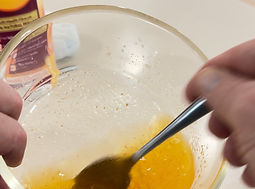
Cut the neck off the balloon — the narrow part you blow into — and discard it.
Stretch the remaining round part tightly over the open top of the plastic cup or tin can.
PREDICT
OBSERVE
EVIDENCE
ASK
SAFETY
TIP
PREDICT
Gather your materials and get
ready for an amazing mission!
2
Add the salt
Sprinkle a thin, even layer of table salt or coloured sprinkles onto the surface of the balloon membrane.
Use enough to cover the surface loosely — you should be able to see individual grains spread across the whole membrane.
PREDICT
OBSERVE
EVIDENCE
ASK
SAFETY
TIP
PREDICT
Gather your materials and get
ready for an amazing mission!
3
Make a prediction
Before making any sound — predict.
Will speaking near the membrane make the salt move?
Will shouting move it more than whispering?
PREDICT
OBSERVE
EVIDENCE
ASK
SAFETY
TIP
PREDICT
Gather your materials and get
ready for an amazing mission!
4
Hold the cup at arm's length and speak directly toward the membrane — say a word clearly and watch the salt.
Try whispering, then speaking at a normal volume, then saying a loud, low sound like "BOOM."
Watch how the salt responds to each.
PREDICT
OBSERVE
EVIDENCE
ASK
SAFETY
TIP
PREDICT
Gather your materials and get
ready for an amazing mission!
1
Big Title
Gather your materials and get
ready for an amazing mission!
PREDICT
OBSERVE
EVIDENCE
ASK
SAFETY
TIP
PREDICT
Gather your materials and get
ready for an amazing mission!
1
Big Title
Gather your materials and get
ready for an amazing mission!
PREDICT
OBSERVE
EVIDENCE
ASK
SAFETY
TIP
PREDICT
Gather your materials and get
ready for an amazing mission!
1
Big Title
Gather your materials and get
ready for an amazing mission!
PREDICT
OBSERVE
EVIDENCE
ASK
SAFETY
TIP
PREDICT
Gather your materials and get
ready for an amazing mission!
1
Big Title
Gather your materials and get
ready for an amazing mission!
PREDICT
OBSERVE
EVIDENCE
ASK
SAFETY
TIP
PREDICT
Gather your materials and get
ready for an amazing mission!
1
Big Title
Gather your materials and get
ready for an amazing mission!
PREDICT
OBSERVE
EVIDENCE
ASK
SAFETY
TIP
PREDICT
1
Make the ear drum
Gather your materials and get
ready for an amazing mission!
PREDICT
OBSERVE
EVIDENCE
ASK
SAFETY
TIP
PREDICT
1
Make the ear drum
Gather your materials and get
ready for an amazing mission!
PREDICT
OBSERVE
EVIDENCE
ASK
SAFETY
TIP
PREDICT
1
Big Title
Gather your materials and get
ready for an amazing mission!
PREDICT
OBSERVE
EVIDENCE
ASK
SAFETY
TIP
PREDICT
The Crazy Scientist LAB Learning System™
Every experiment follows The Crazy Scientist Lab Learning System™ — a simple way to help kids think like real scientists.
We
-
LINK to what they already know,
-
ACTIVATE curiosity through hands-on discovery
-
BUILD understanding that actually sticks.

Think about the last time you heard a really loud sound — a clap of thunder, a door slamming, music turned up high. You didn't just hear it. You might have felt it.
Where in your body did you feel that? Your chest? Your ears? What was actually happening inside your body when you felt that vibration?
Now look at the balloon stretched over the cup. Before you make a single sound — predict: if you speak toward the membrane without touching it, do you think the sound waves travelling through the air will have enough energy to move the salt? And will a louder sound move it more than a quiet one?

You have spoken at the membrane, tested your distance, and compared a tight membrane to a slack one.
Think back to the first moment you spoke toward the membrane and the salt moved. Describe what you saw — did all the salt move at once, or did some grains respond more than others? Was the movement smooth or sharp?
Recall the difference between whispering and saying "BOOM." What changed about the salt's movement — was it the number of grains that moved, how far they jumped, or both?
When you moved further away and the movement decreased, what does that tell you about what happens to sound energy as it travels through the air?

Your eardrum is a membrane that responds to sound waves travelling through air — the same principle your balloon model just demonstrated.
A stethoscope has a flat disc at one end that is pressed against the body.
When a doctor listens to your heartbeat, the disc vibrates with each thump and sends those vibrations up the tube to the earpieces. How is that disc similar to the balloon you just built?
"Want the full teacher guide? The Crazy Scientist Lab includes classroom delivery tips, how to manage the WOW moment, differentiation for Stage 2 & 3, — ready to teach tomorrow."
Think Like a Scientist
Scientists don't stop after their first discovery.
They ask new questions, collect more evidence and test their ideas in different ways.
Where could you take this investigation next?
Does the tension of the membrane change how well it responds to sound?
Does the distance between the sound source and the membrane change how much the salt moves?

Dr Puddledrip’s Science Tip
Read the Science
Sound travels through air as a pressure wave — a pattern of compressions (air molecules pushed together) and rarefactions (air molecules spread apart) that moves outward from the source in all directions. When this wave reaches the balloon membrane, each compression pushes slightly against it, and each rarefaction pulls it back. The membrane vibrates in and out, matching the frequency of the incoming wave exactly.
The salt grains on the membrane's surface are carried by these vibrations. Each tiny inward movement of the membrane flicks the grains upward; gravity returns them. At the frequencies of a human voice, this happens dozens to hundreds of times per second — fast enough to look like continuous dancing, but slow enough to be visible to the naked eye.
Your real eardrum, the tympanic membrane, is a thin oval disc about 8–10 mm across, stretched across your ear canal. It behaves in exactly the same way as the balloon. Sound waves cause it to vibrate; those vibrations are then transferred to three tiny bones in your middle ear — the malleus, incus, and stapes — which amplify and carry the vibration to the cochlea in your inner ear, where it is finally converted into electrical signals your brain reads as sound.
Teachers & Homeschoolers: Print-ready HD versions of this Science Behind It poster and companion G&T Challenge Card are available inside The Crazy Scientist LAB.
Scientist's Challenge
Designed for HPGE, gifted learners and children who enjoy an extra challenge.
Teachers & Homeschoolers: Print-ready HD versions of this Science Behind It poster and companion G&T Challenge Card are available inside The Crazy Scientist LAB.
The Next Question...
You've solved today's mystery. Now discover where curiosity can take you next.
Teachers & Homeschoolers: Print-ready HD versions of this Science Behind It poster and companion G&T Challenge Card are available inside The Crazy Scientist LAB.
Vocabulary
Vibration — A quick back-and-forth movement.
Sound Wave — A vibration that travels through a material such as air.
Eardrum — A thin membrane in your ear that vibrates when sound reaches it.
Know a parent or teacher who'd love this? Send it on! 👇
Keep Exploring This Mystery
One experiment leads to even more amazing discoveries inside the Learning Universe.
Curiosity Files
BIG Questions & Discovery
Illustrated Facts
Explore • Discover
Road Trip Science
Discover science everywhere
The Teacher's Cauldron
Think. Experiment. Inspire
Books
Read • Explore
Videos
Watch & Learn
LAB Resources
Premium learning resources


- Coming Early 2027
How Can a Tiny Fennec Fox Hear a Beetle Under the Sand?
Ready for Your Next Discovery?


READY TO TEACH THIS
TOMORROW?

Running the experiment is easy; however, teaching it well is another challenge.
Teachers often ask:
How do I adapt this for Stages 1,2 or 3?
What misconceptions will they have?
What syllabus outcomes does it cover?
What do I do with fast finishers?
How do I structure this for a full class?
What do I say when they ask WHY?
BUILD AROUND THE LAB LEARNING SYSTEM™
Every resource is designed using our teaching framework.

Inside The Crazy Scientist LAB
Everything you need to confidently teach science tomorrow.


Opening early 2027. Join the Founding Member Waitlist
More Ways to Explore The Crazy Scientist World
Discover more hands-on science fun, programs and resources for every curious mind.


