

Professor Picklebottom
Acid Attack
Professor Picklebottom was minding his own business when a piece of chalk dropped into his vinegar.
Then something strange happened.
Tiny bubbles began appearing all over the chalk.
“Hmm… chalk doesn’t normally bubble,” he muttered. “So where are those bubbles coming from?”
Is the chalk changing?
Is the vinegar changing?
Is something new being made?
And if vinegar can affect chalk… what might slightly acidic rain do to rocks, buildings or statues over time?
Your mission: investigate what acid does to chalk — and use the evidence to work out what’s happening.

Ages
5-12 yrs
Duration
min
20
Difficulty
Easy
Stage
Stage 2-3
Cite this resource
Created by Darin Carr (BSc, DipEd)
NESA Accredited Teacher · Chemistry & Physics Specialist · 30+ years in-class teaching
Resource Version: 1.0
First Published:
Last Updated:
16 Apr 2026
27 Aug 2026

MISSION VERIFIED
Classroom tested. Teacher designed. Safe at home.

Designed by Darin Carr (BScDip Ed)
Practising NESA accredited
Australian Science Teacher
★ 30+ years of classroom experience
MISSION PROGRESS
3
young scientists have completed this mission.
I'VE COMPLETED THIS MISSION
Click to let us know you have completed this mission
LATEST TEACHER FEEDBACK
No feedback yet for this experiment. Use it with your class and let us know how it went!

Before you investigate... watch the mystery
MISSION HOOK
Professor Picklebottom and the team are travelling and collecting amazing science mysteries.
✔ Coming in Term 1 2027

KEEP EXPLORING
Curiosity Files
BIG Questions & Discovery
Illustrated Facts
Explore • Discover
Road Trip Science
Discover science everywhere
The Teacher's Cauldron
Think. Experiment. Inspire
Books
Read • Explore
Videos
Watch & Learn
LAB Resources
Premium learning resources

Mission Equipment
Gather your materials and get
ready for an amazing mission!
• 3–4 pieces of chalk — all roughly the same size
• White vinegar
• Water
• Small cups or containers — one per test sample
• Kitchen scales
• A ruler
• A notebook for recording
• Optional: pH paper or strips x

Let’s Investigate
Follow the missions steps below to solve the mystery.
1
Measure Your Starting Point
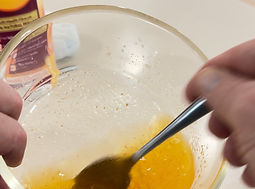
Choose two similar pieces of chalk.
Weigh each piece and record the mass.
Measure the length of each piece.
These are your starting measurements.
PREDICT
OBSERVE
EVIDENCE
ASK
SAFETY
TIP
PREDICT
Gather your materials and get
ready for an amazing mission!
2
Set Up the Test
Place one chalk piece in vinegar.
Place the other in the same amount of water.
Label the cups so you know which is which.
Start your timer.
PREDICT
OBSERVE
EVIDENCE
ASK
SAFETY
TIP
PREDICT
Gather your materials and get
ready for an amazing mission!
3
Watch for Clues
Observe both cups straight away.
Look again after about 1 hour.
Do not disturb the chalk while you observe.
Look for:
bubbles
changes to the chalk surface
sediment
changes in the liquid
PREDICT
OBSERVE
EVIDENCE
ASK
SAFETY
TIP
PREDICT
Gather your materials and get
ready for an amazing mission!
4
Compare the Evidence
After 24 hours:
Remove both pieces of chalk and let them dry.
Weigh and measure them again.
Compare the new measurements with your starting results.
PREDICT
OBSERVE
EVIDENCE
ASK
SAFETY
TIP
PREDICT
Gather your materials and get
ready for an amazing mission!
5
Take It Into the Real World
If you can safely collect some rainwater:
Test its pH with pH paper.
Compare it with tap water and vinegar.
Ask whether rainwater is closer to neutral water or to the vinegar used in your experiment.
PREDICT
OBSERVE
EVIDENCE
ASK
SAFETY
TIP
PREDICT
Gather your materials and get
ready for an amazing mission!
1
Big Title
Gather your materials and get
ready for an amazing mission!
PREDICT
OBSERVE
EVIDENCE
ASK
SAFETY
TIP
PREDICT
Gather your materials and get
ready for an amazing mission!
1
Big Title
Gather your materials and get
ready for an amazing mission!
PREDICT
OBSERVE
EVIDENCE
ASK
SAFETY
TIP
PREDICT
Gather your materials and get
ready for an amazing mission!
1
Big Title
Gather your materials and get
ready for an amazing mission!
PREDICT
OBSERVE
EVIDENCE
ASK
SAFETY
TIP
PREDICT
Gather your materials and get
ready for an amazing mission!
1
Big Title
Gather your materials and get
ready for an amazing mission!
PREDICT
OBSERVE
EVIDENCE
ASK
SAFETY
TIP
PREDICT
Which liquid do you think will change the chalk more — vinegar or water? Why?
1
Measure Your Starting Point
Gather your materials and get
ready for an amazing mission!
PREDICT
OBSERVE
EVIDENCE
ASK
SAFETY
TIP
PREDICT
Which liquid do you think will change the chalk more — vinegar or water? Why?
1
Measure Your Starting Point
Gather your materials and get
ready for an amazing mission!
PREDICT
OBSERVE
EVIDENCE
ASK
SAFETY
TIP
PREDICT
Which liquid do you think will change the chalk more — vinegar or water? Why?
1
Big Title
Gather your materials and get
ready for an amazing mission!
PREDICT
OBSERVE
EVIDENCE
ASK
SAFETY
TIP
PREDICT
Which liquid do you think will change the chalk more — vinegar or water? Why?
The Crazy Scientist LAB Learning System™
Every experiment follows The Crazy Scientist Lab Learning System™ — a simple way to help kids think like real scientists.
We
-
LINK to what they already know,
-
ACTIVATE curiosity through hands-on discovery
-
BUILD understanding that actually sticks.

Have you ever seen an old statue that looks worn away?
Or noticed tiny holes in seashells or rocks?
Some chemicals slowly react with materials around them.
These reactions happen all around us—even in nature.
Today, you'll investigate what happens when acids attack different materials.

Compare the starting and final mass of the chalk in vinegar vs the chalk in water. Was the difference larger than you predicted?
Describe the surface of the chalk after 24 hours in vinegar. What happened to the texture — and what does the sediment at the bottom of the cup consist of?
You saw bubbles forming on the chalk the moment it went into the vinegar. What gas was being produced — and where did it come from? (Hint: chalk is calcium carbonate.)

Chemical weathering dissolves rock through acid reactions. It is responsible for cave formation, limestone karst landscapes, and the pitting of historical monuments. It also releases minerals from rock into soil and water — which can help plant growth but can also harm aquatic ecosystems.
Acid rain has a pH below 5. Normal rain is about 5.6. The difference seems tiny — but pH is a logarithmic scale: pH 4 is ten times more acidic than pH 5. What does this mean for the difference in weathering rate between normal rain and acid rain?
Snails, clams, oysters, and coral reefs are all made of calcium carbonate. As ocean CO₂ levels rise, the ocean becomes more acidic — a process called ocean acidification. Based on your chalk experiment, predict what is happening to these organisms' shells and structures.
"Want the full teacher guide? The Crazy Scientist Lab includes classroom delivery tips, how to manage the WOW moment, differentiation for Stage 2 & 3, — ready to teach tomorrow."
Think Like a Scientist
Scientists don't stop after their first discovery.
They ask new questions, collect more evidence and test their ideas in different ways.
Where could you take this investigation next?
Does the concentration of acid change the erosion rate — does a more dilute vinegar solution (half vinegar, half water) dissolve chalk at half the rate of full vinegar, or is the relationship non-linear?
Does the surface area of the chalk affect how fast it erodes — does crushed chalk dissolve faster than whole chalk of the same mass in the same volume of vinegar?
Dr Puddledrip’s Science Tip

Read the Science
What’s Really Happening?
When the chalk touches the vinegar, tiny bubbles begin to appear.
Those bubbles are carbon dioxide gas — evidence that a chemical reaction is taking place.
Chalk is mostly made of calcium carbonate. The acid in vinegar reacts with the calcium carbonate, producing new substances and gradually breaking down the chalk.
That is why the chalk can lose mass, become smaller and develop a rougher surface.
Why Does This Matter?
Calcium carbonate is also found in limestone and marble, materials used in buildings, monuments and statues.
Rain is normally only slightly acidic, so it does not attack stone as dramatically as vinegar does.
But over many years, repeated exposure to acidic water can slowly wear calcium-carbonate stone away.
Scientists study these changes to understand weathering and how pollution and the environment can affect buildings, statues and natural landscapes.
Curious Minds Want to Know…
Would lemon juice change the chalk too?
Does temperature affect how quickly the reaction happens?
Does a stronger acid cause a bigger change?
What happens if the chalk is exposed for longer?
Try next
• See the same calcium carbonate reaction in a much more dramatic explosion → [The Volcanic Eruption]
• Find out what acid does to the calcium inside an actual bone → [The Bone Bender]
Teachers & Homeschoolers: Print-ready HD versions of this Science Behind It poster and companion G&T Challenge Card are available inside The Crazy Scientist LAB.
Scientist's Challenge
Designed for HPGE, gifted learners and children who enjoy an extra challenge.

Teachers & Homeschoolers: Print-ready HD versions of this Science Behind It poster and companion G&T Challenge Card are available inside The Crazy Scientist LAB.
The Next Question...
You've solved today's mystery. Now discover where curiosity can take you next.
What the pH scale actually means.
pH is a measure of how acidic or alkaline a substance is, running from 0 (extremely acidic) to 14 (extremely alkaline).
What makes pH scientifically interesting is that it's a logarithmic scale — each step of 1 represents a tenfold change in acidity, not an equal change. So pH 4 is not just a little more acidic than pH 5 — it is ten times more acidic. pH 3 is one hundred times more acidic than pH 5.
Normal rain has a pH of about 5.6. Heavy acid rain can reach pH 4.0 or lower. That difference of 1.6 pH units represents roughly 40 times more acid — which explains why acid rain causes more damage than natural rain dramatically, even though the numbers look similar on the scale.
Teachers & Homeschoolers: Print-ready HD versions of this Science Behind It poster and companion G&T Challenge Card are available inside The Crazy Scientist LAB.
Vocabulary
Calcium carbonate
The mineral that makes up chalk, limestone, and marble. It reacts with acid to form new substances and releases carbon dioxide gas as bubbles.
Acid
A substance with a pH below 7. Acids react with certain minerals and materials, breaking them down chemically. Vinegar and lemon juice are weak acids.
Know a parent or teacher who'd love this? Send it on! 👇
Keep Exploring This Mystery
One experiment leads to even more amazing discoveries inside the Learning Universe.
Curiosity Files
BIG Questions & Discovery
Illustrated Facts
Explore • Discover
Road Trip Science
Discover science everywhere
The Teacher's Cauldron
Think. Experiment. Inspire
Books
Read • Explore
Videos
Watch & Learn
LAB Resources
Premium learning resources
Ready for Your Next Discovery?


READY TO TEACH THIS
TOMORROW?

Running the experiment is easy; however, teaching it well is another challenge.
Teachers often ask:
How do I adapt this for Stages 1,2 or 3?
What misconceptions will they have?
What syllabus outcomes does it cover?
What do I do with fast finishers?
How do I structure this for a full class?
What do I say when they ask WHY?
BUILD AROUND THE LAB LEARNING SYSTEM™
Every resource is designed using our teaching framework.

Inside The Crazy Scientist LAB
Everything you need to confidently teach science tomorrow.


Opening early 2027. Join the Founding Member Waitlist
More Ways to Explore The Crazy Scientist World
Discover more hands-on science fun, programs and resources for every curious mind.


