


Professor Picklebottom
Dancing Lava Tubes
Professor Picklebottom was cleaning his lab when he noticed something strange.
A few colourful blobs were moving up and down inside a test tube all by themselves.
No batteries.
No motors.
No stirring.
So what was making them dance?
Let’s investigate and discover what is really happening inside these Dancing Lava Tubes.

Ages
5-12 yrs
Duration
min
10
Difficulty
Easy
Stage
Stage 1-3
Cite this resource
Created by Darin Carr (BSc, DipEd)
NESA Accredited Teacher · Chemistry & Physics Specialist · 30+ years in-class teaching
Resource Version: 1.0
First Published:
Last Updated:
1 Apr 2024
10 Aug 2026

MISSION VERIFIED
Classroom tested. Teacher designed. Safe at home.

Designed by Darin Carr (BScDip Ed)
Practising NESA accredited
Australian Science Teacher
★ 30+ years of classroom experience
MISSION PROGRESS
95
young scientists have completed this mission.
I'VE COMPLETED THIS MISSION
Click to let us know you have completed this mission
LATEST TEACHER FEEDBACK
No feedback yet for this experiment. Use it with your class and let us know how it went!

Before you investigate... watch the mystery
MISSION HOOK
Professor Picklebottom and the team are travelling and collecting amazing science mysteries.
✔ Coming in Term 1 2027

KEEP EXPLORING
Curiosity Files
BIG Questions & Discovery
Illustrated Facts
Explore • Discover
Road Trip Science
Discover science everywhere
The Teacher's Cauldron
Think. Experiment. Inspire
Books
Read • Explore
Videos
Watch & Learn
LAB Resources
Premium learning resources

Mission Equipment
Gather your materials and get
ready for an amazing mission!
Test tubes or clear cups
Water
Vegetable oil
Food colouring
Effervescent tablet (Alka-Seltzer or similar)
Tray (to catch spills)


Let’s Investigate
Follow the missions steps below to solve the mystery.
1
Think Like a Scientist

Let's begin with a little thinking.
PREDICT
OBSERVE
EVIDENCE
ASK
SAFETY
TIP
PREDICT
Gather your materials and get
ready for an amazing mission!
2
Add the Water

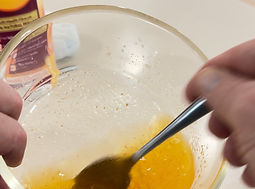
Fill your test tube (or cup) about one-third full with water. This is where the reaction will happen.
PREDICT
OBSERVE
EVIDENCE
ASK
SAFETY
TIP
PREDICT
Gather your materials and get
ready for an amazing mission!
3
Add Colour

Add a few drops of food colouring and gently mix. This will help you clearly see the blobs move later.
PREDICT
OBSERVE
EVIDENCE
ASK
SAFETY
TIP
PREDICT
Gather your materials and get
ready for an amazing mission!
4
Pour the Oil

Slowly pour vegetable oil into the test tube until it is almost full. Watch as the oil sits on top of the water.
PREDICT
OBSERVE
EVIDENCE
ASK
SAFETY
TIP
PREDICT
Gather your materials and get
ready for an amazing mission!
5
Let It Settle

Wait a moment until the oil and water separate into two clear layers.
PREDICT
OBSERVE
EVIDENCE
ASK
SAFETY
TIP
PREDICT
Gather your materials and get
ready for an amazing mission!
6
Drop in the Tablet

Add a small piece of the effervescent tablet and get ready…
PREDICT
OBSERVE
EVIDENCE
ASK
SAFETY
TIP
PREDICT
Gather your materials and get
ready for an amazing mission!
7
Watch the Lava Action

Colourful blobs will start rising, falling, and bouncing up and down like a lava lamp!
PREDICT
OBSERVE
EVIDENCE
ASK
SAFETY
TIP
PREDICT
Gather your materials and get
ready for an amazing mission!
8
Investigation 1 – Listen to the Science

Drop in a fresh piece of tablet, then hold the tube close to your ear.
Raise the glass or test tube near your ear.
PREDICT
OBSERVE
EVIDENCE
ASK
SAFETY
TIP
PREDICT
Gather your materials and get
ready for an amazing mission!
9
Investigation 2 - Watch the bubbles

Watch the coloured blobs as they rise and fall.
PREDICT
OBSERVE
EVIDENCE
ASK
SAFETY
TIP
PREDICT
Look at a glass of water and a glass of oil.
What do you think will happen if you pour them together?
Will they mix, float, or something else?
Record your prediction before you start.
1
Think Like a Scientist

Add a few drops of another colour.
PREDICT
OBSERVE
EVIDENCE
ASK
SAFETY
TIP
PREDICT
Look at a glass of water and a glass of oil.
What do you think will happen if you pour them together?
Will they mix, float, or something else?
Record your prediction before you start.
1
Think Like a Scientist

Now lets try a different oil (eg Olive, Canola)
PREDICT
OBSERVE
EVIDENCE
ASK
SAFETY
TIP
PREDICT
Look at a glass of water and a glass of oil.
What do you think will happen if you pour them together?
Will they mix, float, or something else?
Record your prediction before you start.
1
Big Title
Gather your materials and get
ready for an amazing mission!
PREDICT
OBSERVE
EVIDENCE
ASK
SAFETY
TIP
PREDICT
Look at a glass of water and a glass of oil.
What do you think will happen if you pour them together?
Will they mix, float, or something else?
Record your prediction before you start.
The Crazy Scientist LAB Learning System™
Every experiment follows The Crazy Scientist Lab Learning System™ — a simple way to help kids think like real scientists.
We
-
LINK to what they already know,
-
ACTIVATE curiosity through hands-on discovery
-
BUILD understanding that actually sticks.

You’ve probably seen a lava lamp before… but what’s actually making those blobs rise… fall… and then do it all over again?

At first, nothing seems to happen… then suddenly blobs start forming, rising, and falling.
But what is actually pushing them around?

Gas lifting things through liquid doesn't just happen in test tubes — it's how fish control their depth (they inflate a tiny gas bladder inside their body), how bread rises in the oven, and how bubbles carry flavour to the top of your glass of lemonade.
Next time you open a fizzy drink, watch closely — you're seeing the same force at work. Where else does gas push things upward through liquid?
"Want the full teacher guide? The Crazy Scientist Lab includes classroom delivery tips, how to manage the WOW moment, differentiation for Stage 2 & 3, — ready to teach tomorrow."
Think Like a Scientist
Scientists don't stop after their first discovery.
They ask new questions, collect more evidence and test their ideas in different ways.
Where could you take this investigation next?
What happens if you use warm vs cold water?
What happens if you change the size of the tablet?

Dr Puddledrip’s Science Tip

Read the Science
What’s Really Happening?
Oil and water do not like to mix.
The oil floats on top because it is less dense than water.
When the fizzy tablet touches the water, it releases tiny bubbles of carbon dioxide gas.
These bubbles stick to the coloured water droplets and carry them upward through the oil.
When the bubbles reach the top, they pop and release the gas.
Without the bubbles, the coloured water becomes heavier again and sinks back down.
That’s why the blobs keep rising and falling like a dancing lava lamp!
Why Do The Blobs Move?
The secret is the gas bubbles.
The bubbles act like tiny life jackets that help the coloured water float.
When the bubbles burst at the surface, the water loses its lift and sinks again.
The cycle repeats over and over until the tablet stops producing gas.
Real-World Science
Scientists use ideas about density and gases in many real-world situations, including:
Hot air balloons floating through the sky
Submarines rising and sinking underwater
Lava lamps creating moving blobs
Fish using swim bladders to control their depth
The same science is happening inside your test tube!
Curiosity Question
If bubbles can lift coloured water through oil…
Could they lift something bigger?
What would happen if you used warm water, cold water, or a different fizzy tablet?
Try Next
Does warm water make the blobs move faster?
What happens if you add more tablet?
Can you make the blobs larger?
Does a different oil change the result?
Try next
• See the same oil-water boundary create a completely different kind of spectacle → [Comet Collisions]
• Watch CO₂ bubbles do the same lifting trick with a different passenger → [Dancing Raisins]
Teachers & Homeschoolers: Print-ready HD versions of this Science Behind It poster and companion G&T Challenge Card are available inside The Crazy Scientist LAB.
Scientist's Challenge
Designed for HPGE, gifted learners and children who enjoy an extra challenge.

Teachers & Homeschoolers: Print-ready HD versions of this Science Behind It poster and companion G&T Challenge Card are available inside The Crazy Scientist LAB.
The Next Question...
You've solved today's mystery. Now discover where curiosity can take you next.
What is an acid-base reaction?
Citric acid is an acid — you can taste it. It's the sharp, sour flavour in lemons and limes. Sodium bicarbonate (baking soda) is its chemical opposite, called a base. On its own, each ingredient just sits there doing nothing.

Teachers & Homeschoolers: Print-ready HD versions of this Science Behind It poster and companion G&T Challenge Card are available inside The Crazy Scientist LAB.
Vocabulary
Polar molecule
A molecule with an uneven electrical charge — one end is slightly positive, the other slightly negative, like a tiny magnet. Water is polar, which is why it behaves so differently from oil.
Non-polar molecule
A molecule with an even distribution of charge — no positive or negative ends. Oil molecules are non-polar, which is why they don't mix with water.
Density
How much mass is packed into a given volume? Oil is less dense than water — the same volume of oil weighs less — so it always floats on top.
Know a parent or teacher who'd love this? Send it on! 👇
Keep Exploring This Mystery
One experiment leads to even more amazing discoveries inside the Learning Universe.
Curiosity Files
BIG Questions & Discovery
Illustrated Facts
Explore • Discover
Road Trip Science
Discover science everywhere
The Teacher's Cauldron
Think. Experiment. Inspire
Books
Read • Explore
Videos
Watch & Learn
LAB Resources
Premium learning resources


- Coming Late 2027
Make Them Get It WRONG! ... for a Brilliant Lesson.
- Coming Mid 2027
The Question Grenade: 5 Questions That Can Change an Investigation

- Coming Mid 2027
Why Won't Oil and Water Ever Be Best Friends?
Ready for Your Next Discovery?


READY TO TEACH THIS
TOMORROW?

Running the experiment is easy; however, teaching it well is another challenge.
Teachers often ask:
How do I adapt this for Stages 1,2 or 3?
What misconceptions will they have?
What syllabus outcomes does it cover?
What do I do with fast finishers?
How do I structure this for a full class?
What do I say when they ask WHY?
BUILD AROUND THE LAB LEARNING SYSTEM™
Every resource is designed using our teaching framework.

Inside The Crazy Scientist LAB
Everything you need to confidently teach science tomorrow.


Opening early 2027. Join the Founding Member Waitlist
More Ways to Explore The Crazy Scientist World
Discover more hands-on science fun, programs and resources for every curious mind.


