


Professor Picklebottom
Comet Collisions
Have you ever seen a tiny comet flying through space?
Believe it or not, you can make something that looks just like one in a glass of water!
The strange part is that the food colouring doesn't fall straight away. It lands on the oil, sits there for a moment... then suddenly blasts through into the water, leaving a colourful tail behind.
But why does it wait?
Today, you'll become a Space Science Detective and see if you can solve the mystery.

Ages
5-12 yrs
Duration
min
15
Difficulty
Easy
Stage
Stage 1-3
Cite this resource
Created by Darin Carr (BSc, DipEd)
NESA Accredited Teacher · Chemistry & Physics Specialist · 30+ years in-class teaching
Resource Version: 1.0
First Published:
Last Updated:
15 June 2026
21 Aug 2026

MISSION VERIFIED
Classroom tested. Teacher designed. Safe at home.

Designed by Darin Carr (BScDip Ed)
Practising NESA accredited
Australian Science Teacher
★ 30+ years of classroom experience
MISSION PROGRESS
9
young scientists have completed this mission.
I'VE COMPLETED THIS MISSION
Click to let us know you have completed this mission
LATEST TEACHER FEEDBACK
No feedback yet for this experiment. Use it with your class and let us know how it went!

Before you investigate... watch the mystery
MISSION HOOK
Professor Picklebottom and the team are travelling and collecting amazing science mysteries.
✔ Coming in Term 1 2027

KEEP EXPLORING
Curiosity Files
BIG Questions & Discovery
Illustrated Facts
Explore • Discover
Road Trip Science
Discover science everywhere
The Teacher's Cauldron
Think. Experiment. Inspire
Books
Read • Explore
Videos
Watch & Learn
LAB Resources
Premium learning resources

Mission Equipment
Gather your materials and get
ready for an amazing mission!
A tall clear glass or vase
Water
Vegetable oil
Food colouring
A dropper or pipette


Let’s Investigate
Follow the missions steps below to solve the mystery.
1
Build Your Space Lab
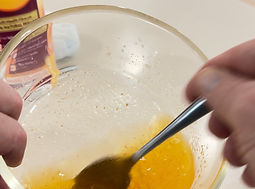
Fill a clear glass about two-thirds full with water.
Slowly pour vegetable oil on top until you have a layer about 2–3 cm deep.
Wait until the water and oil are completely still.
PREDICT
OBSERVE
EVIDENCE
ASK
SAFETY
TIP
PREDICT
Gather your materials and get
ready for an amazing mission!
2
Launch Your First Comet
Carefully place ONE small drop of food colouring onto the oil.
Don't stir the glass.
Watch carefully.
PREDICT
OBSERVE
EVIDENCE
ASK
SAFETY
TIP
PREDICT
Gather your materials and get
ready for an amazing mission!
3
Watch Like a Scientist
Keep watching your single drop before adding any more colours.
Look closely at how it changes as it moves through the water.
PREDICT
OBSERVE
EVIDENCE
ASK
SAFETY
TIP
PREDICT
Gather your materials and get
ready for an amazing mission!
4
Create a Comet Shower
Now add several more drops using different colours.
Try dropping them into different places on the oil.
Watch the colourful comet tails spread through the water.
PREDICT
OBSERVE
EVIDENCE
ASK
SAFETY
TIP
PREDICT
Gather your materials and get
ready for an amazing mission!
5
Become a Space Scientist
Empty the glass and start again.
Choose ONE thing to change.
PREDICT
OBSERVE
EVIDENCE
ASK
SAFETY
TIP
PREDICT
Gather your materials and get
ready for an amazing mission!
6
Try something different
Now run it as a proper investigation.
Reset with fresh oil and water, choose one variable to change, and keep everything else exactly the same.
Try a different type of oil. Try warming the water
PREDICT
OBSERVE
EVIDENCE
ASK
SAFETY
TIP
PREDICT
Gather your materials and get
ready for an amazing mission!
1
Big Title
Gather your materials and get
ready for an amazing mission!
PREDICT
OBSERVE
EVIDENCE
ASK
SAFETY
TIP
PREDICT
Gather your materials and get
ready for an amazing mission!
1
Big Title
Gather your materials and get
ready for an amazing mission!
PREDICT
OBSERVE
EVIDENCE
ASK
SAFETY
TIP
PREDICT
Gather your materials and get
ready for an amazing mission!
1
Big Title
Gather your materials and get
ready for an amazing mission!
PREDICT
OBSERVE
EVIDENCE
ASK
SAFETY
TIP
PREDICT
Where do you think the food colouring will go first?
○ Float on the oil
○ Sink straight to the bottom
○ Stay in the middle
○ Something else…
1
Build Your Space Lab
Gather your materials and get
ready for an amazing mission!
PREDICT
OBSERVE
EVIDENCE
ASK
SAFETY
TIP
PREDICT
Where do you think the food colouring will go first?
○ Float on the oil
○ Sink straight to the bottom
○ Stay in the middle
○ Something else…
1
Build Your Space Lab
Gather your materials and get
ready for an amazing mission!
PREDICT
OBSERVE
EVIDENCE
ASK
SAFETY
TIP
PREDICT
Where do you think the food colouring will go first?
○ Float on the oil
○ Sink straight to the bottom
○ Stay in the middle
○ Something else…
1
Big Title
Gather your materials and get
ready for an amazing mission!
PREDICT
OBSERVE
EVIDENCE
ASK
SAFETY
TIP
PREDICT
Where do you think the food colouring will go first?
○ Float on the oil
○ Sink straight to the bottom
○ Stay in the middle
○ Something else…
The Crazy Scientist LAB Learning System™
Every experiment follows The Crazy Scientist Lab Learning System™ — a simple way to help kids think like real scientists.
We
-
LINK to what they already know,
-
ACTIVATE curiosity through hands-on discovery
-
BUILD understanding that actually sticks.

You already know that oil and water don't mix. Shake a salad dressing, watch it separate. Pour oil into water, it floats. You've seen it a hundred times.
Here's your prediction before you touch anything: if you drop food colouring — which is water-based — into a glass that has a layer of oil floating on top of the water, what do you think will happen to the droplet?
Write it down. Does it sink straight through? Float on top? Sit at the boundary? Something else entirely? You're about to find out — and the answer has four different pieces of science in it.

Watch a single droplet closely from the moment it hits the oil — follow it all the way through until it stops moving
Try dropping two different colours at the same time and watch what happens when their tails meet in the water
The droplet formed a round bead at the oil-water boundary before it broke through — why do you think it held that shape instead of spreading out immediately?
The food colouring fell straight through the oil but then spread out sideways once it hit the water. What does that tell you about the relationship between the food colouring and each liquid?

Water molecules are polar — they carry an uneven charge, like a tiny magnet. They stick to other polar molecules and push away anything non-polar, like oil. Food colouring is polar, so water pulls it in the moment it arrives.
Soap works as a cleaning agent because one end of a soap molecule is attracted to water and the other end is attracted to oil — how does that help it remove grease that water alone can't shift?
Where else in everyday life do you see water and oil behaving like opposites — and what tricks do we use to force them to work together?
"Want the full teacher guide? The Crazy Scientist Lab includes classroom delivery tips, how to manage the WOW moment, differentiation for Stage 2 & 3, — ready to teach tomorrow."
Think Like a Scientist
Scientists don't stop after their first discovery.
They ask new questions, collect more evidence and test their ideas in different ways.
Where could you take this investigation next?
Does the viscosity of the oil change how long the droplet hangs at the boundary before breaking through — try vegetable oil vs. olive oil vs. baby oil?
Does the temperature of the water change how fast the food colouring spreads once it breaks through into the water layer?

Dr Puddledrip’s Science Tip
Read the Science
Oil floats on water because it's less dense — less mass packed into the same space. That invisible boundary between them is where everything happens.
Oil and water don't mix because of electrical charges. Water molecules carry an uneven electrical charge — like a tiny magnet with a positive and a negative end. Scientists call this being polar.
Polar molecules stick to other polar molecules and actively push away anything without a charge — like oil, which has no imbalance at all.
Food colouring is water-based and polar. When a droplet lands on the oil, the oil pushes it away into a tight, perfectly round bead — held together, repelled, suspended. Your comet's nucleus.
Then it punches through. The moment it enters the water below, the charged water molecules grab the dye and pull it outward in every direction — streaming downward, spreading as it falls. The comet's tail.
Did you notice the bead held its shape for a moment before breaking through? That's the oil actively pushing the water-based dye away. And did you spot that dropping from higher up changes how the tail fans out? Speed of impact changes everything.
This same polarity — polar and non-polar molecules refusing to mix — is exactly why fat floats suspended in milk, and why soap is needed to break up that standoff in [Magic Milk Reaction]. You can see the same oil-and-water density layers create a completely different spectacle in [Lava Tubes].
What would happen if you added a drop of dish soap to the oil before dropping in the food colouring — would the comets still form, or would something completely different happen?
Find out in The Crazy Scientist Lab.
Teachers & Homeschoolers: Print-ready HD versions of this Science Behind It poster and companion G&T Challenge Card are available inside The Crazy Scientist LAB.
Scientist's Challenge
Designed for HPGE, gifted learners and children who enjoy an extra challenge.
Teachers & Homeschoolers: Print-ready HD versions of this Science Behind It poster and companion G&T Challenge Card are available inside The Crazy Scientist LAB.
The Next Question...
You've solved today's mystery. Now discover where curiosity can take you next.
Teachers & Homeschoolers: Print-ready HD versions of this Science Behind It poster and companion G&T Challenge Card are available inside The Crazy Scientist LAB.
Vocabulary
Impact — The forceful contact that happens when objects collide.
Crater — A bowl-shaped hollow made by an impact.
Collision — When two objects hit each other.
Know a parent or teacher who'd love this? Send it on! 👇
Keep Exploring This Mystery
One experiment leads to even more amazing discoveries inside the Learning Universe.
Curiosity Files
BIG Questions & Discovery
Illustrated Facts
Explore • Discover
Road Trip Science
Discover science everywhere
The Teacher's Cauldron
Think. Experiment. Inspire
Books
Read • Explore
Videos
Watch & Learn
LAB Resources
Premium learning resources


- Coming Early 2027
Have You Seen Comets Colliding in Your Kitchen?
Ready for Your Next Discovery?


READY TO TEACH THIS
TOMORROW?

Running the experiment is easy; however, teaching it well is another challenge.
Teachers often ask:
How do I adapt this for Stages 1,2 or 3?
What misconceptions will they have?
What syllabus outcomes does it cover?
What do I do with fast finishers?
How do I structure this for a full class?
What do I say when they ask WHY?
BUILD AROUND THE LAB LEARNING SYSTEM™
Every resource is designed using our teaching framework.

Inside The Crazy Scientist LAB
Everything you need to confidently teach science tomorrow.


Opening early 2027. Join the Founding Member Waitlist
More Ways to Explore The Crazy Scientist World
Discover more hands-on science fun, programs and resources for every curious mind.


