


Professor Picklebottom
Super Absorber Challenge
Have you ever wondered how a baby’s nappy can hold so much liquid without leaking everywhere?
Scientists have invented a material so strange it can make water seem to vanish. Your mission: find out where it goes.
In this investigation, you’ll test this amazing material for yourself and discover just how much liquid it can hold before it reaches its limit.
But here’s the mystery…
Where does all the water actually go?

Ages
5-12 yrs
Duration
min
5
Difficulty
Easy
Stage
Stage 2-3
Cite this resource
Created by Darin Carr (BSc, DipEd)
NESA Accredited Teacher · Chemistry & Physics Specialist · 30+ years in-class teaching
Resource Version: 1.0
First Published:
Last Updated:
7 June 2026
31 July 2026

MISSION VERIFIED
Classroom tested. Teacher designed. Safe at home.

Designed by Darin Carr (BScDip Ed)
Practising NESA accredited
Australian Science Teacher
★ 30+ years of classroom experience
MISSION PROGRESS
1
young scientists have completed this mission.
I'VE COMPLETED THIS MISSION
Click to let us know you have completed this mission
LATEST TEACHER FEEDBACK
No feedback yet for this experiment. Use it with your class and let us know how it went!

Before you investigate... watch the mystery
MISSION HOOK
Professor Picklebottom and the team are travelling and collecting amazing science mysteries.
✔ Coming in Term 1 2027

KEEP EXPLORING
Curiosity Files
BIG Questions & Discovery
Illustrated Facts
Explore • Discover
Road Trip Science
Discover science everywhere
The Teacher's Cauldron
Think. Experiment. Inspire
Books
Read • Explore
Videos
Watch & Learn
LAB Resources
Premium learning resources

Mission Equipment
Gather your materials and get
ready for an amazing mission!
Sodium polyacrylate (instant snow powder)
Water
ziplock bag
permeable cloth
sticky tape
Water dropper (pipette)
food colouring (optional)


Let’s Investigate
Follow the missions steps below to solve the mystery.
1
Build Your Absorber

Place a tablespoon of super absorber powder inside a ziplock bag.
Spread it into a thin layer across the bottom of the bag.
PREDICT
OBSERVE
EVIDENCE
ASK
SAFETY
TIP
PREDICT
Gather your materials and get
ready for an amazing mission!
2
Create the Test Window

Cover the powder with a square of permeable cloth and secure it with tape.
This will help spread the water evenly during your test.
PREDICT
OBSERVE
EVIDENCE
ASK
SAFETY
TIP
PREDICT
Gather your materials and get
ready for an amazing mission!
3
Make a Prediction

How many drops of coloured water do you think your absorber can hold?
Write down your prediction before you start testing.
🔍 Prediction: ______ drops
PREDICT
OBSERVE
EVIDENCE
ASK
SAFETY
TIP
PREDICT
Gather your materials and get
ready for an amazing mission!
4
Begin the Test

Add coloured water one drop at a time.
Count every drop carefully as the liquid passes through the cloth.
PREDICT
OBSERVE
EVIDENCE
ASK
SAFETY
TIP
PREDICT
Gather your materials and get
ready for an amazing mission!
5
Gather Evidence

Watch what happens inside the bag. Does the water stay on top? Does it disappear?
Keep counting until you notice liquid remaining on the surface.
Mission Question:
Where does all the water go?
PREDICT
OBSERVE
EVIDENCE
ASK
SAFETY
TIP
PREDICT
Gather your materials and get
ready for an amazing mission!
6
Record Your Results

Examine your super absorber.
How many drops did it absorb?
How much did the material grow?
How did it change?
How close was your prediction?
PREDICT
OBSERVE
EVIDENCE
ASK
SAFETY
TIP
PREDICT
Gather your materials and get
ready for an amazing mission!
1
Big Title
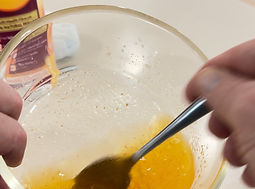
Gather your materials and get
ready for an amazing mission!
PREDICT
OBSERVE
EVIDENCE
ASK
SAFETY
TIP
PREDICT
Gather your materials and get
ready for an amazing mission!
1
Big Title
Gather your materials and get
ready for an amazing mission!
PREDICT
OBSERVE
EVIDENCE
ASK
SAFETY
TIP
PREDICT
Gather your materials and get
ready for an amazing mission!
1
Big Title
Gather your materials and get
ready for an amazing mission!
PREDICT
OBSERVE
EVIDENCE
ASK
SAFETY
TIP
PREDICT
1
Build Your Absorber
Gather your materials and get
ready for an amazing mission!
PREDICT
OBSERVE
EVIDENCE
ASK
SAFETY
TIP
PREDICT
1
Build Your Absorber
Gather your materials and get
ready for an amazing mission!
PREDICT
OBSERVE
EVIDENCE
ASK
SAFETY
TIP
PREDICT
1
Big Title
Gather your materials and get
ready for an amazing mission!
PREDICT
OBSERVE
EVIDENCE
ASK
SAFETY
TIP
PREDICT
The Crazy Scientist LAB Learning System™
Every experiment follows The Crazy Scientist Lab Learning System™ — a simple way to help kids think like real scientists.
We
-
LINK to what they already know,
-
ACTIVATE curiosity through hands-on discovery
-
BUILD understanding that actually sticks.

Have you ever spilled a drink and watched it spread everywhere?
Now imagine a material that can grab hold of water and stop it from escaping.
Could something really soak up hundreds of times its own weight?

The coloured water seems to disappear.
But it hasn’t vanished.
Look carefully.
Something is happening inside the bag that you can’t see.
Where do you think the water is hiding?

The powder you tested is called sodium polyacrylate.
It’s used inside nappies because it can lock huge amounts of water inside tiny particles.
Scientists and engineers also use similar materials to help soil hold water during dry periods.
Can you think of other places where a super absorber might be useful?
"Want the full teacher guide? The Crazy Scientist Lab includes classroom delivery tips, how to manage the WOW moment, differentiation for Stage 2 & 3, — ready to teach tomorrow."
Think Like a Scientist
Scientists don't stop after their first discovery.
They ask new questions, collect more evidence and test their ideas in different ways.
Where could you take this investigation next?
What happens if you change how much water you add?
What happens if the water is a different temperature?

Dr Puddledrip’s Science Tip

Read the Science
What Just Happened?
You didn’t make snow.
You made something far more surprising.
As the coloured water touched the white powder, it seemed to disappear almost instantly. But the water didn’t vanish at all.
So where did it go?
The Secret Material
The powder you used is called sodium polyacrylate.
Scientists call it a super absorber because it can soak up huge amounts of water compared to its own size.
That’s why this material is often used inside baby nappies to help keep babies dry.
The Big Mystery
Your super absorber trapped the water so effectively that the liquid seemed to disappear.
But look closely.
The powder became larger and fluffier as more water was added.
Somehow, the water was being stored inside the material itself.
But how can such a tiny amount of powder hold so much liquid?
And why doesn’t it feel completely soaking wet when you touch it?
Want to Go Further?
Scientists explain this using something called a polymer network — a hidden structure far too small to see with your eyes.
Inside The Crazy Scientist Lab, you’ll discover:
🔬 Why the powder swells so dramatically
🔬 How polymers trap water molecules
🔬 Why the material feels cool to touch
🔬 Whether the “snow” can be changed back again
Because the real science hiding inside this fluffy white material is even more surprising than the experiment itself.
Try these
[The Magic Skewer]).
Teachers & Homeschoolers: Print-ready HD versions of this Science Behind It poster and companion G&T Challenge Card are available inside The Crazy Scientist LAB.
Scientist's Challenge
Designed for HPGE, gifted learners and children who enjoy an extra challenge.

Teachers & Homeschoolers: Print-ready HD versions of this Science Behind It poster and companion G&T Challenge Card are available inside The Crazy Scientist LAB.
The Next Question...
You've solved today's mystery. Now discover where curiosity can take you next.
Can you design a better super absorber?
Scientists don’t just test materials.
They investigate how different conditions affect performance.
Your Challenge
Investigate ONE variable:
🔬 Amount of powder
🔬 Type of liquid (water, salty water, sugary water)

Teachers & Homeschoolers: Print-ready HD versions of this Science Behind It poster and companion G&T Challenge Card are available inside The Crazy Scientist LAB.
Vocabulary
Super Absorber
A material that can soak up and hold a very large amount of liquid.
Variable
Something you change during an investigation to see what effect it has.
Polymer
Long chain chemicals made up of repeating smaller units called monomers.
Know a parent or teacher who'd love this? Send it on! 👇
Keep Exploring This Mystery
One experiment leads to even more amazing discoveries inside the Learning Universe.
Curiosity Files
BIG Questions & Discovery
Illustrated Facts
Explore • Discover
Road Trip Science
Discover science everywhere
The Teacher's Cauldron
Think. Experiment. Inspire
Books
Read • Explore
Videos
Watch & Learn
LAB Resources
Premium learning resources


- Coming Early 2027
Could a Bandage Drink Up Your Blood?
- Coming Mid 2027
How Can a Baby’s Nappy Hold SO Much Wee?
Ready for Your Next Discovery?


READY TO TEACH THIS
TOMORROW?

Running the experiment is easy; however, teaching it well is another challenge.
Teachers often ask:
How do I adapt this for Stages 1,2 or 3?
What misconceptions will they have?
What syllabus outcomes does it cover?
What do I do with fast finishers?
How do I structure this for a full class?
What do I say when they ask WHY?
BUILD AROUND THE LAB LEARNING SYSTEM™
Every resource is designed using our teaching framework.

Inside The Crazy Scientist LAB
Everything you need to confidently teach science tomorrow.


Opening early 2027. Join the Founding Member Waitlist
More Ways to Explore The Crazy Scientist World
Discover more hands-on science fun, programs and resources for every curious mind.


