
Mission: Underwater Air Rescue

Professor Picklebottom
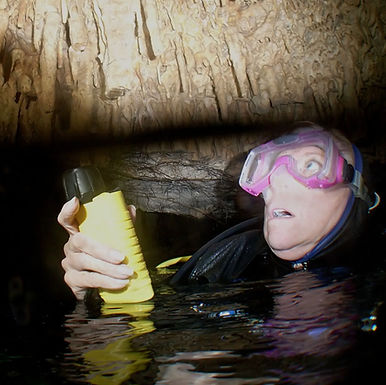
Mission Briefing.
A diver has become trapped beneath the surface.
There is no way back to the top.
The only hope is to build a hidden underwater air cave where the diver can stay dry and breathe.
But there is a problem…
Air is invisible.
Can invisible air really stop water from flooding in?
Today you’ll investigate one of the strangest secrets in science.
5-12 yrs
5
min
Easy
Stage 2, Stage 3
Designed by Darin Carr (BSc, DipEd)
NESA Accredited Teacher · Chemistry & Physics Specialist · 30+ years in-class teaching
Creator of the LAB™ Learning System
Last updated: June 2026 ·
[Cite this resource ↗]
>
Mission: Underwater Air Rescue
-
NESA Accredited Teacher
-
High school chemistry & physics specialist 30+ years
-
The Crazy Scientist in primary schools — 15 years
-
International conference presenter on science education
-
Creator of the LAB™ Learning System
-
Curriculum aligned: NSW Science & Technology K–6 (2024)
A picture is worth a thousand words — check this out and see if you can spot the science hiding in plain sight.
Mission Equipment
Large clear container or tub filled with water
Clear plastic cup or drinking glass
Tissue paper
LEGO diver, toy figure, or paper “message”
Optional: waterproof torch or light
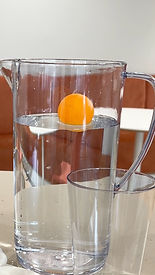
Optional: ping pong ball

Let’s Investigate
1
Your diver is stranded
Place your diver inside the water container.
Imagine they are trapped beneath an underwater cave.
Prediction
Will the diver stay dry underwater?
□ Yes
□ No
□ Not sure
3
The deep dive
Slowly push the glass straight down into the water while keeping it over the diver.
Watch like a scientist
As the glass moves down:
□ Does water enter the cave?
□ Does the diver stay dry?
□ Can you see trapped air?
□ What surprises you?

5
The mystery leak
Slowly tilt the cave.
Before you do:
What do you think will escape first?
□ Water
□ Air bubbles
□ Nothing

2
Build the air cave.
Place the upside-down glass carefully over the diver ball.
Do NOT push it underwater yet.
Before you test…
The glass looks empty.
But is it really empty?
What do you think is inside the glass?
□ Nothing
□ Air
□ Water

4
Cave inspection
Look closely.
What evidence can you find?
□ Dry space above the diver
□ Water outside the cave
□ Air trapped at the top
□ Diver still protected

6
The flooded cave
Observe what happens.
□ Air bubbles escaped
□ Water entered the cave
□ The diver got wet
□ The cave disappeared

Did it work? Share the science! Tag @the_crazy_scientist on Instagram — we love seeing your experiments!
The Crazy Scientist LAB Learning System™
Every experiment follows The Crazy Scientist Lab Learning System™ — a simple way to help kids think like real scientists.
We
-
LINK to what they already know,
-
ACTIVATE curiosity through hands-on discovery
-
BUILD understanding that actually sticks.

Have you ever:
hidden under an upside-down pool float?
trapped bubbles underwater in the bath?
wondered how submarines survive underwater?
Water seems to fill every space it can.
So how can an invisible gas stop water from entering an underwater cave?
Predict:
Can invisible air stop water from entering your underwater cave?

The diver stayed dry.
But how?
The cup looked empty…
yet something inside stopped the water from flooding in.
Think about your observations:
• What was trapped inside the cup?
• Why did bubbles escape when the cup tilted?
• What happened when the trapped air escaped completely?

Air takes up space
Even though you cannot see it, air is matter.
That means it:
• takes up space
• has mass
• can push on things
When the upside-down cup went underwater, trapped air stayed inside.
That trapped air pushed back against the surrounding water and created a hidden air cave.
As long as the air remained trapped, the diver stayed dry.
When the air escaped as bubbles, water rushed in and flooded the cave.
Scientists use this same idea in:
• diving bells
• submarines
• underwater tunnels
"Want the full teacher guide? The Crazy Scientist Lab includes classroom delivery tips, how to manage the WOW moment, differentiation for Stage 2 & 3, — ready to teach tomorrow."
Think Like a Scientist
Scientists don't just do ONE experiment; they change one part of the experiment (independent variable) and then see how it affects another part of the experiment
(dependent variable)
Change ONE variable and test again.
Does the shape or size of the cup affect how much water enters the air cave?
What happens if you push the underwater cave deeper and deeper?
🧪 Try it! Change ONE thing and test again. What did you discover?

Dr Puddledrip’s Science Tip
Want to go deeper? Tap a section below to explore. ▼
The Science Behind It
Is the glass really empty?
Most people think an upside-down glass is empty.
It isn’t.
Even before it touches the water, the glass is already filled with something invisible: air.
When the glass went underwater, that trapped air became very important.
Why didn’t the water flood in?
When you pushed the glass straight down, the air stayed trapped inside.
That trapped air stopped the water from completely filling the glass.
As long as the air remained trapped, the diver stayed dry.
Why did tilting change everything?
The moment the glass tilted, bubbles escaped.
Once some of the trapped air left, water was able to move into the space it had been protecting.
That is why the underwater cave flooded.
Real-World Science
Scientists use trapped air in many situations, including:
• diving bells
• submarines
• underwater habitats
Understanding how air behaves underwater helps engineers design equipment that keeps people safe.
Curiosity Spark
What do you think would happen if you pushed the glass deeper and deeper underwater?
Would the air bubble stay the same size?
Or would something unexpected happen?
Discover more inside The Crazy Scientist Lab.
Find out in The Crazy Scientist Lab.
Try next
• See air pressure keeping liquid in place in a completely different way → [Drink Up]
• Watch air pressure create an invisible force that keeps a ball floating → [The Impossible Blow]

Teachers & Homeschoolers: Print-ready HD versions of this Science Behind It poster and companion G&T Challenge Card are available inside The Crazy Scientist LAB.
Extension: HPGE / Gifted Learners
What is air pressure, really?
The air above us has mass — it weighs something. A column of air stretching from where you are standing all the way to the top of the atmosphere presses down on every square centimetre of the Earth's surface with enormous force. This is atmospheric pressure.
At sea level, atmospheric pressure is about 101,000 pascals — roughly the same as a 1-kilogram weight pressing on every square centimetre of your skin. You don't feel it because it pushes equally in all directions. Your body pushes back with the same force. Everything is in balance.
Push the glass underwater. Now water pressure adds to atmospheric pressure pushing against the trapped air. Does more water pressure mean more air is pushed into the glass — or that the air compresses? Make your prediction before reading on.
Why doesn't the water enter?
• The trapped air cannot escape while the glass is held straight. Water would only enter if it could push the air out of the way — but the air is pressing back with equal force. Neither wins. This balance is called pressure equilibrium.
• The moment you tilt the glass and a bubble escapes, the balance breaks. Water floods in immediately.

Teachers & Homeschoolers: Print-ready HD versions of this Science Behind It poster and companion G&T Challenge Card are available inside The Crazy Scientist LAB.
Vocabulary
Air pressure — the pushing force that air creates in all directions. The atmosphere above us pushes down on the Earth's surface, on water, and on anything in between.
Atmospheric pressure — air pressure caused by the weight of the entire atmosphere pressing down from above. At sea level this is the strongest air pressure we normally experience.
Trapped air — air enclosed in a space and unable to escape. In this experiment, the air inside the upside-down glass is trapped — it cannot escape past the water surrounding the rim.
Compress/compression — to squash something into a smaller space. When pressure on a trapped gas increases, the gas compresses — molecules are pushed closer together.
Know a parent or teacher who'd love this? Send it on! 👇
READY TO TEACH THIS
TOMORROW?

Running the experiment is easy; however, teaching it well is another challenge.
Teachers often ask:
How do I adapt this for Stages 1,2 or 3?
What do I do with fast finishers?
What misconceptions will they have?
How do I structure this for a full class?
What syllabus outcomes does it cover?
What do I say when they ask WHY?
BUILD AROUND THE LAB LEARNING SYSTEM™
Every resource is designed using our teaching framework.

Inside The Crazy Scientist LAB
Everything you need to confidently teach science tomorrow.


Opening early 2027. Join the Founding Member Waitlist

Try Another Crazy Experiment
Keep the science going with these fun experiments
Let's Go!
Keep exploring with The Crazy Scientist


Hands-On Science Workshops
Interactive STEM experiences aligned to the NSW syllabus.
