


Professor Picklebottom
Ocean Energy in a Bottle
Tip a bottle and watch a wave travel from one end to the other. Now ask yourself where the water went. Not the wave — the actual water. It's a question most people have never thought to ask. And the tiny duck floating inside has the answer.

Ages
5-12 yrs
Duration
min
20
Difficulty
Easy
Stage
Stage 2-3
Cite this resource
Created by Darin Carr (BSc, DipEd)
NESA Accredited Teacher · Chemistry & Physics Specialist · 30+ years in-class teaching
Resource Version: 1.0
First Published:
Last Updated:
1 June 2026
21 Aug 2026

MISSION VERIFIED
Classroom tested. Teacher designed. Safe at home.

Designed by Darin Carr (BScDip Ed)
Practising NESA accredited
Australian Science Teacher
★ 30+ years of classroom experience
MISSION PROGRESS
0
young scientists have completed this mission.
I'VE COMPLETED THIS MISSION
Click to let us know you have completed this mission
LATEST TEACHER FEEDBACK
No feedback yet for this experiment. Use it with your class and let us know how it went!

Before you investigate... watch the mystery
MISSION HOOK
Professor Picklebottom and the team are travelling and collecting amazing science mysteries.
✔ Coming in Term 1 2027
KEEP EXPLORING
Curiosity Files
BIG Questions & Discovery
Illustrated Facts
Explore • Discover
Road Trip Science
Discover science everywhere
The Teacher's Cauldron
Think. Experiment. Inspire
Books
Read • Explore
Videos
Watch & Learn
LAB Resources
Premium learning resources

Mission Equipment
Gather your materials and get
ready for an amazing mission!
A clear plastic bottle with a tight-fitting lid — 500 ml works well (the clearer the better)
Baby oil or mineral oil — enough to fill roughly half the bottle
Water
Blue food colouring
A mini rubber duck — approximately 1.5–2 cm


Let’s Investigate
Follow the missions steps below to solve the mystery.
1
Fill with water
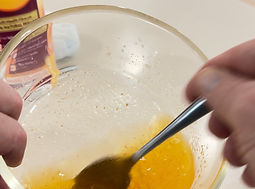
Add a few drops of blue food colouring to your water, stir to mix, then pour it into the clean clear bottle until it is just under half full.
This is your ocean layer.
PREDICT
OBSERVE
EVIDENCE
ASK
SAFETY
TIP
PREDICT
Gather your materials and get
ready for an amazing mission!
2
Add an object
Before the oil goes in, drop your two objects into the water: the small piece of birthday candle and the mini rubber duck.
PREDICT
OBSERVE
EVIDENCE
ASK
SAFETY
TIP
PREDICT
Gather your materials and get
ready for an amazing mission!
3
Add the oil
Slowly pour baby oil or mineral oil into the bottle until it is almost full — leave about 1–2 cm of air space at the top.
Watch the oil settle on top of the water. Screw the lid on tightly,
PREDICT
OBSERVE
EVIDENCE
ASK
SAFETY
TIP
PREDICT
Gather your materials and get
ready for an amazing mission!
4
Make your predictio
Before you make any waves: predict — when a wave travels from one end of the bottle to the other, where will the duck end up once the wave has passed? Write it down.
PREDICT
OBSERVE
EVIDENCE
ASK
SAFETY
TIP
PREDICT
Gather your materials and get
ready for an amazing mission!
5
Make your wave
Hold the bottle horizontally — just enough to send a single wave from one end to the other.
Then stop and watch.
Follow the duck from the moment the wave forms until everything goes still. Do not tip again until the bottle has completely settled.
PREDICT
OBSERVE
EVIDENCE
ASK
SAFETY
TIP
PREDICT
Gather your materials and get
ready for an amazing mission!
1
Big Title
Gather your materials and get
ready for an amazing mission!
PREDICT
OBSERVE
EVIDENCE
ASK
SAFETY
TIP
PREDICT
Gather your materials and get
ready for an amazing mission!
1
Big Title
Gather your materials and get
ready for an amazing mission!
PREDICT
OBSERVE
EVIDENCE
ASK
SAFETY
TIP
PREDICT
Gather your materials and get
ready for an amazing mission!
1
Big Title
Gather your materials and get
ready for an amazing mission!
PREDICT
OBSERVE
EVIDENCE
ASK
SAFETY
TIP
PREDICT
Gather your materials and get
ready for an amazing mission!
1
Big Title
Gather your materials and get
ready for an amazing mission!
PREDICT
OBSERVE
EVIDENCE
ASK
SAFETY
TIP
PREDICT
1
Fill with water
Gather your materials and get
ready for an amazing mission!
PREDICT
OBSERVE
EVIDENCE
ASK
SAFETY
TIP
PREDICT
1
Fill with water
Gather your materials and get
ready for an amazing mission!
PREDICT
OBSERVE
EVIDENCE
ASK
SAFETY
TIP
PREDICT
1
Big Title
Gather your materials and get
ready for an amazing mission!
PREDICT
OBSERVE
EVIDENCE
ASK
SAFETY
TIP
PREDICT
The Crazy Scientist LAB Learning System™
Every experiment follows The Crazy Scientist Lab Learning System™ — a simple way to help kids think like real scientists.
We
-
LINK to what they already know,
-
ACTIVATE curiosity through hands-on discovery
-
BUILD understanding that actually sticks.

Think about the last time you watched waves rolling into a beach — one after another, coming in from the horizon without stopping.
If the water was moving forward with each wave, the ocean would eventually empty out onto the beach. But it doesn't. The water stays. Something keeps travelling in. But it isn't the water.
Here's your prediction before you touch anything: you're going to make a wave in a sealed bottle with a rubber duck floating inside. Once the wave passes through — where do you think the duck ends up?

Tip the bottle once — just enough to send a single wave from one end to the other. Then stop. Watch the duck from the moment the wave forms until everything settles.
Try it again, more slowly. This time watch the candle piece at the same time as the duck — notice whether they move in the same direction or differently.
After the wave passed, where did the duck end up? Exactly where it started, or at the other end of the bottle?
The wave clearly moved from one end to the other. Which direction did the duck move — forward with the wave, or up and down?

The duck stayed behind. The wave kept going. Something travelled through the bottle — but it wasn't the water, and it wasn't the duck. Now think about where else that same thing is travelling, invisibly, through everything around you.
A storm in the Southern Ocean can send waves all the way to a beach in Queensland — thousands of kilometres. If the water isn't making that journey, what is? And when a surfer catches one of those waves, what is actually lifting them?
"Want the full teacher guide? The Crazy Scientist Lab includes classroom delivery tips, how to manage the WOW moment, differentiation for Stage 2 & 3, — ready to teach tomorrow."
Think Like a Scientist
Scientists don't stop after their first discovery.
They ask new questions, collect more evidence and test their ideas in different ways.
Where could you take this investigation next?
Does a thicker oil layer produce smoother, slower waves, or does the proportion not make a difference to the wave's speed?
Does a longer bottle (longer wave travel distance) produce a more dramatic up-and-down motion in the duck than a shorter one?
Dr Puddledrip’s Science Tip
Read the Science
Here's what most people assume when they watch a wave: the water is moving forward.
A wave rolls across the ocean toward the beach, and it looks like water is travelling. But the duck in your bottle just showed you that this isn't what's happening.
A wave is not a movement of matter. It is a transfer of energy through a medium.
When you tip the bottle, you give energy to the fluid at one end. That energy disturbs the particles — pushing them slightly, which pushes the particles next to them, which push the next ones, all the way to the other end of the bottle. The energy travels through the medium. Each particle moves a little — up and down, in a small circle — and then returns to where it started.
That's why the duck bobs vertically and ends up back where it started. It's being moved by passing energy, not by travelling water.
You can see the same principle at work in [The Wave Factory], where the wave structure makes the energy transfer visible in a completely different way. And in [The Whisper Wire], sound does exactly the same thing through a string — energy passes through the medium, particle by particle, while the string itself goes nowhere.
Curiosity spark: If particles just move in circles and return to where they started, why do ocean waves eventually crash on a beach? The wave doesn't change — but something about the beach does. What do you think it is?
Find out in The Crazy Scientist Lab.
Teachers & Homeschoolers: Print-ready HD versions of this Science Behind It poster and companion G&T Challenge Card are available inside The Crazy Scientist LAB.
Scientist's Challenge
Designed for HPGE, gifted learners and children who enjoy an extra challenge.
Teachers & Homeschoolers: Print-ready HD versions of this Science Behind It poster and companion G&T Challenge Card are available inside The Crazy Scientist LAB.
The Next Question...
You've solved today's mystery. Now discover where curiosity can take you next.
Teachers & Homeschoolers: Print-ready HD versions of this Science Behind It poster and companion G&T Challenge Card are available inside The Crazy Scientist LAB.
Vocabulary
Wave — A movement that transfers energy through water.
Energy — The ability to cause movement or change.
Motion — A change in an object's position.
Know a parent or teacher who'd love this? Send it on! 👇
Keep Exploring This Mystery
One experiment leads to even more amazing discoveries inside the Learning Universe.
Curiosity Files
BIG Questions & Discovery
Illustrated Facts
Explore • Discover
Road Trip Science
Discover science everywhere
The Teacher's Cauldron
Think. Experiment. Inspire
Books
Read • Explore
Videos
Watch & Learn
LAB Resources
Premium learning resources
Ready for Your Next Discovery?


READY TO TEACH THIS
TOMORROW?

Running the experiment is easy; however, teaching it well is another challenge.
Teachers often ask:
How do I adapt this for Stages 1,2 or 3?
What misconceptions will they have?
What syllabus outcomes does it cover?
What do I do with fast finishers?
How do I structure this for a full class?
What do I say when they ask WHY?
BUILD AROUND THE LAB LEARNING SYSTEM™
Every resource is designed using our teaching framework.

Inside The Crazy Scientist LAB
Everything you need to confidently teach science tomorrow.


Opening early 2027. Join the Founding Member Waitlist
More Ways to Explore The Crazy Scientist World
Discover more hands-on science fun, programs and resources for every curious mind.


