


Essy
Snail Slime
Can you create a material that behaves like snail slime?
Snails can crawl over rough surfaces, sharp objects and even razor blades without getting injured. Their secret is a special slime that helps protect their soft bodies while they move.
Today you’ll create a strange material using a plant powder and investigate how it behaves. As it changes, look for clues about why snail slime is such an amazing natural material.
Observe carefully, test its properties and decide:
Does your material behave like real snail slime?

Ages
5-12 yrs
Duration
min
15
Difficulty
Easy
Stage
Stage 1-3
Cite this resource
Created by Darin Carr (BSc, DipEd)
NESA Accredited Teacher · Chemistry & Physics Specialist · 30+ years in-class teaching
Resource Version: 1.0
First Published:
Last Updated:
28 May 2026
31 July 2026

MISSION VERIFIED
Classroom tested. Teacher designed. Safe at home.

Designed by Darin Carr (BScDip Ed)
Practising NESA accredited
Australian Science Teacher
★ 30+ years of classroom experience
MISSION PROGRESS
23
young scientists have completed this mission.
I'VE COMPLETED THIS MISSION
Click to let us know you have completed this mission
LATEST TEACHER FEEDBACK
No feedback yet for this experiment. Use it with your class and let us know how it went!

Before you investigate... watch the mystery
MISSION HOOK
Professor Picklebottom and the team are travelling and collecting amazing science mysteries.
✔ Coming in Term 1 2027

KEEP EXPLORING
Curiosity Files
BIG Questions & Discovery
Illustrated Facts
Explore • Discover
Road Trip Science
Discover science everywhere
The Teacher's Cauldron
Think. Experiment. Inspire
Books
Read • Explore
Videos
Watch & Learn
LAB Resources
Premium learning resources

Mission Equipment
Gather your materials and get
ready for an amazing mission!
1 teaspoon psyllium husk powder — sold as Metamucil
1 cup cold water
Food colouring — optional; add to the water before mixing; silver or grey makes a convincing snail-slime colour
A microwave-safe bowl — use a LARGE bowl; the mixture will overflow during heating
A microwave
Oven mitts — the bowl will be extremely hot
A spoon for stirring


Let’s Investigate
Follow the missions steps below to solve the mystery.
1
Create the Mystery Mixture

What to do
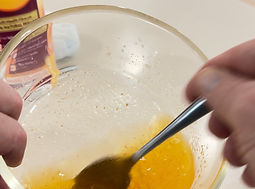
Place 1 teaspoon of psyllium husk powder into the bowl.
Add 1 cup of water.
Stir for 30 seconds.
Clue to look for
Does it look like water, or is it already starting to change?
PREDICT
OBSERVE
EVIDENCE
ASK
SAFETY
TIP
PREDICT
Gather your materials and get
ready for an amazing mission!
2
Make your prediction

Before heating…
Real snail slime is stretchy, slippery and protects a snail’s body.
What do you think our mystery material will become?
☐ Runny like water
☐ Thick and sticky
☐ Stretchy like slime
☐ Dry and rubbery
☐ Something else
PREDICT
OBSERVE
EVIDENCE
ASK
SAFETY
TIP
PREDICT
Gather your materials and get
ready for an amazing mission!
3
Watch for Changes

Adult help needed
Place the bowl in the microwave.
Heat for 2 minutes.
Watch carefully through the door.
Clue to look for
What is the first change you notice?
☐ Bubbles
☐ Thickening
PREDICT
OBSERVE
EVIDENCE
ASK
SAFETY
TIP
PREDICT
Gather your materials and get
ready for an amazing mission!
4
Watch It Grow

What to do
Continue heating in 30-second bursts.
Watch as the mixture grows.
Clue to look for
How high does it rise?
☐ Barely rises
☐ Doubles in size
☐ Reaches the rim
PREDICT
OBSERVE
EVIDENCE
ASK
SAFETY
TIP
PREDICT
Gather your materials and get
ready for an amazing mission!
5
Cool & Investigate

What to do
Carefully remove the bowl.
Leave it to cool completely.
Clue to look for
Which words describe your material?
☐ Sticky
☐ Stretchy
☐ Slippery
☐ Rubbery
☐ Squishy
☐ Wet
PREDICT
OBSERVE
EVIDENCE
ASK
SAFETY
TIP
PREDICT
Gather your materials and get
ready for an amazing mission!
6
Snail Slime Test Lab

Test your material
Can it:
☐ Stretch?
☐ Hold its shape?
☐ Stick to a surface?
☐ Slowly flow?
☐ Return to shape after squashing?
PREDICT
OBSERVE
EVIDENCE
ASK
SAFETY
TIP
PREDICT
Gather your materials and get
ready for an amazing mission!
1
Big Title
Gather your materials and get
ready for an amazing mission!
PREDICT
OBSERVE
EVIDENCE
ASK
SAFETY
TIP
PREDICT
Gather your materials and get
ready for an amazing mission!
1
Big Title
Gather your materials and get
ready for an amazing mission!
PREDICT
OBSERVE
EVIDENCE
ASK
SAFETY
TIP
PREDICT
Gather your materials and get
ready for an amazing mission!
1
Big Title
Gather your materials and get
ready for an amazing mission!
PREDICT
OBSERVE
EVIDENCE
ASK
SAFETY
TIP
PREDICT
1
Create the Mystery Mixture
Gather your materials and get
ready for an amazing mission!
PREDICT
OBSERVE
EVIDENCE
ASK
SAFETY
TIP
PREDICT
1
Create the Mystery Mixture
Gather your materials and get
ready for an amazing mission!
PREDICT
OBSERVE
EVIDENCE
ASK
SAFETY
TIP
PREDICT
1
Big Title
Gather your materials and get
ready for an amazing mission!
PREDICT
OBSERVE
EVIDENCE
ASK
SAFETY
TIP
PREDICT
The Crazy Scientist LAB Learning System™
Every experiment follows The Crazy Scientist Lab Learning System™ — a simple way to help kids think like real scientists.
We
-
LINK to what they already know,
-
ACTIVATE curiosity through hands-on discovery
-
BUILD understanding that actually sticks.

Have you ever watched a snail climb a wall or slide across a rough path?
A snail’s body is soft and squishy, yet it can move across sharp sticks, rough rocks and even glass without being damaged.
Its secret is slime.
Today you’ll investigate a strange material that shares some surprising properties with real snail slime.
Predict: Will your material behave like the slime a snail uses?

When your mixture started to rise in the microwave:
Was it a liquid?
Was it a solid?
Was it both?
Scientists call materials like this “weird materials” because they don’t always behave the way we expect.
Think about your finished slime:
Does it flow?
Does it stretch?
Does it bounce back?
Is it more like a liquid or a solid?
Can one material be both?

Your snail slime started as a powder and water, but heating changed it into a stretchy gel.
Inside the psyllium are long chains that absorb and trap water.
Real snail slime works differently, but it does something similar—it helps trap water, cushion the snail’s body and protect it while moving.
Scientists study natural materials like snail slime to design new materials for medicine, engineering and technology.
Your investigation showed that some materials can:
✔ Stretch
✔ Hold water
✔ Change shape
✔ Protect soft surfaces
Just like a snail’s slime does in nature.
"Want the full teacher guide? The Crazy Scientist Lab includes classroom delivery tips, how to manage the WOW moment, differentiation for Stage 2 & 3, — ready to teach tomorrow."
Think Like a Scientist
Scientists don't stop after their first discovery.
They ask new questions, collect more evidence and test their ideas in different ways.
Where could you take this investigation next?
Does the amount of psyllium husk change how stiff the result is — does more husk produce a firmer, stiffer slime, or does it make no difference?
Does the microwave time change the texture — does longer microwaving produce a firmer result, or does it make the slime softer and more watery?

Dr Puddledrip’s Science Tip

Read the Science
Why Is Snail Slime So Special?
Snails are soft-bodied animals, yet they can crawl across rough surfaces, sharp sticks and even glass without getting hurt.
Their secret is slime.
But snail slime is not just wet goo. It is a remarkable material that helps protect the snail while it moves.
Trapping Water
Real snail slime is mostly water.
The trick is that the water does not simply run away.
Instead, it is trapped inside a network of tiny natural molecules that help the slime stay moist, stretchy and protective.
Your psyllium mixture works in a similar way.
What Happened In The Microwave?
When you mixed the powder with water, not much seemed to happen at first.
But as the mixture heated, something changed.
The material began trapping more water and air, causing it to swell and grow.
That is why you saw the mixture rise higher and higher inside the bowl.
From Liquid To Slime
After cooling, the material behaved very differently from when you started.
Instead of watery liquid, you had a stretchy, rubbery gel.
Scientists call materials like this hydrogels because they can hold large amounts of water while still keeping their shape.
Nature’s Engineers
Snails have been using slime successfully for hundreds of millions of years.
Scientists study natural materials like snail slime to learn how to create better products for medicine, engineering and technology.
Sometimes nature has already solved the problem long before humans arrive.
Think Like A Scientist
Your slime could:
✔ Stretch
✔ Hold water
✔ Keep its shape
✔ Protect soft surfaces
How many of these properties are similar to real snail slime?
To compare this natural process with a synthetic one, try [The Polymer Factory]. For another edible, heat-set material that sets using protein chains instead of sugar chains, try [The Sweet Lab].
Teachers & Homeschoolers: Print-ready HD versions of this Science Behind It poster and companion G&T Challenge Card are available inside The Crazy Scientist LAB.
Scientist's Challenge
Designed for HPGE, gifted learners and children who enjoy an extra challenge.

Teachers & Homeschoolers: Print-ready HD versions of this Science Behind It poster and companion G&T Challenge Card are available inside The Crazy Scientist LAB.
The Next Question...
You've solved today's mystery. Now discover where curiosity can take you next.
How does snail slime allow a snail to climb upside down?
Snail mucus is a non‑Newtonian gel — a material that can behave like a liquid or a soft solid depending on how it is pushed. When part of the snail’s foot presses down and pushes backward, the slime softens and flows, letting that part of the foot slide forward. When the foot lifts, the slime firms up again, gripping the surface like a flexible glue pad.
Different parts of the foot switch between “sliding mode” and “gripping mode” in a wave that travels along the snail’s body. At any moment, some regions are flowing while others are holding tight. This alternating pattern is what lets the snail move smoothly on vertical walls — or even across the underside of a leaf — without falling.
Engineers designing soft robots want materials that can flow when pushed and grip when pressure is removed. If the robot needed to work underwater, what extra property would its “slime” need to have to maintain grip in a fluid environment?

Teachers & Homeschoolers: Print-ready HD versions of this Science Behind It poster and companion G&T Challenge Card are available inside The Crazy Scientist LAB.
Vocabulary
Polymer A very long molecule made of many repeated units. The psyllium chains in this slime are natural polymers.
Hydrogel A material made of a polymer network that holds a large amount of water while still behaving like a solid. Snail slime and psyllium slime are both hydrogels.
Non‑Newtonian fluid A fluid that changes its thickness depending on the force applied. Snail slime flows under gentle pressure but firms up under sudden force.
Absorb To take in and hold a substance. Psyllium chains absorb water and swell, trapping the water inside the network.
Know a parent or teacher who'd love this? Send it on! 👇
Keep Exploring This Mystery
One experiment leads to even more amazing discoveries inside the Learning Universe.
Curiosity Files
BIG Questions & Discovery
Illustrated Facts
Explore • Discover
Road Trip Science
Discover science everywhere
The Teacher's Cauldron
Think. Experiment. Inspire
Books
Read • Explore
Videos
Watch & Learn
LAB Resources
Premium learning resources


- Coming Early 2027
Can a Fish Fire Snot at Its Enemies?
- Coming Mid 2027
Could Slime Help a Snail Crawl Across a Razor Blade?
Ready for Your Next Discovery?


READY TO TEACH THIS
TOMORROW?

Running the experiment is easy; however, teaching it well is another challenge.
Teachers often ask:
How do I adapt this for Stages 1,2 or 3?
What misconceptions will they have?
What syllabus outcomes does it cover?
What do I do with fast finishers?
How do I structure this for a full class?
What do I say when they ask WHY?
BUILD AROUND THE LAB LEARNING SYSTEM™
Every resource is designed using our teaching framework.

Inside The Crazy Scientist LAB
Everything you need to confidently teach science tomorrow.


Opening early 2027. Join the Founding Member Waitlist
More Ways to Explore The Crazy Scientist World
Discover more hands-on science fun, programs and resources for every curious mind.


