


Essy
Water Bug Challenge
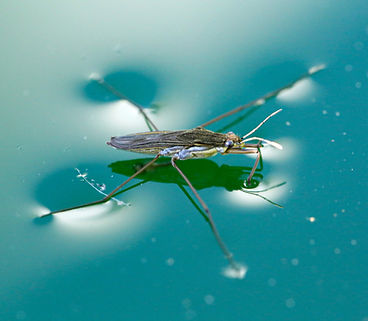
Have you ever seen tiny insects walking across a pond?
They don’t seem to sink! I started wondering… how can something so small stand on top of water? Then I had another question… what if more and more insects landed on the pond?
Would the water keep holding them, or would its invisible skin finally break?
Let’s investigate!
Ages
5-12 yrs
Duration
min
10
Difficulty
Easy
Stage
Stage 1-3
Cite this resource
Created by Darin Carr (BSc, DipEd)
NESA Accredited Teacher · Chemistry & Physics Specialist · 30+ years in-class teaching
Resource Version: 1.0
First Published:
Last Updated:
7 July 2026
18 July 2026

MISSION VERIFIED
Classroom tested. Teacher designed. Safe at home.

Designed by Darin Carr (BScDip Ed)
Practising NESA accredited
Australian Science Teacher
★ 30+ years of classroom experience
MISSION PROGRESS
8
young scientists have completed this mission.
I'VE COMPLETED THIS MISSION
Click to let us know you have completed this mission
LATEST TEACHER FEEDBACK
No feedback yet for this experiment. Use it with your class and let us know how it went!

Before you investigate... watch the mystery
MISSION HOOK
Professor Picklebottom and the team are travelling and collecting amazing science mysteries.
✔ Coming in Term 1 2027

KEEP EXPLORING
Curiosity Files
BIG Questions & Discovery
Illustrated Facts
Explore • Discover
Road Trip Science
Discover science everywhere
The Teacher's Cauldron
Think. Experiment. Inspire
Books
Read • Explore
Videos
Watch & Learn
LAB Resources
Premium learning resources

Mission Equipment
Gather your materials and get
ready for an amazing mission!
Bowl or tray of water
10 small, medium and large paperclips


Let’s Investigate
Follow the missions steps below to solve the mystery.
1
Make Your First Water Bug

Fill your cup until the water is almost overflowing.
Carefully place one paperclip onto the surface.
Can you make it float without sinking?
If your paperclip stays on top, your first water bug is standing on the pond!
PREDICT
OBSERVE
EVIDENCE
ASK
SAFETY
TIP
PREDICT
Gather your materials and get
ready for an amazing mission!
2
More Water Bugs Arrive

Now carefully add a second floating paperclip.
Can your pond hold two water bugs?
Then try adding another.
Keep going one at a time.
PREDICT
OBSERVE
EVIDENCE
ASK
SAFETY
TIP
PREDICT
Gather your materials and get
ready for an amazing mission!
3
Test the Pond

Keep adding one water bug at a time.
Count carefully.
Stop when the invisible skin finally breaks and the paperclips sink.
Record your highest number.
PREDICT
OBSERVE
EVIDENCE
ASK
SAFETY
TIP
PREDICT
Gather your materials and get
ready for an amazing mission!
4
Think Like a Scientist

Look at your results.
• Did every pond hold the same number of water bugs?
• Which pond held the most?
• Why do you think some ponds held more than others?
• What might have changed during the investigation?
PREDICT
OBSERVE
EVIDENCE
ASK
SAFETY
TIP
PREDICT
Gather your materials and get
ready for an amazing mission!
5
Water Bug Challenge

Can you make your pond hold even more water bugs?
Try changing just one thing.
Use a larger bowl.
Try smaller or larger paperclips.
See if you can improve your technique.
What helped the most?
Mission Complete…?
Or can you design an even better pond?
PREDICT
OBSERVE
EVIDENCE
ASK
SAFETY
TIP
PREDICT
Gather your materials and get
ready for an amazing mission!
1
Big Title
Gather your materials and get
ready for an amazing mission!
PREDICT
OBSERVE
EVIDENCE
ASK
SAFETY
TIP
PREDICT
Gather your materials and get
ready for an amazing mission!
1
Big Title
Gather your materials and get
ready for an amazing mission!
PREDICT
OBSERVE
EVIDENCE
ASK
SAFETY
TIP
PREDICT
Gather your materials and get
ready for an amazing mission!
1
Big Title
Gather your materials and get
ready for an amazing mission!
PREDICT
OBSERVE
EVIDENCE
ASK
SAFETY
TIP
PREDICT
Gather your materials and get
ready for an amazing mission!
1
Big Title
Gather your materials and get
ready for an amazing mission!
PREDICT
OBSERVE
EVIDENCE
ASK
SAFETY
TIP
PREDICT
Will your first water bug float or sink?
1
Make Your First Water Bug
Gather your materials and get
ready for an amazing mission!
PREDICT
OBSERVE
EVIDENCE
ASK
SAFETY
TIP
PREDICT
Will your first water bug float or sink?
1
Make Your First Water Bug
Gather your materials and get
ready for an amazing mission!
PREDICT
OBSERVE
EVIDENCE
ASK
SAFETY
TIP
PREDICT
Will your first water bug float or sink?
1
Big Title
Gather your materials and get
ready for an amazing mission!
PREDICT
OBSERVE
EVIDENCE
ASK
SAFETY
TIP
PREDICT
Will your first water bug float or sink?
The Crazy Scientist LAB Learning System™
Every experiment follows The Crazy Scientist Lab Learning System™ — a simple way to help kids think like real scientists.
We
-
LINK to what they already know,
-
ACTIVATE curiosity through hands-on discovery
-
BUILD understanding that actually sticks.

Have you ever seen tiny insects walking across the surface of a pond without sinking?
At first glance, it doesn’t seem possible. Water looks like a liquid, so why doesn’t the insect simply fall straight through?
Yet water striders and other tiny insects can walk, stop and even race across the surface with ease.
Before you investigate…
Why do you think the water can hold them up?
What might happen if more and more insects landed on the pond?
Record your prediction, then test your ideas.

What happened when you carefully placed your first paperclip onto the water?
• As you added more paperclips, what did you notice about the water’s surface?
• Did every cup hold the same number of water bugs?
• Why do you think some ponds held more water bugs than others?
• What do you think finally caused the invisible skin to break?

Scientists call the invisible skin on water surface tension.
Surface tension allows tiny insects, light objects and even carefully placed paperclips to rest on top of the water without sinking.
Think about these examples:
• Why can a water strider walk across a pond?
• Why can a carefully placed paperclip float even though steel is heavier than water?
• Why do tiny drops of water form round beads on a leaf or a freshly waxed car?
Your paperclip pond uses the same hidden idea.
Can you explain how surface tension supported your water bugs—and why it eventually broke?
"Want the full teacher guide? The Crazy Scientist Lab includes classroom delivery tips, how to manage the WOW moment, differentiation for Stage 2 & 3, — ready to teach tomorrow."
Think Like a Scientist
Scientists don't stop after their first discovery.
They ask new questions, collect more evidence and test their ideas in different ways.
Where could you take this investigation next?
What happens if you use smaller or larger paperclips?
What happens if you add a tiny drop of dishwashing liquid to the water?
Dr Puddledrip’s Science Tip

Read the Science
Why didn’t the first paperclip sink?
When you carefully placed the paperclip onto the water, something surprising happened—it stayed on top instead of sinking.
Water molecules attract each other and pull tightly together, creating a very thin layer across the surface. Scientists call this surface tension.
Although this invisible layer is extremely thin, it can support very light objects if they are placed gently enough.
Why could the pond hold so many water bugs?
Each paperclip added a little more weight to the water’s surface.
For a while, the invisible skin stretched and continued supporting the paperclips.
Eventually, the weight became too great and the surface could no longer hold them.
The invisible skin finally broke, causing the paperclips to sink.
Why were everyone’s results different?
You may have noticed that not every pond held the same number of water bugs.
Small differences can affect the results.
For example:
how gently each paperclip was placed
tiny ripples in the water
fingerprints or soap on the paperclips
the shape and size of the container
Scientists expect investigations to produce different results. That’s why they compare evidence, repeat tests and look for patterns.
Curiosity Spark
Have you ever noticed that adding a tiny drop of dishwashing liquid makes floating paperclips suddenly sink?
Why does soap seem to make the invisible skin disappear?
That’s one of the next investigations scientists explore when studying surface tension.
Discover more in The Crazy Scientist Lab.
Keep Investigating
If you enjoyed this mission, try these next:
Pepper Escape – What happens when soap touches the surface of water?
Walking Water – Can water climb uphill?
Magic Milk Patterns – Watch colours race across the surface when soap changes the water.
Teachers & Homeschoolers: Print-ready HD versions of this Science Behind It poster and companion G&T Challenge Card are available inside The Crazy Scientist LAB.
Scientist's Challenge
Designed for HPGE, gifted learners and children who enjoy an extra challenge.

Teachers & Homeschoolers: Print-ready HD versions of this Science Behind It poster and companion G&T Challenge Card are available inside The Crazy Scientist LAB.
The Next Question...
You've solved today's mystery. Now discover where curiosity can take you next.

Teachers & Homeschoolers: Print-ready HD versions of this Science Behind It poster and companion G&T Challenge Card are available inside The Crazy Scientist LAB.
Vocabulary
Surface Tension
A thin, invisible layer on the surface of water that can support very light objects.
Water Molecules
Tiny particles that make up water. They pull towards each other, creating surface tension.
Evidence
The observations and results that help scientists answer a question.
Know a parent or teacher who'd love this? Send it on! 👇
Keep Exploring This Mystery
One experiment leads to even more amazing discoveries inside the Learning Universe.
Curiosity Files
BIG Questions & Discovery
Illustrated Facts
Explore • Discover
Road Trip Science
Discover science everywhere
The Teacher's Cauldron
Think. Experiment. Inspire
Books
Read • Explore
Videos
Watch & Learn
LAB Resources
Premium learning resources


- Coming Early 2027
One Experiment. Three Levels. No Chaos

- Coming Mid 2027
What Happens to Bubbles When There Is No UP?
- Coming Mid 2027
How Can a Lizard RUN Across Water Without Sinking?
Ready for Your Next Discovery?


READY TO TEACH THIS
TOMORROW?

Running the experiment is easy; however, teaching it well is another challenge.
Teachers often ask:
How do I adapt this for Stages 1,2 or 3?
What misconceptions will they have?
What syllabus outcomes does it cover?
What do I do with fast finishers?
How do I structure this for a full class?
What do I say when they ask WHY?
BUILD AROUND THE LAB LEARNING SYSTEM™
Every resource is designed using our teaching framework.

Inside The Crazy Scientist LAB
Everything you need to confidently teach science tomorrow.


Opening early 2027. Join the Founding Member Waitlist
More Ways to Explore The Crazy Scientist World
Discover more hands-on science fun, programs and resources for every curious mind.


