


Mackey
The Pepper Escape
Mackey has a plate full of pepper… and something very strange is about to happen.
The pepper is just floating there, minding its own business. Then ONE tiny drop of dish soap touches the water and—
WHOOSH! The pepper races away!
But here’s the mystery…
What is actually making it move?
Is the soap pushing the pepper? Is the water moving? Does it matter where the soap lands?
Mackey has a challenge for you:
Make a prediction BEFORE you try it — then see if the evidence proves you right!

Ages
5-12 yrs
Duration
min
20
Difficulty
Easy
Stage
Stage 1-3
Cite this resource
Created by Darin Carr (BSc, DipEd)
NESA Accredited Teacher · Chemistry & Physics Specialist · 30+ years in-class teaching
Resource Version: 1.0
First Published:
Last Updated:
9 Apr 2026
16 Aug 2026

MISSION VERIFIED
Classroom tested. Teacher designed. Safe at home.

Designed by Darin Carr (BScDip Ed)
Practising NESA accredited
Australian Science Teacher
★ 30+ years of classroom experience
MISSION PROGRESS
68
young scientists have completed this mission.
I'VE COMPLETED THIS MISSION
Click to let us know you have completed this mission
LATEST TEACHER FEEDBACK
No feedback yet for this experiment. Use it with your class and let us know how it went!

Before you investigate... watch the mystery
MISSION HOOK
Professor Picklebottom and the team are travelling and collecting amazing science mysteries.
✔ Coming in Term 1 2027
KEEP EXPLORING
Curiosity Files
BIG Questions & Discovery
Illustrated Facts
Explore • Discover
Road Trip Science
Discover science everywhere
The Teacher's Cauldron
Think. Experiment. Inspire
Books
Read • Explore
Videos
Watch & Learn
LAB Resources
Premium learning resources

Mission Equipment
Gather your materials and get
ready for an amazing mission!
A white plate with a rim (flat base, so water stays still)
Water
Black pepper (shows clearly against a white plate)
Dish soap or washing-up liquid
A toothpick or cotton bud (for precise soap delivery)


Let’s Investigate
Follow the missions steps below to solve the mystery.
1
Prepare the surface
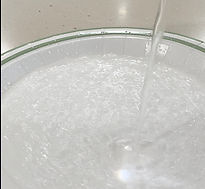
Pour water onto the plate until the base is covered by about 5 mm.
Wait 20–30 seconds for the water to become completely still.
Sprinkle black pepper lightly across the whole surface.
Try to make a thin, even layer rather than one giant pepper mountain!
PREDICT
OBSERVE
EVIDENCE
ASK
SAFETY
TIP
PREDICT
Gather your materials and get
ready for an amazing mission!
2
Make a prediction

Before touching the water, imagine placing ONE tiny drop of dish soap right in the centre.
What do you think the pepper will do?
Move toward the soap?
Move away from it?
Stay where it is?
Do something completely different?
PREDICT
OBSERVE
EVIDENCE
ASK
SAFETY
TIP
PREDICT
Gather your materials and get
ready for an amazing mission!
3
Start the Escape!

Dip just the tip of a toothpick or cotton bud into dish soap.
You only need a tiny amount.
Gently touch it to the centre of the water.
Watch carefully — the interesting part happens FAST!
PREDICT
OBSERVE
EVIDENCE
ASK
SAFETY
TIP
PREDICT
Gather your materials and get
ready for an amazing mission!
4
Hunt for Evidence

Don't add any more soap yet.
Look carefully at the plate.
Where is most of the pepper now?
What happened near the place where the soap touched?
Did every grain travel the same distance?
Did the pepper move toward or away from the soap?
Now compare the evidence with your original prediction.
PREDICT
OBSERVE
EVIDENCE
ASK
SAFETY
TIP
PREDICT
Gather your materials and get
ready for an amazing mission!
5
Move the Soap

Now let's see if you can control the escape.
Rinse and completely dry the plate.
Add fresh water and pepper again.
This time, don't touch the centre.
Touch your tiny amount of soap near one edge of the water.
Watch what happens.
PREDICT
OBSERVE
EVIDENCE
ASK
SAFETY
TIP
PREDICT
Gather your materials and get
ready for an amazing mission!
6
Become the Pepper Controller

Mackey thinks you can now predict where the pepper will go.
Choose a new location for your soap before you reset the plate.
Draw or point to:
SOAP GOES HERE → ○
Then predict:
PEPPER WILL MOVE → ______
Reset the experiment and test your idea.
PREDICT
OBSERVE
EVIDENCE
ASK
SAFETY
TIP
PREDICT
Gather your materials and get
ready for an amazing mission!
1
Big Title
Gather your materials and get
ready for an amazing mission!
PREDICT
OBSERVE
EVIDENCE
ASK
SAFETY
TIP
PREDICT
Gather your materials and get
ready for an amazing mission!
1
Big Title
Gather your materials and get
ready for an amazing mission!
PREDICT
OBSERVE
EVIDENCE
ASK
SAFETY
TIP
PREDICT
Gather your materials and get
ready for an amazing mission!
1
Big Title
Gather your materials and get
ready for an amazing mission!
PREDICT
OBSERVE
EVIDENCE
ASK
SAFETY
TIP
PREDICT
1
Prepare the surface
Gather your materials and get
ready for an amazing mission!
PREDICT
OBSERVE
EVIDENCE
ASK
SAFETY
TIP
PREDICT
1
Prepare the surface
Gather your materials and get
ready for an amazing mission!
PREDICT
OBSERVE
EVIDENCE
ASK
SAFETY
TIP
PREDICT
1
Big Title
Gather your materials and get
ready for an amazing mission!
PREDICT
OBSERVE
EVIDENCE
ASK
SAFETY
TIP
PREDICT
The Crazy Scientist LAB Learning System™
Every experiment follows The Crazy Scientist Lab Learning System™ — a simple way to help kids think like real scientists.
We
-
LINK to what they already know,
-
ACTIVATE curiosity through hands-on discovery
-
BUILD understanding that actually sticks.

Have you ever shaken a fizzy drink and watched it explode
What do you think is building up inside before it pops?

Think back to the exact moment the soap touched the surface.
Describe what you saw in order: which pepper moved first — the pepper near the soap, or the pepper at the edges?
You predicted whether the pepper would move toward the soap or away from it. Were you right? If you were wrong — what had you assumed was doing the moving? Was it the pepper? Was it the soap? Or something else?
The soap landed in the very centre — but the pepper ended up at the edges. If the soap had pushed the pepper away, where would the soap be now? Where is the soap actually? What does that tell you about what was really moving?

A difference in surface tension across a liquid surface causes the liquid to flow from the weak zone toward the strong zone — carrying everything on top of it as a passenger.
A water strider is an insect that skates on the surface of water using surface tension. Its feet are coated in tiny water-repelling hairs. What do you think would happen to a water strider that skated into a patch of water that contained detergent — based on exactly what you just saw happen to the pepper?
Soap makes bubbles because a thin soap-water film can stretch across an opening and hold its shape. Plain water can't do this — it snaps back and doesn't form a stable film. Based on what you now know about soap molecules, why does adding soap make a water film more stable rather than less?
"Want the full teacher guide? The Crazy Scientist Lab includes classroom delivery tips, how to manage the WOW moment, differentiation for Stage 2 & 3, — ready to teach tomorrow."
Think Like a Scientist
Scientists don't stop after their first discovery.
They ask new questions, collect more evidence and test their ideas in different ways.
Where could you take this investigation next?
Does the amount of soap change the size of the clearing?
Does water temperature change how quickly or dramatically the pepper escapes?
Dr Puddledrip’s Science Tip
Read the Science
Why Does the Pepper Suddenly Escape?
The pepper looks as though it is being frightened away by the soap — but the soap isn't actually pushing the pepper.
The secret is something happening across the surface of the water.
Water Molecules Like to Stick Together
Water molecules attract one another.
At the surface, this attraction creates surface tension — almost like an invisible stretchy skin across the top of the water.
The pepper is light enough to sit on this surface without immediately sinking.
Then the Soap Arrives...
Dish soap is really good at disrupting the attraction between water molecules.
When the soap touches one spot on the water, the surface tension there suddenly becomes much weaker.
But farther away, where the soap hasn't reached yet, the surface tension is still stronger.
Now the surface is unbalanced.
So Why Does the Pepper Race Away?
The stronger surface tension pulls the surface water away from the soapy area and toward areas with higher surface tension.
That moving surface carries the floating pepper along with it.
WHOOSH!
The pepper isn't really escaping from the soap at all. It's hitching a ride on moving water.
Why Did Moving the Soap Change the Pattern?
When you put the soap in the centre, the surface can move outward in many directions.
Put the soap near one side instead and the pattern changes because the high- and low-surface-tension areas are now in different places.
That's why you could begin to predict where the pepper would travel.
Why Can't You Keep Doing It?
Try adding another drop of soap and the effect usually becomes much less dramatic.
Why?
The first soap has already spread across much of the surface. Once the surface tension becomes more similar across the plate, there isn't such a strong difference to drive the water.
That's why resetting the investigation requires fresh water and a clean plate.
Surface Tension Is Everywhere
This same property of water helps create rounded droplets and allows some tiny insects to stand and move across a pond without sinking.
Teachers & Homeschoolers: Print-ready HD versions of this Science Behind It poster and companion G&T Challenge Card are available inside The Crazy Scientist LAB.
Scientist's Challenge
Designed for HPGE, gifted learners and children who enjoy an extra challenge.

Teachers & Homeschoolers: Print-ready HD versions of this Science Behind It poster and companion G&T Challenge Card are available inside The Crazy Scientist LAB.
The Next Question...
You've solved today's mystery. Now discover where curiosity can take you next.

Teachers & Homeschoolers: Print-ready HD versions of this Science Behind It poster and companion G&T Challenge Card are available inside The Crazy Scientist LAB.
Vocabulary
Surface Tension — The force that makes the surface of water act a little like a stretchy skin.
Surfactant — A substance, such as soap, that reduces the surface tension of water.
Know a parent or teacher who'd love this? Send it on! 👇
Keep Exploring This Mystery
One experiment leads to even more amazing discoveries inside the Learning Universe.
Curiosity Files
BIG Questions & Discovery
Illustrated Facts
Explore • Discover
Road Trip Science
Discover science everywhere
The Teacher's Cauldron
Think. Experiment. Inspire
Books
Read • Explore
Videos
Watch & Learn
LAB Resources
Premium learning resources


- Coming Mid 2027
What Happens to Bubbles When There Is No UP?
- Coming Mid 2027
How Can a Lizard RUN Across Water Without Sinking?
- Coming Late 2027
Why Does Soap Destroy Water's Invisible Skin?
Ready for Your Next Discovery?


READY TO TEACH THIS
TOMORROW?

Running the experiment is easy; however, teaching it well is another challenge.
Teachers often ask:
How do I adapt this for Stages 1,2 or 3?
What misconceptions will they have?
What syllabus outcomes does it cover?
What do I do with fast finishers?
How do I structure this for a full class?
What do I say when they ask WHY?
BUILD AROUND THE LAB LEARNING SYSTEM™
Every resource is designed using our teaching framework.

Inside The Crazy Scientist LAB
Everything you need to confidently teach science tomorrow.


Opening early 2027. Join the Founding Member Waitlist
More Ways to Explore The Crazy Scientist World
Discover more hands-on science fun, programs and resources for every curious mind.


