


Essy
The Petal Lab
Pick any petal — any colour, any flower. Crush it, dissolve the pigments in rubbing alcohol, and load the extract onto a strip of chromatography paper. What travels up the strip might not be what you expected.

Ages
7-12 yrs
Duration
min
25
Difficulty
Medium
Stage
Stage 3
Cite this resource
Created by Darin Carr (BSc, DipEd)
NESA Accredited Teacher · Chemistry & Physics Specialist · 30+ years in-class teaching
Resource Version: 1.0
First Published:
Last Updated:
15 June 2026
21 Aug 2026

MISSION VERIFIED
Classroom tested. Teacher designed. Safe at home.

Designed by Darin Carr (BScDip Ed)
Practising NESA accredited
Australian Science Teacher
★ 30+ years of classroom experience
MISSION PROGRESS
0
young scientists have completed this mission.
I'VE COMPLETED THIS MISSION
Click to let us know you have completed this mission
LATEST TEACHER FEEDBACK
No feedback yet for this experiment. Use it with your class and let us know how it went!

Before you investigate... watch the mystery
MISSION HOOK
Professor Picklebottom and the team are travelling and collecting amazing science mysteries.
✔ Coming in Term 1 2027

KEEP EXPLORING
Curiosity Files
BIG Questions & Discovery
Illustrated Facts
Explore • Discover
Road Trip Science
Discover science everywhere
The Teacher's Cauldron
Think. Experiment. Inspire
Books
Read • Explore
Videos
Watch & Learn
LAB Resources
Premium learning resources

Mission Equipment
Gather your materials and get
ready for an amazing mission!
Fresh flower petals
Rubbing alcohol / isopropyl alcohol
A mortar and pestle
A small glass jar or cup
A pipette or dropper
Strips of chromatography paper
A pencil or chopstick
Tape
White paper or paper towel


Let’s Investigate
Follow the missions steps below to solve the mystery.
1
Choose your petal
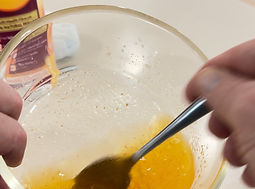
Pick your petal — the more intensely coloured the better.
A deep red rose, bright orange marigold, or vivid purple pansy will give you richer, more visible results than a pale or white flower.
PREDICT
OBSERVE
EVIDENCE
ASK
SAFETY
TIP
PREDICT
Gather your materials and get
ready for an amazing mission!
2
Crush the petal
Tear your petal into small pieces and place them in the mortar.
Use the pestle to grind them into a paste — keep going until you have a deeply coloured, almost liquid paste.
PREDICT
OBSERVE
EVIDENCE
ASK
SAFETY
TIP
PREDICT
Gather your materials and get
ready for an amazing mission!
3
Add Alcohol
Scrape all the paste into your small jar.
Pour in just enough rubbing alcohol to completely cover the paste.
Give it a gentle swirl and leave it to sit for 5 minutes.
PREDICT
OBSERVE
EVIDENCE
ASK
SAFETY
TIP
PREDICT
Gather your materials and get
ready for an amazing mission!
4
Load your first spot
After 15 minutes, use the pipette to draw up a small amount of the coloured extract.
Touch the tip to the base of your chromatography strip — about 1.5 cm from the bottom — and release one small drop onto the paper.
Let it dry completely before the next step.
PREDICT
OBSERVE
EVIDENCE
ASK
SAFETY
TIP
PREDICT
Gather your materials and get
ready for an amazing mission!
5
Build up the spot
Once the first spot is completely dry, load another small drop onto exactly the same point.
Let it dry again.
Repeat this process 3 to 4 times in total.
PREDICT
OBSERVE
EVIDENCE
ASK
SAFETY
TIP
PREDICT
Gather your materials and get
ready for an amazing mission!
6
Dip & Wait
Tape your loaded strip to a pencil and rest it across the top of the jar so only the very bottom of the strip just touches the alcohol — the pigment spot must stay above the liquid surface.
Leave it completely undisturbed for 20 to 30 minutes.
PREDICT
OBSERVE
EVIDENCE
ASK
SAFETY
TIP
PREDICT
Gather your materials and get
ready for an amazing mission!
7
Read results
After 20 to 30 minutes, carefully remove the strip and lay it flat on white paper.
Count the colour bands.
How far did each one travel?
Are any of the bands a colour that wasn't visible in the original petal?
PREDICT
OBSERVE
EVIDENCE
ASK
SAFETY
TIP
PREDICT
Gather your materials and get
ready for an amazing mission!
1
Big Title
Gather your materials and get
ready for an amazing mission!
PREDICT
OBSERVE
EVIDENCE
ASK
SAFETY
TIP
PREDICT
Gather your materials and get
ready for an amazing mission!
1
Big Title
Gather your materials and get
ready for an amazing mission!
PREDICT
OBSERVE
EVIDENCE
ASK
SAFETY
TIP
PREDICT
1
Choose your petal
Gather your materials and get
ready for an amazing mission!
PREDICT
OBSERVE
EVIDENCE
ASK
SAFETY
TIP
PREDICT
1
Choose your petal
Gather your materials and get
ready for an amazing mission!
PREDICT
OBSERVE
EVIDENCE
ASK
SAFETY
TIP
PREDICT
1
Big Title
Gather your materials and get
ready for an amazing mission!
PREDICT
OBSERVE
EVIDENCE
ASK
SAFETY
TIP
PREDICT
The Crazy Scientist LAB Learning System™
Every experiment follows The Crazy Scientist Lab Learning System™ — a simple way to help kids think like real scientists.
We
-
LINK to what they already know,
-
ACTIVATE curiosity through hands-on discovery
-
BUILD understanding that actually sticks.

You can see what colour your petal is just by looking at it.
But colour is just what your eyes detect — it doesn't tell you what's actually producing that colour inside the petal at the molecular level.
Here's your prediction before you start: pick up your petal and look at it carefully. How many different pigment molecules do you think are working together inside it to make that one colour you can see?
Write it down. One? Two? More? You're about to find out — and the answer is probably not what you'd guess from the outside.

How many bands appeared on your strip? Were any of them a colour you wouldn't have predicted from the original petal?
All the pigments started at exactly the same spot — why did they end up at different heights?
If someone else used a different-coloured petal, do your strips share any of the same bands?

Different pigments travel different distances because of their molecular size and how strongly they stick to the paper — this is called chromatography.
A food scientist suspects an orange drink contains undeclared dyes — how would chromatography help them check without tasting it?
Two flowers look identical in colour but came from different plants — could chromatography tell them apart? What would you be looking for?
If you ran this with a petal that's starting to wilt and turn brown — would you predict the same bands, fewer bands, or different ones entirely?
What other coloured liquids from everyday life do you think would separate into interesting bands on chromatography paper?
"Want the full teacher guide? The Crazy Scientist Lab includes classroom delivery tips, how to manage the WOW moment, differentiation for Stage 2 & 3, — ready to teach tomorrow."
Think Like a Scientist
Scientists don't stop after their first discovery.
They ask new questions, collect more evidence and test their ideas in different ways.
Where could you take this investigation next?
Does the colour of the petal change how many bands appear — or how far the pigments travel up the strip?
Does the amount of alcohol used to cover the petal paste change how richly the extract is coloured — and does that affect the bands?

Dr Puddledrip’s Science Tip
Read the Science
The colour you see in a flower petal isn't painted on — it's produced by tiny molecules called pigments, packed inside the petal cells.
Different flowers use different types of pigments to make their colours. Reds, purples, and blues usually come from molecules called anthocyanins. Oranges and yellows come from carotenoids and flavonoids — the same pigment families hiding inside green leaves, revealed in [Sneaky Light Absorbers].
And here's what makes chromatography so revealing: most petals don't use just one pigment — they use a mixture. The colour you see is a blend, the same way a screen makes any colour from just red, green, and blue light (which you can explore in [What Colour Is Your Shadow]).
The pattern of bands on your strip is like a chemical fingerprint for that petal. Two petals that look identical in colour might produce completely different band patterns — meaning completely different chemistry inside them. And two petals that look totally different might share one or two of the same bands — meaning they have at least one pigment in common.
Curiosity spark: What do you think would happen if you mixed the extracts from two completely different-coloured petals and ran them together on one strip — would you see all the bands from both, or would something unexpected appear?
Find out in The Crazy Scientist Lab.
Teachers & Homeschoolers: Print-ready HD versions of this Science Behind It poster and companion G&T Challenge Card are available inside The Crazy Scientist LAB.
Scientist's Challenge
Designed for HPGE, gifted learners and children who enjoy an extra challenge.
Teachers & Homeschoolers: Print-ready HD versions of this Science Behind It poster and companion G&T Challenge Card are available inside The Crazy Scientist LAB.
The Next Question...
You've solved today's mystery. Now discover where curiosity can take you next.
Teachers & Homeschoolers: Print-ready HD versions of this Science Behind It poster and companion G&T Challenge Card are available inside The Crazy Scientist LAB.
Vocabulary
Pigment — A substance that gives something its colour.
Extract — To remove or draw out a substance from something.
Colour — What we see when different wavelengths of light reach our eyes.
Know a parent or teacher who'd love this? Send it on! 👇
Keep Exploring This Mystery
One experiment leads to even more amazing discoveries inside the Learning Universe.
Curiosity Files
BIG Questions & Discovery
Illustrated Facts
Explore • Discover
Road Trip Science
Discover science everywhere
The Teacher's Cauldron
Think. Experiment. Inspire
Books
Read • Explore
Videos
Watch & Learn
LAB Resources
Premium learning resources
Ready for Your Next Discovery?


READY TO TEACH THIS
TOMORROW?

Running the experiment is easy; however, teaching it well is another challenge.
Teachers often ask:
How do I adapt this for Stages 1,2 or 3?
What misconceptions will they have?
What syllabus outcomes does it cover?
What do I do with fast finishers?
How do I structure this for a full class?
What do I say when they ask WHY?
BUILD AROUND THE LAB LEARNING SYSTEM™
Every resource is designed using our teaching framework.

Inside The Crazy Scientist LAB
Everything you need to confidently teach science tomorrow.


Opening early 2027. Join the Founding Member Waitlist
More Ways to Explore The Crazy Scientist World
Discover more hands-on science fun, programs and resources for every curious mind.


