


Essy
Sneaky Light Absorbers
Crush a leaf, add rubbing alcohol, and use a strip of paper to pull apart the hidden colours inside. Run it twice — once with a coffee filter, once with chromatography paper — and see what science-grade equipment actually changes.
Ages
7-12 yrs
Duration
min
30
Difficulty
Medium
Stage
Stage 3
Cite this resource
Created by Darin Carr (BSc, DipEd)
NESA Accredited Teacher · Chemistry & Physics Specialist · 30+ years in-class teaching
Resource Version: 1.0
First Published:
Last Updated:
20 Oct 2024
21 Aug 2026

MISSION VERIFIED
Classroom tested. Teacher designed. Safe at home.

Designed by Darin Carr (BScDip Ed)
Practising NESA accredited
Australian Science Teacher
★ 30+ years of classroom experience
MISSION PROGRESS
83
young scientists have completed this mission.
I'VE COMPLETED THIS MISSION
Click to let us know you have completed this mission
LATEST TEACHER FEEDBACK
No feedback yet for this experiment. Use it with your class and let us know how it went!

Before you investigate... watch the mystery
MISSION HOOK
Professor Picklebottom and the team are travelling and collecting amazing science mysteries.
✔ Coming in Term 1 2027

KEEP EXPLORING
Curiosity Files
BIG Questions & Discovery
Illustrated Facts
Explore • Discover
Road Trip Science
Discover science everywhere
The Teacher's Cauldron
Think. Experiment. Inspire
Books
Read • Explore
Videos
Watch & Learn
LAB Resources
Premium learning resources

Mission Equipment
Gather your materials and get
ready for an amazing mission!
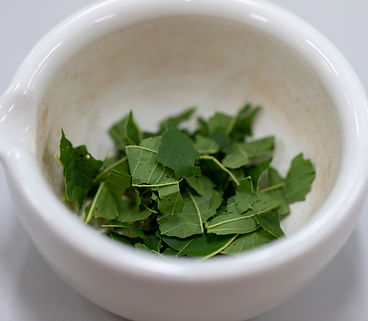
A handful of fresh dark green spinach leaves
Rubbing alcohol/isopropyl alcohol
2 small glass jars or heatproof cups
A mortar and pestle
Scissors
strips of coffee filter paper
2 strips of chromatography paper (available online on Amazon)
2 pencils or chopsticks
Tape / paperclip
A large heatproof bowl or tray
Hot water - adult supervision required
Pot holders or oven mitts


Let’s Investigate
Follow the missions steps below to solve the mystery.
1
Prepare the leaves
Using scissors, cut your leaves into small pieces — the smaller the better.
Spinach and silverbeet work brilliantly because
PREDICT
OBSERVE
EVIDENCE
ASK
SAFETY
TIP
PREDICT
Gather your materials and get
ready for an amazing mission!
2
Crush the leaves
Use the pestle to grind the leaf pieces into a dark green paste.
You want to break open as many leaf cells as possible — the more you crush, the more pigment you release.
Keep going for at least 2–3 minutes until you have a thick, dark paste.
PREDICT
OBSERVE
EVIDENCE
ASK
SAFETY
TIP
PREDICT
Gather your materials and get
ready for an amazing mission!
3
Divide the leaves
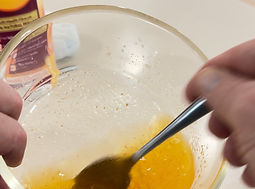
Divide the leaf paste as evenly as possible between your two glass jars.
Pour just enough rubbing alcohol into each jar to completely cover the leaf pieces.
Both jars must have the same amount of leaf and the same amount of alcohol — this is your fair test.
PREDICT
OBSERVE
EVIDENCE
ASK
SAFETY
TIP
PREDICT
Gather your materials and get
ready for an amazing mission!
4
Heat the jars
Fill your large heatproof bowl with very hot water.
Carefully place both jars into the water bath using pot holders — the water should come up the sides of the jars but not tip them over. Leave for 20 minutes.
Watch the alcohol slowly turn green as the pigments dissolve out of the cells.
PREDICT
OBSERVE
EVIDENCE
ASK
SAFETY
TIP
PREDICT
Gather your materials and get
ready for an amazing mission!
5
Prepare the strips
While the jars are in the hot water bath, prepare your strips. Tape one coffee filter strip to the middle of one pencil, and one chromatography paper strip to the middle of the other.
The strip should hang down far enough to touch the alcohol when the pencil rests across the top of the jar — but the strip must NOT touch the bottom or sides of the jar.
PREDICT
OBSERVE
EVIDENCE
ASK
SAFETY
TIP
PREDICT
Gather your materials and get
ready for an amazing mission!
6
Dip the strips
After 20 minutes, carefully remove both jars from the hot water using pot holders. Rest one pencil across each jar so the bottom of each strip just dips into the green alcohol.
Now — before you walk away — make your prediction: which strip do you think will show more colours?
PREDICT
OBSERVE
EVIDENCE
ASK
SAFETY
TIP
PREDICT
Gather your materials and get
ready for an amazing mission!
7
Watch & Wait
Leave both strips undisturbed for 20–30 minutes.
Watch the green alcohol travel up the paper.
As it moves, it carries the pigments with it — but each pigment travels at a different speed.
PREDICT
OBSERVE
EVIDENCE
ASK
SAFETY
TIP
PREDICT
Gather your materials and get
ready for an amazing mission!
8
Compare
After 30 minutes, carefully remove both strips and lay them flat on a white surface.
How many colour bands can you count on each one?
Which strip shows sharper, more distinct bands?
Which colours can you identify — and do the two strips show the same ones?
PREDICT
OBSERVE
EVIDENCE
ASK
SAFETY
TIP
PREDICT
Gather your materials and get
ready for an amazing mission!
1
Big Title
Gather your materials and get
ready for an amazing mission!
PREDICT
OBSERVE
EVIDENCE
ASK
SAFETY
TIP
PREDICT
1
Prepare the leaves
Gather your materials and get
ready for an amazing mission!
PREDICT
OBSERVE
EVIDENCE
ASK
SAFETY
TIP
PREDICT
1
Prepare the leaves
Gather your materials and get
ready for an amazing mission!
PREDICT
OBSERVE
EVIDENCE
ASK
SAFETY
TIP
PREDICT
1
Big Title
Gather your materials and get
ready for an amazing mission!
PREDICT
OBSERVE
EVIDENCE
ASK
SAFETY
TIP
PREDICT
The Crazy Scientist LAB Learning System™
Every experiment follows The Crazy Scientist Lab Learning System™ — a simple way to help kids think like real scientists.
We
-
LINK to what they already know,
-
ACTIVATE curiosity through hands-on discovery
-
BUILD understanding that actually sticks.

Think about the last time you mixed paints. Blue and yellow make green — you know that. But have you ever wondered whether green itself might be hiding other colours inside it?
Here's your prediction before you touch anything: when you pull the pigments out of a leaf and let them travel up a strip of paper — how many different colours do you think you'll find?
Write it down. One colour? Three? Five? You're about to run the same experiment two ways — and find out which version gives you a clearer answer.

How many colour bands appeared on the coffee filter? How many on the chromatography paper?
The same leaf went into both jars. Why are the results different?
The pigments all started at the bottom of the strip at the same time — why did they end up at different heights?

Different pigments travel different distances because of their size and how strongly they stick to the paper — scientists call this chromatography.
A forensic scientist is trying to identify the ink used in a forged document — how could chromatography help crack the case?
Drug testing in sport uses a similar separation technique — what would scientists be separating, and why does equipment precision matter?
If you ran this with a red autumn leaf instead of a green one — would you predict the same bands, different bands, or some overlap?
Where else in science might separating a mixture into its parts reveal something that was hidden?
"Want the full teacher guide? The Crazy Scientist Lab includes classroom delivery tips, how to manage the WOW moment, differentiation for Stage 2 & 3, — ready to teach tomorrow."
Think Like a Scientist
Scientists don't stop after their first discovery.
They ask new questions, collect more evidence and test their ideas in different ways.
Where could you take this investigation next?
Does the type of leaf change which pigments appear — or how many colour bands you see?
Does the concentration of alcohol change how far the pigments travel up the strip?
Dr Puddledrip’s Science Tip
Read the Science
Your leaf looks green. But green is actually a disguise.
Chlorophyll absorbs red and blue light and reflects green back at your eyes — the same absorption principle behind the coloured paddles in [Colour Smashers].
But hiding underneath the chlorophyll are other pigments: carotenoids (yellow and orange) and anthocyanins (red and purple). Chlorophyll is so dominant it drowns them out completely.
The alcohol dissolves those pigments out of the crushed cells.
As it travels up the paper, lighter molecules travel further, heavier ones stay low. The result is bands of colour — one for each pigment — separated by the paper.
This is chromatography.
The coffee filter gives a blurry result because its fibres are uneven. Chromatography paper gives sharp, distinct bands because its fibres are perfectly uniform — the same principle used in forensic labs and pharmaceutical testing.
And those autumn colours? When trees stop producing chlorophyll, the green fades — and the hidden pigments finally show through. They were there all summer. You can see light absorption working from a completely different angle in [What Colour Is Your Shadow].
Curiosity spark: What do you think would happen if you ran this experiment with a leaf that has already turned red or orange in autumn — would you still see the same bands, or completely different ones?
Find out in The Crazy Scientist Lab.
Teachers & Homeschoolers: Print-ready HD versions of this Science Behind It poster and companion G&T Challenge Card are available inside The Crazy Scientist LAB.
Scientist's Challenge
Designed for HPGE, gifted learners and children who enjoy an extra challenge.
Teachers & Homeschoolers: Print-ready HD versions of this Science Behind It poster and companion G&T Challenge Card are available inside The Crazy Scientist LAB.
The Next Question...
You've solved today's mystery. Now discover where curiosity can take you next.
Teachers & Homeschoolers: Print-ready HD versions of this Science Behind It poster and companion G&T Challenge Card are available inside The Crazy Scientist LAB.
Vocabulary
Absorb — To take in energy rather than reflect or transmit it.
Reflect — To bounce light away from a surface.
Temperature — A measure of how hot or cold something is.
Know a parent or teacher who'd love this? Send it on! 👇
Keep Exploring This Mystery
One experiment leads to even more amazing discoveries inside the Learning Universe.
Curiosity Files
BIG Questions & Discovery
Illustrated Facts
Explore • Discover
Road Trip Science
Discover science everywhere
The Teacher's Cauldron
Think. Experiment. Inspire
Books
Read • Explore
Videos
Watch & Learn
LAB Resources
Premium learning resources


- Coming Mid 2027
How Can a Fish Almost Completely Disappear Underwater?
Ready for Your Next Discovery?


READY TO TEACH THIS
TOMORROW?

Running the experiment is easy; however, teaching it well is another challenge.
Teachers often ask:
How do I adapt this for Stages 1,2 or 3?
What misconceptions will they have?
What syllabus outcomes does it cover?
What do I do with fast finishers?
How do I structure this for a full class?
What do I say when they ask WHY?
BUILD AROUND THE LAB LEARNING SYSTEM™
Every resource is designed using our teaching framework.

Inside The Crazy Scientist LAB
Everything you need to confidently teach science tomorrow.


Opening early 2027. Join the Founding Member Waitlist
More Ways to Explore The Crazy Scientist World
Discover more hands-on science fun, programs and resources for every curious mind.


