


Professor Picklebottom
The Stubborn Balloons
A breath of air. A gap between two hanging balloons. Three possible outcomes — they move apart, they move together, or nothing happens at all. One of them is Bernoulli's Principle in action. Make your prediction before you try.

Ages
5-12 yrs
Duration
min
5
Difficulty
Easy
Stage
Stage 1-3
Cite this resource
Created by Darin Carr (BSc, DipEd)
NESA Accredited Teacher · Chemistry & Physics Specialist · 30+ years in-class teaching
Resource Version: 1.0
First Published:
Last Updated:
4 May 2026
31 July 2026

MISSION VERIFIED
Classroom tested. Teacher designed. Safe at home.

Designed by Darin Carr (BScDip Ed)
Practising NESA accredited
Australian Science Teacher
★ 30+ years of classroom experience
MISSION PROGRESS
10
young scientists have completed this mission.
I'VE COMPLETED THIS MISSION
Click to let us know you have completed this mission
LATEST TEACHER FEEDBACK
No feedback yet for this experiment. Use it with your class and let us know how it went!

Before you investigate... watch the mystery
MISSION HOOK
Professor Picklebottom and the team are travelling and collecting amazing science mysteries.
✔ Coming in Term 1 2027

KEEP EXPLORING
Curiosity Files
BIG Questions & Discovery
Illustrated Facts
Explore • Discover
Road Trip Science
Discover science everywhere
The Teacher's Cauldron
Think. Experiment. Inspire
Books
Read • Explore
Videos
Watch & Learn
LAB Resources
Premium learning resources

Mission Equipment
Gather your materials and get
ready for an amazing mission!
2 round balloons — same size (25–30 cm when inflated)
2 pieces of string or wool (~40 cm each)
Tape — to attach string to each balloon


Let’s Investigate
Follow the missions steps below to solve the mystery.
1
Ballons or Balls
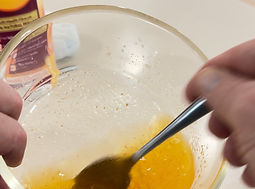
Inflate both balloons to roughly the same size — about the size of a grapefruit.
Tie off each balloon, then tape one end of a string to each one.
The strings should be about the same length so the balloons hang at the same height.
You could also use small plastic ball-pit balls.
PREDICT
OBSERVE
EVIDENCE
ASK
SAFETY
TIP
PREDICT
Gather your materials and get
ready for an amazing mission!
2
Hold side by side
Hold one string in each hand with your arms slightly raised, so both balloons hang down at face height and sit side by side about 5 cm apart.
They should be hanging freely — not touching each other yet.
PREDICT
OBSERVE
EVIDENCE
ASK
SAFETY
TIP
PREDICT
Gather your materials and get
ready for an amazing mission!
3
Prediction time!
Look at the gap between the two balloons. You are about to blow steadily into that gap.
Before you do — write down your prediction: what will happen to the balloons? Will they move apart, move together, or stay exactly where they are?
PREDICT
OBSERVE
EVIDENCE
ASK
SAFETY
TIP
PREDICT
Gather your materials and get
ready for an amazing mission!
4
Blow
Hold the balloons steady and blow a long, steady stream of air directly into the gap between them.
Watch what happens — and notice whether blowing harder changes anything.
PREDICT
OBSERVE
EVIDENCE
ASK
SAFETY
TIP
PREDICT
Gather your materials and get
ready for an amazing mission!
5
Look at the string
While blowing, look at the angle of the strings. Do they lean inward or outward?
What does the lean tell you about the direction of the force acting on each balloon?
Where is the force coming from — the gap, or the sides?
PREDICT
OBSERVE
EVIDENCE
ASK
SAFETY
TIP
PREDICT
Gather your materials and get
ready for an amazing mission!
1
Big Title
Gather your materials and get
ready for an amazing mission!
PREDICT
OBSERVE
EVIDENCE
ASK
SAFETY
TIP
PREDICT
Gather your materials and get
ready for an amazing mission!
1
Big Title
Gather your materials and get
ready for an amazing mission!
PREDICT
OBSERVE
EVIDENCE
ASK
SAFETY
TIP
PREDICT
Gather your materials and get
ready for an amazing mission!
1
Big Title
Gather your materials and get
ready for an amazing mission!
PREDICT
OBSERVE
EVIDENCE
ASK
SAFETY
TIP
PREDICT
Gather your materials and get
ready for an amazing mission!
1
Big Title
Gather your materials and get
ready for an amazing mission!
PREDICT
OBSERVE
EVIDENCE
ASK
SAFETY
TIP
PREDICT
1
Ballons or Balls
Gather your materials and get
ready for an amazing mission!
PREDICT
OBSERVE
EVIDENCE
ASK
SAFETY
TIP
PREDICT
1
Ballons or Balls
Gather your materials and get
ready for an amazing mission!
PREDICT
OBSERVE
EVIDENCE
ASK
SAFETY
TIP
PREDICT
1
Big Title
Gather your materials and get
ready for an amazing mission!
PREDICT
OBSERVE
EVIDENCE
ASK
SAFETY
TIP
PREDICT
The Crazy Scientist LAB Learning System™
Every experiment follows The Crazy Scientist Lab Learning System™ — a simple way to help kids think like real scientists.
We
-
LINK to what they already know,
-
ACTIVATE curiosity through hands-on discovery
-
BUILD understanding that actually sticks.

Blow out a candle — the air pushes the flame away. Blow across a piece of paper on the desk — the air moves it.
Blowing air at something makes it move away from you. That is how blowing works.
Now imagine two balloons hanging side by side, with a gap between them.
You are about to blow directly into that gap.
Predict: do the balloons move apart, move together, or stay still? Write it down before you try — and be ready to explain why.

You have blown between the balloons. Think back to the exact moment you started blowing — describe what happened.
Look at the strings. When you were blowing, which direction did each string lean — inward toward the gap, or outward away from it?
The force that moved the balloons came from somewhere. Was it coming from the gap between them, or from the outside air? How do you know?
When you blew harder, did the balloons press together more or less tightly? What does that tell you about the relationship between the speed of air and the force involved?

Fast-moving air has lower pressure than still air — that is Bernoulli's Principle. The still air outside always wins the pressure battle.
An aircraft wing is curved on top, which forces air to speed up over the surface. Lower pressure forms above the wing. What pushes the plane upward?
"Want the full teacher guide? The Crazy Scientist Lab includes classroom delivery tips, how to manage the WOW moment, differentiation for Stage 2 & 3, — ready to teach tomorrow."
Think Like a Scientist
Scientists don't stop after their first discovery.
They ask new questions, collect more evidence and test their ideas in different ways.
Where could you take this investigation next?
Does the distance between the balloons change how strongly they are pulled together — does a narrower gap make the effect stronger or weaker?
Does the size of the balloons matter — do larger balloons respond more strongly than smaller ones?

Dr Puddledrip’s Science Tip
Read the Science
Why do the balloons move together instead of apart?
When you blow between the balloons, you create a stream of fast-moving air in the narrow gap. Fast-moving air has lower pressure than still air — Bernoulli's Principle.
The still air pressing in from the outside of each balloon is at higher pressure. That pressure difference pushes both balloons inward, toward the low-pressure gap.
The harder you blow, the faster the air in the gap, the lower the pressure, and the harder the balloons are pushed together.
Why almost everyone predicts the wrong thing?
Blowing air at an object normally moves it away — it's what we experience with fans, wind, and our own breath. That expectation is hard to override.
The difference here is location. When you blow at the side of a balloon, you're pushing it directly. When you blow between the balloons, you're creating a zone of low pressure, and the higher-pressure air from outside does the pushing.
Same breath, completely different mechanism. The location of the airstream is everything.
Why blowing from the side give the opposite result?
When you blow at the outside of one balloon, you're adding a high-pressure push directly against its surface. That balloon moves away.
• When you blow in the gap, you're lowering the pressure between them. The outside air is now relatively higher. It pushes both inward.
• Two experiments, one breath: it's not about how hard you blow — it's about where the high pressure ends up.
Real-world connection
• This is one of the principles behind how aircraft wings generate lift. A curved wing surface makes air travel faster over the top, creating lower pressure above. The higher pressure below pushes the wing upward.
Try next
To see Bernoulli's Principle do something even more unexpected — holding a ball in place rather than moving it — try [The Impossible Blow], where blowing harder makes escape less likely, not more. And if you want to see the same pressure logic applied to water instead of air, [The Water Magnet] will produce another result that almost nobody predicts correctly the first time.
Teachers & Homeschoolers: Print-ready HD versions of this Science Behind It poster and companion G&T Challenge Card are available inside The Crazy Scientist LAB.
Scientist's Challenge
Designed for HPGE, gifted learners and children who enjoy an extra challenge.
Teachers & Homeschoolers: Print-ready HD versions of this Science Behind It poster and companion G&T Challenge Card are available inside The Crazy Scientist LAB.
The Next Question...
You've solved today's mystery. Now discover where curiosity can take you next.
Why does fast air have lower pressure?
Bernoulli’s Principle explains that when air speeds up, its pressure drops.
At the molecular level, fast‑moving air molecules are racing forward, not sideways. Fewer sideways collisions mean less sideways push — lower pressure.
When you blow between the balloons, the narrow gap forces the air to speed up dramatically, creating a low‑pressure zone right where no one expects it.
If you narrowed the gap even further, what would happen to the air speed — and the pressure inside the gap?
Why do the balloons move inward? The balloons don’t move because your breath pushes them. They move because the outside air pushes harder than the air in the gap. The pressure difference is the real force here:
Low pressure in the fast airstream
Higher pressure in the still air outside. The higher pressure wins — squeezing the balloons inward.
If you replaced the balloons with two very light objects (like ping‑pong balls), would the effect be stronger or weaker?
Teachers & Homeschoolers: Print-ready HD versions of this Science Behind It poster and companion G&T Challenge Card are available inside The Crazy Scientist LAB.
Vocabulary
Bernoulli’s Principle: Fast‑moving air has lower pressure than still air. Blowing between the balloons lowers the pressure in the gap.
Air pressure: The force of air pushing on a surface. Higher pressure outside the balloons pushes them inward.
Airstream: A focused flow of moving air. Blowing between the balloons creates a fast airstream in the narrow gap.
Pressure difference: A difference in air pressure between two regions. The balloons move toward the low‑pressure region between them.
Know a parent or teacher who'd love this? Send it on! 👇
Keep Exploring This Mystery
One experiment leads to even more amazing discoveries inside the Learning Universe.
Curiosity Files
BIG Questions & Discovery
Illustrated Facts
Explore • Discover
Road Trip Science
Discover science everywhere
The Teacher's Cauldron
Think. Experiment. Inspire
Books
Read • Explore
Videos
Watch & Learn
LAB Resources
Premium learning resources


- Coming Early 2027
Why Won't This Balloon Squash Flat?
Ready for Your Next Discovery?


READY TO TEACH THIS
TOMORROW?

Running the experiment is easy; however, teaching it well is another challenge.
Teachers often ask:
How do I adapt this for Stages 1,2 or 3?
What misconceptions will they have?
What syllabus outcomes does it cover?
What do I do with fast finishers?
How do I structure this for a full class?
What do I say when they ask WHY?
BUILD AROUND THE LAB LEARNING SYSTEM™
Every resource is designed using our teaching framework.

Inside The Crazy Scientist LAB
Everything you need to confidently teach science tomorrow.


Opening early 2027. Join the Founding Member Waitlist
More Ways to Explore The Crazy Scientist World
Discover more hands-on science fun, programs and resources for every curious mind.


