


Professor Picklebottom
Soap Foam
You'll find this recipe across the internet labelled slime. One cup of soap flakes, one bowl of hot water, and an electric beater. Make it — then put the claim to the test.

Ages
7-12 yrs
Duration
min
20
Difficulty
Easy
Stage
Stage 2-3
Cite this resource
Created by Darin Carr (BSc, DipEd)
NESA Accredited Teacher · Chemistry & Physics Specialist · 30+ years in-class teaching
Resource Version: 1.0
First Published:
Last Updated:
7 May 2026
31 July 2026

MISSION VERIFIED
Classroom tested. Teacher designed. Safe at home.

Designed by Darin Carr (BScDip Ed)
Practising NESA accredited
Australian Science Teacher
★ 30+ years of classroom experience
MISSION PROGRESS
10
young scientists have completed this mission.
I'VE COMPLETED THIS MISSION
Click to let us know you have completed this mission
LATEST TEACHER FEEDBACK
"The kids loved it. I also liked how it helped structure their thinking and predicting".
Year 6 Science Specialist
Mr Tam

Before you investigate... watch the mystery
MISSION HOOK
Professor Picklebottom and the team are travelling and collecting amazing science mysteries.
✔ Coming in Term 1 2027

KEEP EXPLORING
Curiosity Files
BIG Questions & Discovery
Illustrated Facts
Explore • Discover
Road Trip Science
Discover science everywhere
The Teacher's Cauldron
Think. Experiment. Inspire
Books
Read • Explore
Videos
Watch & Learn
LAB Resources
Premium learning resources

Mission Equipment
Gather your materials and get
ready for an amazing mission!
1 cup soap flakes — laundry flakes such as Lux work best
1.5 cups hot water
Food colouring — optional
Large mixing bowl
Electric beater or hand mixer
Safety goggles — soap foam near eyes stings
Three small plates or bowls for testing
A spoon


Let’s Investigate
Follow the missions steps below to solve the mystery.
1
Read the Claim
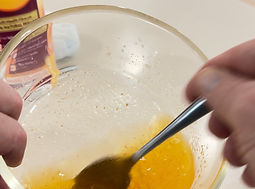
'Soap flakes + hot water + electric beater = slime.'
You will find that exact claim — or something very close to it — on hundreds of websites.
PREDICT
OBSERVE
EVIDENCE
ASK
SAFETY
TIP
PREDICT
Gather your materials and get
ready for an amazing mission!
2
Test Criteria
A good scientist decides what counts as evidence before they run the test.
Things you can actually test. Write them down before you make anything.
Suggestions: Does it stretch without snapping? Does it behave differently when you press it slowly versus quickly? Does it hold its shape when you scoop it out?
PREDICT
OBSERVE
EVIDENCE
ASK
SAFETY
TIP
PREDICT
Gather your materials and get
ready for an amazing mission!
3
Make the Foam
Put 1 cup of soap flakes into your mixing bowl.
Add 1.5 cups of hot water and food colouring if using.
Put on your safety goggles.
Use the electric beater on high speed. Watch closely — what does it look like at 2 minutes? At 5 minutes? Keep going until you have a thick, fluffy foam, usually 5 to 10 minutes.
PREDICT
OBSERVE
EVIDENCE
ASK
SAFETY
TIP
PREDICT
Gather your materials and get
ready for an amazing mission!
4
Stretch Test
Scoop out a generous handful of foam.
Try to slowly stretch it between both hands, the way you would stretch PVA slime.
Does it pull into a long strand — or does it fall apart and collapse?
PREDICT
OBSERVE
EVIDENCE
ASK
SAFETY
TIP
PREDICT
Gather your materials and get
ready for an amazing mission!
5
Pressure Test
Place a small mound of foam on a flat plate.
Press down slowly with one finger, then lift it and press down quickly and firmly.
Does the foam react differently to slow pressure versus fast pressure? A non-Newtonian slime resists fast force and flows under slow force
PREDICT
OBSERVE
EVIDENCE
ASK
SAFETY
TIP
PREDICT
Gather your materials and get
ready for an amazing mission!
6
Bubble Test
Scoop a rounded ball of foam and set it on a flat plate.
Look closely at the surface of the material. Can you see bubbles? Does it crackle when you listen to it?
PREDICT
OBSERVE
EVIDENCE
ASK
SAFETY
TIP
PREDICT
Gather your materials and get
ready for an amazing mission!
7
Verdict
Look back at your three tests and your original criteria from Step 2.
Based on the evidence: is this slime?
Write your verdict — Yeah or Nah — and back it up with at least two specific observations from your tests.
PREDICT
OBSERVE
EVIDENCE
ASK
SAFETY
TIP
PREDICT
Gather your materials and get
ready for an amazing mission!
1
Big Title
Gather your materials and get
ready for an amazing mission!
PREDICT
OBSERVE
EVIDENCE
ASK
SAFETY
TIP
PREDICT
Gather your materials and get
ready for an amazing mission!
1
Big Title
Gather your materials and get
ready for an amazing mission!
PREDICT
OBSERVE
EVIDENCE
ASK
SAFETY
TIP
PREDICT
1
Read the Claim
Gather your materials and get
ready for an amazing mission!
PREDICT
OBSERVE
EVIDENCE
ASK
SAFETY
TIP
PREDICT
1
Read the Claim
Gather your materials and get
ready for an amazing mission!
PREDICT
OBSERVE
EVIDENCE
ASK
SAFETY
TIP
PREDICT
1
Big Title
Gather your materials and get
ready for an amazing mission!
PREDICT
OBSERVE
EVIDENCE
ASK
SAFETY
TIP
PREDICT
The Crazy Scientist LAB Learning System™
Every experiment follows The Crazy Scientist Lab Learning System™ — a simple way to help kids think like real scientists.
We
-
LINK to what they already know,
-
ACTIVATE curiosity through hands-on discovery
-
BUILD understanding that actually sticks.

You will find this recipe on hundreds of websites — and almost all of them call it slime. Parents make it. Teachers make it. Science websites make it. The name is everywhere.
But here is something scientists do that most websites do not: they define their terms before they start.
In science, slime has a specific meaning. So does foam. And they are not the same thing.
Before you make anything today, your job is to agree on a definition. What would soap foam need to do — measurably, testably — to count as slime? Write your answer before you touch the beater.
Then make it. Test it. And decide: yeah or nah?

Which of your three tests gave you the most convincing evidence — and why was that test more reliable than the others?
The foam collapsed when you pressed it. Real polymer slime does not do that. What does that tell you about what is holding the foam together?
Someone argues: 'It feels slimy, so it is slime.' Is that a scientific argument? What is missing from it?
A jellyfish is not a fish. A peanut is not a nut. A strawberry is not a berry — not botanically.
Why does science need its own meanings for words, separate from everyday language? What would go wrong if it did not?

Whipped cream is a foam (air in fat). Sea foam is a foam (air in seawater). Your soap foam is a foam (air in soapy water). They are all colloids — but they behave very differently. What is different about the liquid in each case, and how might that change how stable the foam is?
If you wanted to design a test that could reliably tell a foam from a slime — without touching either — what would you measure? How would you make the test fair enough that anyone running it would get the same result?
"Want the full teacher guide? The Crazy Scientist Lab includes classroom delivery tips, how to manage the WOW moment, differentiation for Stage 2 & 3, — ready to teach tomorrow."
Think Like a Scientist
Scientists don't stop after their first discovery.
They ask new questions, collect more evidence and test their ideas in different ways.
Where could you take this investigation next?
Does water temperature change the foam?
Does the type of soap change the foam?

Dr Puddledrip’s Science Tip
Read the Science
What is soap foam actually made of?
When you whip soap and hot water together, you're forcing air into the liquid. The soap molecules rush to the surface of each air bubble and wrap around it — holding it in place.
Millions of those air bubbles packed together make foam. It feels smooth, slippery, and wet — which is exactly why people call it slime.
But scientifically, it's not. Slime is a specific type of material that changes behaviour under force — it stretches, it grips, it resists fast pressure. Soap foam does none of those things.
Press it and it collapses. Stretch it, and it tears. Leave it alone and it slowly deflates. It's a foam, not a slime. And that difference matters.
Why does the word matter?
In everyday language, 'slime' means anything wet and slippery. That's fine for describing how something feels. But in science, words need precise meanings so that everyone is talking about the same thing.
Slime has a specific scientific meaning: a polymer material that behaves differently depending on how much force you apply. Soap foam doesn't do that — it just collapses.
So scientists call it a foam. The same situation comes up all the time in science: a jellyfish is not a fish, a peanut is not a nut, a strawberry is not technically a berry.
Everyday words and scientific words often look the same but mean different things. Knowing which you're using — and when — is a core science skill.
What makes foam stay together?
Soap molecules are called surfactants. A fancy word to describe its structure:
- one end loves water, the other end loves air and oil.
When you force air into soapy water, the soap molecules immediately rush to the surface of each bubble — water-loving end pointing into the liquid, air-loving end pointing into the bubble.
This creates a thin, elastic skin around each air bubble that stops it from popping immediately. The more you beat, the more bubbles form, and the foam gets bigger and lighter. Over time, the bubbles slowly pop, and the foam collapses — but while the surfactant skins hold, the foam stays.
Real-world connection
Surfactant foams appear everywhere once you know what to look for.
a) Whipped cream is a foam (air in fat).
b) Cappuccino froth is a foam (air in milk protein).
c) Sea foam is a foam (air in seawater full of organic compounds). d) Firefighting foam — used on fuel fires
Try next
• See what a real polymer slime looks and feels like — and notice the difference → [Snail Slime]
• Watch foam produced by a completely different chemical reaction → [The Escape Artist]
Teachers & Homeschoolers: Print-ready HD versions of this Science Behind It poster and companion G&T Challenge Card are available inside The Crazy Scientist LAB.
Scientist's Challenge
Designed for HPGE, gifted learners and children who enjoy an extra challenge.
Teachers & Homeschoolers: Print-ready HD versions of this Science Behind It poster and companion G&T Challenge Card are available inside The Crazy Scientist LAB.
The Next Question...
You've solved today's mystery. Now discover where curiosity can take you next.
What is a colloid?
Foam is a type of colloid — a material where tiny particles of one substance are evenly spread through another substance, but not dissolved.
In soap foam, the particles are air bubbles dispersed through soapy liquid. Other colloids include milk (fat droplets in water), fog (water droplets in air), and smoke (solid particles in air).
What makes a colloid different from a simple mixture is that the particles are small enough to stay suspended and don't simply sink or float out — they're held in place by surface forces. Surfactants are what make soap foam a stable colloid rather than just a pile of unstable bubbles.
What is a non-Newtonian fluid?
A Newtonian fluid has a constant viscosity (thickness) regardless of how hard or fast you stir or push it. Water, vinegar, and mercury are Newtonian fluids — they flow the same way whether you're gentle or forceful.
A non-Newtonian fluid changes its viscosity depending on the force applied. Real slime (PVA + borax) is non-Newtonian — it flows slowly under gentle pressure but resists sudden force.
Cornflour and water is non-Newtonian in the opposite direction — it goes solid when hit hard. Soap foam is neither: it simply collapses under any pressure. It doesn't change its behaviour based on force — it just breaks.
Teachers & Homeschoolers: Print-ready HD versions of this Science Behind It poster and companion G&T Challenge Card are available inside The Crazy Scientist LAB.
Vocabulary
Foam
A colloid where air bubbles are spread through a liquid. Soap foam is air dispersed in soapy water, held together by surfactant molecules around each bubble.
Surfactant
A molecule with one water-loving end and one air/oil-loving end. Surfactants wrap around air bubbles to make foam — and around grease to make soap work.
Colloid
A mixture where tiny particles of one substance are spread through another but not dissolved. Foam, milk, and fog are all colloids.
Non-Newtonian fluid
A fluid that changes its thickness (viscosity) depending on how much force is applied. Real slime is non-Newtonian — soap foam is not.
Polymer
A very long molecule made of many repeated units linked in a chain. Real slime is made of polymers; soap foam is not — this is why they behave differently.
Viscosity
How thick or resistant to flow a liquid is. Water has low viscosity; honey has high viscosity. Slime has variable viscosity depending on the force applied.
Know a parent or teacher who'd love this? Send it on! 👇
Keep Exploring This Mystery
One experiment leads to even more amazing discoveries inside the Learning Universe.
Curiosity Files
BIG Questions & Discovery
Illustrated Facts
Explore • Discover
Road Trip Science
Discover science everywhere
The Teacher's Cauldron
Think. Experiment. Inspire
Books
Read • Explore
Videos
Watch & Learn
LAB Resources
Premium learning resources


- Coming Mid 2027
Why Aren't Bubbles Square?
Ready for Your Next Discovery?


READY TO TEACH THIS
TOMORROW?

Running the experiment is easy; however, teaching it well is another challenge.
Teachers often ask:
How do I adapt this for Stages 1,2 or 3?
What misconceptions will they have?
What syllabus outcomes does it cover?
What do I do with fast finishers?
How do I structure this for a full class?
What do I say when they ask WHY?
BUILD AROUND THE LAB LEARNING SYSTEM™
Every resource is designed using our teaching framework.

Inside The Crazy Scientist LAB
Everything you need to confidently teach science tomorrow.


Opening early 2027. Join the Founding Member Waitlist
More Ways to Explore The Crazy Scientist World
Discover more hands-on science fun, programs and resources for every curious mind.


