


Mackey
Elephant’s Toothpaste: The Chemical Genie
Elephant’s Toothpaste: The Chemical Genie
Professor Picklebottom thinks something is trapped inside this bottle.
It isn’t a genie… but it might behave like one.
Add one special ingredient and watch what happens when the Chemical Genie escapes.
What do you think is hiding inside?

Ages
5-12 yrs
Duration
min
20
Difficulty
Easy
Stage
Stage 3
Cite this resource
Created by Darin Carr (BSc, DipEd)
NESA Accredited Teacher · Chemistry & Physics Specialist · 30+ years in-class teaching
Resource Version: 1.0
First Published:
Last Updated:
4 June 2026
31 July 2026

MISSION VERIFIED
Classroom tested. Teacher designed. Safe at home.

Designed by Darin Carr (BScDip Ed)
Practising NESA accredited
Australian Science Teacher
★ 30+ years of classroom experience
MISSION PROGRESS
6
young scientists have completed this mission.
I'VE COMPLETED THIS MISSION
Click to let us know you have completed this mission
LATEST TEACHER FEEDBACK
"The kids loved it. I also liked how it helped structure their thinking and predicting".
Year 6 Science Specialist
Mr Tam

Before you investigate... watch the mystery
MISSION HOOK
Professor Picklebottom and the team are travelling and collecting amazing science mysteries.
✔ Coming in Term 1 2027

KEEP EXPLORING
Curiosity Files
BIG Questions & Discovery
Illustrated Facts
Explore • Discover
Road Trip Science
Discover science everywhere
The Teacher's Cauldron
Think. Experiment. Inspire
Books
Read • Explore
Videos
Watch & Learn
LAB Resources
Premium learning resources

Mission Equipment
Gather your materials and get
ready for an amazing mission!
• 1 empty plastic bottle — a 600mL
• 120mL (½ cup) hydrogen peroxide — 3%
• 1 tablespoon dry yeast
• 3 tablespoons warm water — warm, not hot
• 1 large squirt of dish soap — about 1 tablespoon
• Food colouring — optional, for coloured foam
• A measuring cup and spoons
• A large tray or baking dish — to catch the foam
• Safety glasses — hydrogen peroxide can irritate eyes; everyone present wears them
• For Variable 2: a raw potato — grated finely


Let’s Investigate
Follow the missions steps below to solve the mystery.
1
Make your prediction
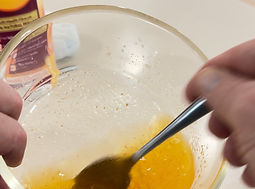
Before you touch anything, write down your theory.
You have three ingredients: hydrogen peroxide, dish soap, and dry yeast. What do you think each one is doing?
PREDICT
OBSERVE
EVIDENCE
ASK
SAFETY
TIP
PREDICT
Gather your materials and get
ready for an amazing mission!
2
Prepare the bottle
Pour 120mL (½ cup) of hydrogen peroxide into the bottle.
Add a large squirt of dish soap and swirl very gently to mix — do not shake.
If you want coloured foam, add a few drops of food colouring now and swirl gently.
PREDICT
OBSERVE
EVIDENCE
ASK
SAFETY
TIP
PREDICT
Gather your materials and get
ready for an amazing mission!
3
Wake up the yeast
In your measuring cup, mix 1 tablespoon of dry yeast with 3 tablespoons of warm water.
Stir for about 30 seconds. The yeast is now active — you might see it starting to look a little frothy.
This is the escape artist getting ready.
PREDICT
OBSERVE
EVIDENCE
ASK
SAFETY
TIP
PREDICT
Gather your materials and get
ready for an amazing mission!
4
Start the reaction
Pour the yeast mixture into the bottle and step back immediately.
Do not put your face over the bottle. Watch what happens. Record: how fast does it start?
How long does it keep going? When it slows down, carefully touch the outside of the bottle. What do you notice about the temperature?
PREDICT
OBSERVE
EVIDENCE
ASK
SAFETY
TIP
PREDICT
Gather your materials and get
ready for an amazing mission!
5
Check your prediction
Go back to what you wrote in Step 1.
Was your theory right? What was the yeast actually doing — was it adding something, removing something, or speeding something up?
Write one sentence that corrects or confirms your original prediction.
PREDICT
OBSERVE
EVIDENCE
ASK
SAFETY
TIP
PREDICT
Gather your materials and get
ready for an amazing mission!
1
Big Title
Gather your materials and get
ready for an amazing mission!
PREDICT
OBSERVE
EVIDENCE
ASK
SAFETY
TIP
PREDICT
Gather your materials and get
ready for an amazing mission!
1
Big Title
Gather your materials and get
ready for an amazing mission!
PREDICT
OBSERVE
EVIDENCE
ASK
SAFETY
TIP
PREDICT
Gather your materials and get
ready for an amazing mission!
1
Big Title
Gather your materials and get
ready for an amazing mission!
PREDICT
OBSERVE
EVIDENCE
ASK
SAFETY
TIP
PREDICT
Gather your materials and get
ready for an amazing mission!
1
Big Title
Gather your materials and get
ready for an amazing mission!
PREDICT
OBSERVE
EVIDENCE
ASK
SAFETY
TIP
PREDICT
1
Make your prediction
Gather your materials and get
ready for an amazing mission!
PREDICT
OBSERVE
EVIDENCE
ASK
SAFETY
TIP
PREDICT
1
Make your prediction
Gather your materials and get
ready for an amazing mission!
PREDICT
OBSERVE
EVIDENCE
ASK
SAFETY
TIP
PREDICT
1
Big Title
Gather your materials and get
ready for an amazing mission!
PREDICT
OBSERVE
EVIDENCE
ASK
SAFETY
TIP
PREDICT
The Crazy Scientist LAB Learning System™
Every experiment follows The Crazy Scientist Lab Learning System™ — a simple way to help kids think like real scientists.
We
-
LINK to what they already know,
-
ACTIVATE curiosity through hands-on discovery
-
BUILD understanding that actually sticks.

Have you ever opened a fizzy drink too quickly?
Suddenly, bubbles rush out everywhere!
Some chemical reactions produce gases incredibly fast.
When millions of tiny bubbles form at once, the results can be spectacular.
Today you'll investigate one of the fastest foaming reactions you'll ever see.

You touched the bottle and it felt warm. A reaction that releases heat is called an exothermic reaction. Where did that heat energy come from — and what does that tell you about the hydrogen peroxide before and after the reaction?
The yeast made the reaction happen much faster — but the yeast itself was not destroyed. It is still there in the foam. If the yeast is not used up, what exactly is it doing? Draw a diagram showing your theory of what the yeast did to the hydrogen peroxide.
Pour a small amount of hydrogen peroxide onto a piece of fresh raw potato. What happens? Compare it to what happened with yeast. What does this tell you about what is inside a potato?

You tested yeast and potato. Both made the reaction go. What do yeast and potato have in common — and what does that tell you about where this enzyme is found in nature? Can you think of other living things that might also have it?
A catalyst is something that speeds up a reaction without being used up. Catalysts are used in car exhaust systems to break down harmful gases, and in industrial factories to make chemicals more efficiently.
Based on what you have seen today, explain in your own words why a catalyst is so useful — and why it matters that it is not used up.
"Want the full teacher guide? The Crazy Scientist Lab includes classroom delivery tips, how to manage the WOW moment, differentiation for Stage 2 & 3, — ready to teach tomorrow."
Think Like a Scientist
Scientists don't stop after their first discovery.
They ask new questions, collect more evidence and test their ideas in different ways.
Where could you take this investigation next?
Does the amount of yeast change the reaction — does more yeast produce more foam or a faster eruption, and is there a point where adding more yeast makes no difference?
Does the source of the enzyme change the result — does grated raw potato produce the same reaction as dry yeast, a bigger one, or a smaller one?
Dr Puddledrip’s Science Tip

Read the Science
What’s Really Happening?
Something was trapped inside the bottle.
Not a genie…
but a gas.
Normally that gas escapes very slowly, so slowly that you would never notice it.
When you added the yeast, the reaction suddenly sped up and the gas was released much faster.
The dish soap trapped the gas in thousands of tiny bubbles, creating the giant tower of foam.
Why Did The Bottle Feel Warm?
Did you notice the bottle becoming warm?
Some chemical reactions release heat while they happen.
The foam wasn’t the only clue that something was changing inside the bottle.
The warmth was another clue.
Scientists use observations like bubbles, temperature changes and colour changes to help understand what is happening during a reaction.
Curious Minds Want To Know…
Would warm yeast work faster than cold yeast?
What happens if you use more yeast?
Can other living things make the same reaction happen?
Could you make an even bigger Chemical Genie?
Try next
• Discover another chemical reaction hidden inside a living thing → [The Starch Detective]
• Look at what foam actually is and how its structure forms → [Soap Foam]
Teachers & Homeschoolers: Print-ready HD versions of this Science Behind It poster and companion G&T Challenge Card are available inside The Crazy Scientist LAB.
Scientist's Challenge
Designed for HPGE, gifted learners and children who enjoy an extra challenge.
Teachers & Homeschoolers: Print-ready HD versions of this Science Behind It poster and companion G&T Challenge Card are available inside The Crazy Scientist LAB.
The Next Question...
You've solved today's mystery. Now discover where curiosity can take you next.
What is an enzyme?
An enzyme is a special type of protein — a large molecule made of folded chains of amino acids — that acts as a biological catalyst. The key feature of an enzyme is its three-dimensional shape.
Each enzyme has a specific region called the active site, which is shaped to fit only one particular type of molecule (called the substrate). When the substrate fits into the active site — like a key fitting a lock — the enzyme triggers a chemical reaction that breaks the molecule apart or joins molecules together.
The enzyme itself is unchanged at the end and can immediately work on the next substrate molecule. One catalase enzyme can process millions of hydrogen peroxide molecules per second.
Teachers & Homeschoolers: Print-ready HD versions of this Science Behind It poster and companion G&T Challenge Card are available inside The Crazy Scientist LAB.
Vocabulary
Enzyme
A special protein inside living things that speeds up a specific chemical reaction. Each enzyme is shaped to work on one particular substance only.
Catalyst
Something that speeds up a chemical reaction without being used up or changed itself. Enzymes are biological catalysts made by living things.
Know a parent or teacher who'd love this? Send it on! 👇
Keep Exploring This Mystery
One experiment leads to even more amazing discoveries inside the Learning Universe.
Curiosity Files
BIG Questions & Discovery
Illustrated Facts
Explore • Discover
Road Trip Science
Discover science everywhere
The Teacher's Cauldron
Think. Experiment. Inspire
Books
Read • Explore
Videos
Watch & Learn
LAB Resources
Premium learning resources


- Coming Early 2027
Could Something in Your Bathroom Really Erupt Like a Volcano?
- Coming Late 2027
Can One Tiny Drop Create a Giant Foam Monster?
Ready for Your Next Discovery?


READY TO TEACH THIS
TOMORROW?

Running the experiment is easy; however, teaching it well is another challenge.
Teachers often ask:
How do I adapt this for Stages 1,2 or 3?
What misconceptions will they have?
What syllabus outcomes does it cover?
What do I do with fast finishers?
How do I structure this for a full class?
What do I say when they ask WHY?
BUILD AROUND THE LAB LEARNING SYSTEM™
Every resource is designed using our teaching framework.

Inside The Crazy Scientist LAB
Everything you need to confidently teach science tomorrow.


Opening early 2027. Join the Founding Member Waitlist
More Ways to Explore The Crazy Scientist World
Discover more hands-on science fun, programs and resources for every curious mind.


