

Professor Picklebottom
Magic Milk Reaction
Watch colours burst, swirl, and race across the surface of milk when you touch it with a simple cotton bud.
It looks like magic — but it’s actually a fascinating interaction between soap and fat molecules.

Ages
5-12 yrs
Duration
min
10
Difficulty
Easy
Stage
Stage 1-3
Cite this resource
Created by Darin Carr (BSc, DipEd)
NESA Accredited Teacher · Chemistry & Physics Specialist · 30+ years in-class teaching
Resource Version: 1.0
First Published:
Last Updated:
1 Sept 2024
21 Aug 2026

MISSION VERIFIED
Classroom tested. Teacher designed. Safe at home.

Designed by Darin Carr (BScDip Ed)
Practising NESA accredited
Australian Science Teacher
★ 30+ years of classroom experience
MISSION PROGRESS
42
young scientists have completed this mission.
I'VE COMPLETED THIS MISSION
Click to let us know you have completed this mission
LATEST TEACHER FEEDBACK
No feedback yet for this experiment. Use it with your class and let us know how it went!

Before you investigate... watch the mystery
MISSION HOOK
Professor Picklebottom and the team are travelling and collecting amazing science mysteries.
✔ Coming in Term 1 2027
KEEP EXPLORING
Curiosity Files
BIG Questions & Discovery
Illustrated Facts
Explore • Discover
Road Trip Science
Discover science everywhere
The Teacher's Cauldron
Think. Experiment. Inspire
Books
Read • Explore
Videos
Watch & Learn
LAB Resources
Premium learning resources

Mission Equipment
Gather your materials and get
ready for an amazing mission!
Milk (full cream works best)
Food colouring (multiple colours)
Dishwashing liquid
Cotton buds
Plate or shallow dish

Let’s Investigate
Follow the missions steps below to solve the mystery.
1
Pour the Milk

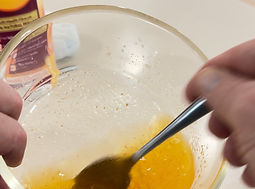
Pour milk into a shallow plate until it covers the base.
PREDICT
OBSERVE
EVIDENCE
ASK
SAFETY
TIP
PREDICT
Gather your materials and get
ready for an amazing mission!
2
Add Colour

Add a few drops of different food colouring around the plate.
Don’t mix them yet!
PREDICT
OBSERVE
EVIDENCE
ASK
SAFETY
TIP
PREDICT
Gather your materials and get
ready for an amazing mission!
3
Prepare the Cotton Bud

Dip a cotton bud into dishwashing liquid.
PREDICT
OBSERVE
EVIDENCE
ASK
SAFETY
TIP
PREDICT
Gather your materials and get
ready for an amazing mission!
4
Touch the Milk

Gently touch the surface of the milk with the cotton bud.
Watch closely…
PREDICT
OBSERVE
EVIDENCE
ASK
SAFETY
TIP
PREDICT
Gather your materials and get
ready for an amazing mission!
5
Observe the Reaction

The colours will rapidly move, swirl, and spread across the surface!
PREDICT
OBSERVE
EVIDENCE
ASK
SAFETY
TIP
PREDICT
Gather your materials and get
ready for an amazing mission!
1
Big Title
Gather your materials and get
ready for an amazing mission!
PREDICT
OBSERVE
EVIDENCE
ASK
SAFETY
TIP
PREDICT
Gather your materials and get
ready for an amazing mission!
1
Big Title
Gather your materials and get
ready for an amazing mission!
PREDICT
OBSERVE
EVIDENCE
ASK
SAFETY
TIP
PREDICT
Gather your materials and get
ready for an amazing mission!
1
Big Title
Gather your materials and get
ready for an amazing mission!
PREDICT
OBSERVE
EVIDENCE
ASK
SAFETY
TIP
PREDICT
Gather your materials and get
ready for an amazing mission!
1
Big Title
Gather your materials and get
ready for an amazing mission!
PREDICT
OBSERVE
EVIDENCE
ASK
SAFETY
TIP
PREDICT
1
Pour the Milk
Gather your materials and get
ready for an amazing mission!
PREDICT
OBSERVE
EVIDENCE
ASK
SAFETY
TIP
PREDICT
1
Pour the Milk
Gather your materials and get
ready for an amazing mission!
PREDICT
OBSERVE
EVIDENCE
ASK
SAFETY
TIP
PREDICT
1
Big Title
Gather your materials and get
ready for an amazing mission!
PREDICT
OBSERVE
EVIDENCE
ASK
SAFETY
TIP
PREDICT
The Crazy Scientist LAB Learning System™
Every experiment follows The Crazy Scientist Lab Learning System™ — a simple way to help kids think like real scientists.
We
-
LINK to what they already know,
-
ACTIVATE curiosity through hands-on discovery
-
BUILD understanding that actually sticks.

Have you ever seen oil and water refuse to mix?
Why do we use soap to wash greasy hands?
What if something in the milk is reacting when we add soap…?

Add drops of food colouring to milk and watch them sit still…
Now dip a cotton bud in dishwashing liquid…
Touch the surface and observe what happens!
Something invisible is pushing the colours away…

This is exactly how soap cleans your hands: one end of the soap molecule grabs the fat (or dirt), the other end grabs water, and they pull in opposite directions — carrying the grease away.
The same chemistry happens in your digestive system, where bile breaks down fatty food so your body can absorb it.
Soap is essentially the body's trick, borrowed and put in a bottle.
Where else in your daily life is something acting as a molecular "bridge" between oil and water?
"Want the full teacher guide? The Crazy Scientist Lab includes classroom delivery tips, how to manage the WOW moment, differentiation for Stage 2 & 3, — ready to teach tomorrow."
Think Like a Scientist
Scientists don't stop after their first discovery.
They ask new questions, collect more evidence and test their ideas in different ways.
Where could you take this investigation next?
What happens if you use different types of milk (full cream vs skim)?
What happens if you change how much dishwashing liquid you use?
Dr Puddledrip’s Science Tip
Read the Science
The soap didn't mix with the milk. It attacked it.
Milk is mostly water — but it's full of tiny floating fat molecules. And soap has a very particular obsession with fat. The moment that cotton bud touches the surface, the soap molecules go absolutely wild, racing across the milk in every direction, trying to grab onto every fat molecule they can find.
This fat-and-water chemistry is the same reason oil and water never mix on their own in [Comet Collisions] — and why soap is the thing that bridges them.
That frantic race is what you're watching. The colours aren't moving on their own — they're being dragged along by the soap as it charges across the surface.
But why does it move at all? Because milk has surface tension — a thin, tight skin across the top held together by water molecules clinging to each other. Soap is a surfactant, which means its one job in life is to break that tension.
The moment it hits the surface, it tears through it like a pin through cling wrap — and the whole surface rushes to rebalance. You can see the same soap-and-skin mechanism at work in [The Pepper Escape], where pepper grains get dragged across the plate as passengers in exactly the same way.
Did you notice it eventually slows down and stops? That's the soap running out of fat to chase. Once it's bonded with everything it can find, the reaction is over.
Did you also notice the colours stay separated for so long before they blur? That's the speed of the reaction keeping them apart.
This exact science is how soap lifts grease off your hands, how detergent cleans your clothes, and how scientists break up oil spills in the ocean.
But here's the question — what would happen if you used skim milk instead? And why does the pattern look completely different every single time?
Find out in The Crazy Scientist Lab!
Teachers & Homeschoolers: Print-ready HD versions of this Science Behind It poster and companion G&T Challenge Card are available inside The Crazy Scientist LAB.
Scientist's Challenge
Designed for HPGE, gifted learners and children who enjoy an extra challenge.

Teachers & Homeschoolers: Print-ready HD versions of this Science Behind It poster and companion G&T Challenge Card are available inside The Crazy Scientist LAB.
The Next Question...
You've solved today's mystery. Now discover where curiosity can take you next.
Teachers & Homeschoolers: Print-ready HD versions of this Science Behind It poster and companion G&T Challenge Card are available inside The Crazy Scientist LAB.
Vocabulary
Surface Tension — The force that makes the surface of a liquid behave like a stretched skin.
Fat — A type of molecule found in foods such as milk.
Surfactant — A substance that reduces the surface tension of a liquid.
Know a parent or teacher who'd love this? Send it on! 👇
Keep Exploring This Mystery
One experiment leads to even more amazing discoveries inside the Learning Universe.
Curiosity Files
BIG Questions & Discovery
Illustrated Facts
Explore • Discover
Road Trip Science
Discover science everywhere
The Teacher's Cauldron
Think. Experiment. Inspire
Books
Read • Explore
Videos
Watch & Learn
LAB Resources
Premium learning resources


- Coming Mid 2027
Can One Tiny Drop Really Make Milk Come Alive?
Ready for Your Next Discovery?


READY TO TEACH THIS
TOMORROW?

Running the experiment is easy; however, teaching it well is another challenge.
Teachers often ask:
How do I adapt this for Stages 1,2 or 3?
What misconceptions will they have?
What syllabus outcomes does it cover?
What do I do with fast finishers?
How do I structure this for a full class?
What do I say when they ask WHY?
BUILD AROUND THE LAB LEARNING SYSTEM™
Every resource is designed using our teaching framework.

Inside The Crazy Scientist LAB
Everything you need to confidently teach science tomorrow.


Opening early 2027. Join the Founding Member Waitlist
More Ways to Explore The Crazy Scientist World
Discover more hands-on science fun, programs and resources for every curious mind.


