


Alex
The Gravity Battlefield
Gravity pulls everything down.
A balloon should fall to the floor…
…so why does it suddenly float in mid-air when you switch on the hair dryer?
Gravity never takes a break.
Every second it’s pulling your balloon towards the floor…
Can you keep it trapped in mid-air?

Ages
5-12 yrs
Duration
min
10
Difficulty
Easy
Stage
Stage 1-3
Cite this resource
Created by Darin Carr (BSc, DipEd)
NESA Accredited Teacher · Chemistry & Physics Specialist · 30+ years in-class teaching
Resource Version: 1.0
First Published:
Last Updated:
23 Apr 2026
9 Aug 2026

MISSION VERIFIED
Classroom tested. Teacher designed. Safe at home.

Designed by Darin Carr (BScDip Ed)
Practising NESA accredited
Australian Science Teacher
★ 30+ years of classroom experience
MISSION PROGRESS
9
young scientists have completed this mission.
I'VE COMPLETED THIS MISSION
Click to let us know you have completed this mission
LATEST TEACHER FEEDBACK
No feedback yet for this experiment. Use it with your class and let us know how it went!

Before you investigate... watch the mystery
MISSION HOOK
Professor Picklebottom and the team are travelling and collecting amazing science mysteries.
✔ Coming in Term 1 2027

KEEP EXPLORING
Curiosity Files
BIG Questions & Discovery
Illustrated Facts
Explore • Discover
Road Trip Science
Discover science everywhere
The Teacher's Cauldron
Think. Experiment. Inspire
Books
Read • Explore
Videos
Watch & Learn
LAB Resources
Premium learning resources

Mission Equipment
Gather your materials and get
ready for an amazing mission!
1 round balloon — standard size
1 small coin — 10c or 20c
1 hair dryer — set to COOL air, medium speed
Optional: coloured markers to draw a face on the balloon
Adult supervision required when using the hair dryer


Let’s Investigate
Follow the missions steps below to solve the mystery.
1
Build your gravity challenger
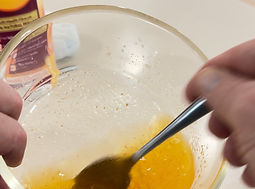
Place a small 10c or 20c coin inside a standard balloon.
Inflate the balloon until it is about the size of a grapefruit (don’t overinflate).
Tie the balloon securely.
Place your hair dryer on COOL and medium speed, but don’t switch it on yet.
PREDICT
OBSERVE
EVIDENCE
ASK
SAFETY
TIP
PREDICT
Gather your materials and get
ready for an amazing mission!
2
Predict the Outcome
Hold the balloon above the hair dryer without letting go.
Before switching it on, think carefully.
What do you predict will happen when you let go of the balloon?
PREDICT
OBSERVE
EVIDENCE
ASK
SAFETY
TIP
PREDICT
Gather your materials and get
ready for an amazing mission!
3
Can You Defeat Gravity?
Turn the hair dryer on using the cool setting.
Carefully release the balloon into the stream of moving air.
Watch closely.
Can you keep the balloon floating without touching it?
PREDICT
OBSERVE
EVIDENCE
ASK
SAFETY
TIP
PREDICT
Gather your materials and get
ready for an amazing mission!
4
Push the Limits
While the balloon is floating,
Gently push it sideways with one finger.
Try:
a tiny push
a bigger push
your biggest safe push
How far can you push the balloon before it escapes?
PREDICT
OBSERVE
EVIDENCE
ASK
SAFETY
TIP
PREDICT
Gather your materials and get
ready for an amazing mission!
5
Challenge Gravity
Keep the balloon hovering.
Now, slowly tilt the hair dryer.
Can the balloon stay inside the moving air?
Keep increasing the angle until gravity finally wins.
PREDICT
OBSERVE
EVIDENCE
ASK
SAFETY
TIP
PREDICT
Gather your materials and get
ready for an amazing mission!
6
Become an Airflow Engineer
Choose ONE thing to change.
Examples:
balloon size
balloon weight
air speed
hair dryer angle
Test your idea fairly.
Did your change make it easier or harder to keep the balloon floating?
PREDICT
OBSERVE
EVIDENCE
ASK
SAFETY
TIP
PREDICT
Gather your materials and get
ready for an amazing mission!
1
Big Title
Gather your materials and get
ready for an amazing mission!
PREDICT
OBSERVE
EVIDENCE
ASK
SAFETY
TIP
PREDICT
Gather your materials and get
ready for an amazing mission!
1
Big Title
Gather your materials and get
ready for an amazing mission!
PREDICT
OBSERVE
EVIDENCE
ASK
SAFETY
TIP
PREDICT
Gather your materials and get
ready for an amazing mission!
1
Big Title
Gather your materials and get
ready for an amazing mission!
PREDICT
OBSERVE
EVIDENCE
ASK
SAFETY
TIP
PREDICT
1
Build your gravity challenger
Gather your materials and get
ready for an amazing mission!
PREDICT
OBSERVE
EVIDENCE
ASK
SAFETY
TIP
PREDICT
1
Build your gravity challenger
Gather your materials and get
ready for an amazing mission!
PREDICT
OBSERVE
EVIDENCE
ASK
SAFETY
TIP
PREDICT
1
Big Title
Gather your materials and get
ready for an amazing mission!
PREDICT
OBSERVE
EVIDENCE
ASK
SAFETY
TIP
PREDICT
The Crazy Scientist LAB Learning System™
Every experiment follows The Crazy Scientist Lab Learning System™ — a simple way to help kids think like real scientists.
We
-
LINK to what they already know,
-
ACTIVATE curiosity through hands-on discovery
-
BUILD understanding that actually sticks.

Connect this investigation to what you already know.
Gravity pulls everything towards the ground. Drop a ball, throw a balloon into the air or jump as high as you can—you always come back down.
We see gravity at work every day, so we expect objects to fall unless something holds them up.
But here’s today’s mystery…
Could moving air create enough force to stop a balloon from falling—even without helium, a string or your hand holding it?
Before you investigate, make your prediction.
What do you think will happen when you let go of the balloon above the hair dryer? Explain your thinking.

Use your observations to build your ideas.
You switched on the hair dryer and let go of the balloon. Now think carefully about what you observed.
Did the balloon stay exactly where you released it, or did it move first?
When you pushed the balloon sideways, what happened after you let go?
As you tilted the hair dryer, why do you think the balloon followed the moving air instead of falling straight down?
Which forces do you think were acting on the balloon during the investigation?
Use your observations as evidence to explain what you think was happening.

Take your thinking further.
You discovered that moving air can do much more than simply blow objects away. It can also help support, guide and control the movement of objects.
Engineers use these same ideas in many real-world situations, including:
✈️ Designing aircraft wings to generate lift.
🏎️ Creating downforce on Formula One racing cars.
🌬️ Testing new designs in wind tunnels.
🪂 Helping people float safely in indoor skydiving tunnels.
Scientists explain these behaviours using ideas such as the Bernoulli Principle and the Coandă Effect.
Where else have you seen moving air change the way an object moves?
"Want the full teacher guide? The Crazy Scientist Lab includes classroom delivery tips, how to manage the WOW moment, differentiation for Stage 2 & 3, — ready to teach tomorrow."
Think Like a Scientist
Scientists don't stop after their first discovery.
They ask new questions, collect more evidence and test their ideas in different ways.
Where could you take this investigation next?
Does the size of the balloon change how stable the hover is — does a larger balloon work better or worse?
Does the coin inside the balloon make a difference — what happens to the hover if you remove it?

Dr Puddledrip’s Science Tip
Read the Science
Why does the balloon hover instead of falling?
A hair dryer blasts a column of air upward. That air is moving fast. And fast‑moving air has lower pressure than the still air around it. Daniel Bernoulli discovered this in the 1700s: when a fluid speeds up, its pressure drops.
Think of it like a busy motorway. Cars travelling at high speed stay in their lanes — they don’t push sideways. But the still air beside the motorway? It presses in from all directions with full force. The balloon sits right in this situation:
Low pressure in the fast airstream
Normal pressure from the surrounding still air
That surrounding air squeezes inward, holding the balloon inside the rising column. Gravity pulls down, but the pressure difference pushes up harder. The balloon hovers.
Why the coin matters?
A balloon on its own is too light and too symmetrical. It spins, wobbles, and drifts — it has no “down”. Drop a coin inside and everything changes. The coin settles at the bottom, giving the balloon a heavy end and a light end. Now it behaves like a ship with ballast:
the heavy end stays down
the balloon stabilises
the wobbling stops
The coin doesn’t help the balloon float — it helps it stay upright long enough for the air column to catch and hold it.
Why does the balloon follow the airstream when you tilt the dryer?
This is the Coanda Effect — the tendency of moving air to cling to curved surfaces. When you tilt the hair dryer, the airstream tilts too. Instead of falling out of the stream, the balloon “chases” it.
Here’s what’s happening:
The curved surface of the balloon bends the fast air around it.
The air sticks to the balloon’s surface and curves away.
Where the air curves away, the pressure drops.
Higher pressure on the opposite side pushes the balloon back in.
The balloon constantly self‑corrects — always nudged back toward the centre of the airstream. It behaves like a satellite hugging its orbit: drifting slightly, correcting instantly, never escaping.
Where have you seen this before?
The same two principles — Bernoulli and Coanda — work together in:
every aircraft wing
every helicopter rotor
every hovercraft
every leaf that lifts and flutters above a campfire
Your hair dryer just demonstrated the physics of flight using nothing more than a balloon and a coin.
Try next
To see the same self-correcting Coanda behaviour on a smaller scale — and without a hair dryer — try [The Invisible Cushion], where a handmade card cone and a single breath do the same job. And if you want to see Bernoulli working sideways instead of vertically, [The Stubborn Balloons] shows what happens when fast air runs between two objects instead of under one.
Teachers & Homeschoolers: Print-ready HD versions of this Science Behind It poster and companion G&T Challenge Card are available inside The Crazy Scientist LAB.
Scientist's Challenge
Designed for HPGE, gifted learners and children who enjoy an extra challenge.

Teachers & Homeschoolers: Print-ready HD versions of this Science Behind It poster and companion G&T Challenge Card are available inside The Crazy Scientist LAB.
The Next Question...
You've solved today's mystery. Now discover where curiosity can take you next.

Teachers & Homeschoolers: Print-ready HD versions of this Science Behind It poster and companion G&T Challenge Card are available inside The Crazy Scientist LAB.
Vocabulary
Bernoulli’s Principle: Fast‑moving air has lower pressure than still air. The balloon stays in the airstream because higher‑pressure air around it pushes inward.
Coanda Effect: The tendency of moving air to cling to curved surfaces and follow their shape. This keeps the balloon “locked” into the tilted airstream.
Air pressure: The force of air pushing on a surface. Still air pushes harder sideways than fast‑moving air.
Know a parent or teacher who'd love this? Send it on! 👇
Keep Exploring This Mystery
One experiment leads to even more amazing discoveries inside the Learning Universe.
Curiosity Files
BIG Questions & Discovery
Illustrated Facts
Explore • Discover
Road Trip Science
Discover science everywhere
The Teacher's Cauldron
Think. Experiment. Inspire
Books
Read • Explore
Videos
Watch & Learn
LAB Resources
Premium learning resources


- Coming Mid 2027
How Can a Tornado Throw a Car Like a Toy?
- Coming Mid 2027
What If Earth Suddenly Had Half Its Gravity?
- Coming Late 2027
Can AIR Really Stop You From Falling?
Ready for Your Next Discovery?


READY TO TEACH THIS
TOMORROW?

Running the experiment is easy; however, teaching it well is another challenge.
Teachers often ask:
How do I adapt this for Stages 1,2 or 3?
What misconceptions will they have?
What syllabus outcomes does it cover?
What do I do with fast finishers?
How do I structure this for a full class?
What do I say when they ask WHY?
BUILD AROUND THE LAB LEARNING SYSTEM™
Every resource is designed using our teaching framework.

Inside The Crazy Scientist LAB
Everything you need to confidently teach science tomorrow.


Opening early 2027. Join the Founding Member Waitlist
More Ways to Explore The Crazy Scientist World
Discover more hands-on science fun, programs and resources for every curious mind.


